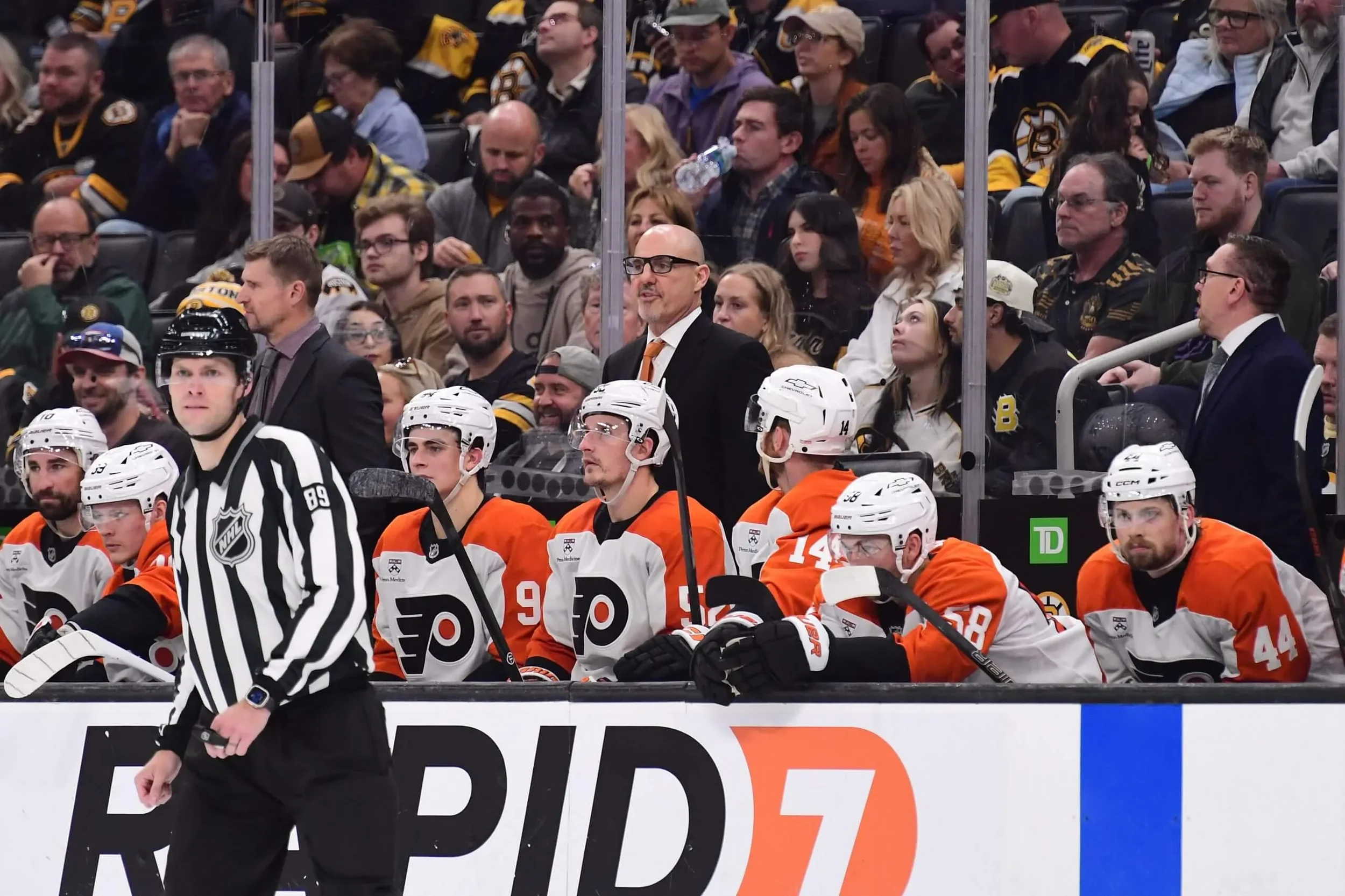
Flyers’ Nightmare Start Continues as Philadelphia Remains Winless Through Seven Games
The Philadelphia Flyers entered the 2026-27 NHL season hoping to take another step forward in their rebuilding process. Instead, the opening weeks have brought frustration, offensive struggles, and growing concerns about the direction of a team still searching for its first victory.
Philadelphia has stumbled to an 0-5-2 record through its first seven games, sitting at the bottom of the Metropolitan Division with just two points. What was supposed to be an opportunity for the Flyers’ young talent to establish itself has quickly turned into one of the most disappointing starts in the NHL.
The struggles began immediately on September 30, when the Pittsburgh Penguins handed Philadelphia an embarrassing 7-0 defeat in its season opener. Rather than responding with a convincing performance, the Flyers followed with consecutive overtime losses against New Jersey and Carolina before dropping regulation decisions to Tampa Bay, Ottawa, and Boston. (Hockey Reference)
Philadelphia’s difficulties continued Sunday night, when the defending Stanley Cup champion Carolina Hurricanes defeated the Flyers 4-1, extending their winless start to seven games. The loss also marked Philadelphia’s 11th consecutive defeat dating back to last season, further emphasizing the challenges facing the organization. (Reuters)
Offensive Struggles Becoming Impossible to Ignore
Perhaps the most concerning aspect of Philadelphia’s start has been its inability to generate consistent offense.
Through the first six games, the Flyers managed just seven goals, averaging a little over one goal per contest. Philadelphia ranked last in the NHL in goals scored during that stretch, an alarming figure for a roster featuring several promising offensive players. (Hockey Reference)
Matvei Michkov, Trevor Zegras, Owen Tippett, and Tyson Foerster represent a significant portion of Philadelphia’s offensive potential. However, the Flyers have struggled to turn that individual talent into sustained pressure, quality scoring opportunities, or meaningful production.
The October 5 loss against Tampa Bay offered a particularly troubling example. Philadelphia was outshot heavily throughout the contest, forcing goaltender Dan Vladar to make 32 saves while the Flyers managed only 14 shots on goal.
Following the defeat, rookie forward Porter Martone acknowledged that the team needed to be more connected and that its performances were falling short of expectations. (NHL.com)
For a team attempting to develop a competitive identity around its younger players, the lack of offensive cohesion is particularly discouraging. Philadelphia has enough individual skill to create problems for opposing defenses, but that ability has rarely translated into consistent results.
Defensive Issues Only Adding to Philadelphia’s Problems
While the offensive struggles have attracted considerable attention, Philadelphia’s difficulties extend well beyond its inability to score.
The Flyers surrendered 24 goals over their first six contests, including seven against Pittsburgh and five against Boston. Those performances have exposed weaknesses in defensive coverage, puck management, and the team’s ability to withstand sustained pressure. (Hockey Reference)
The combination has created a difficult situation for Philadelphia’s goaltenders. With little offensive support, even relatively strong performances in net have left the Flyers with limited opportunities to collect points.
There have been moments when Philadelphia has looked capable of competing. Consecutive overtime losses against New Jersey and Carolina demonstrated that the Flyers could remain competitive against quality opponents. However, those performances have been overshadowed by lopsided defeats and an inability to finish games.
The October 3 matchup against Carolina was especially frustrating, as former Flyer Shayne Gostisbehere scored the overtime winner to hand Philadelphia another defeat. (NHL.com)
Pressure Building on Rick Tocchet and Philadelphia’s Young Core
For head coach Rick Tocchet, the challenge now goes beyond simply finding the team’s first victory.
Philadelphia is attempting to establish a foundation capable of supporting long-term success, and the early results suggest that considerable work remains.
Tocchet’s responsibility is to develop consistency within a relatively young roster while ensuring that the Flyers remain competitive throughout the rebuilding process. That task becomes increasingly difficult when the team struggles to generate offense and spends extended periods defending in its own zone.
The development of Michkov remains especially important to Philadelphia’s future. Alongside Zegras, Tippett, Foerster, and Martone, the young Russian forward represents part of a group expected to help transform the Flyers into a more dangerous offensive team.
However, individual potential alone will not be enough to reverse Philadelphia’s fortunes. The Flyers must find a way to establish chemistry throughout their forward lines, improve their defensive structure, and create a more consistent offensive attack.
Seven games are hardly enough to determine the outcome of an 82-game season, but Philadelphia is already putting itself in a difficult position within a competitive Metropolitan Division.
A Season Already Approaching a Critical Point
There is still plenty of hockey remaining, and the Flyers have time to recover from their disappointing opening stretch. Nevertheless, the urgency surrounding the organization is becoming increasingly difficult to ignore.
For a franchise that has spent several seasons attempting to return to playoff contention, another prolonged stretch of losing would represent a significant setback.
Philadelphia’s young players need opportunities to develop, but they also need to experience meaningful success. Continued offensive struggles and mounting losses could make that process considerably more challenging.
The Flyers entered the season looking to demonstrate that their rebuild was beginning to produce tangible progress. Through seven games, however, they have offered little evidence that the organization is ready to take that next step.
The talent is there, and the season is still young. But unless Philadelphia can find answers quickly, what began as a disappointing opening stretch could develop into another long winter of frustration for one of hockey’s most passionate fan bases.