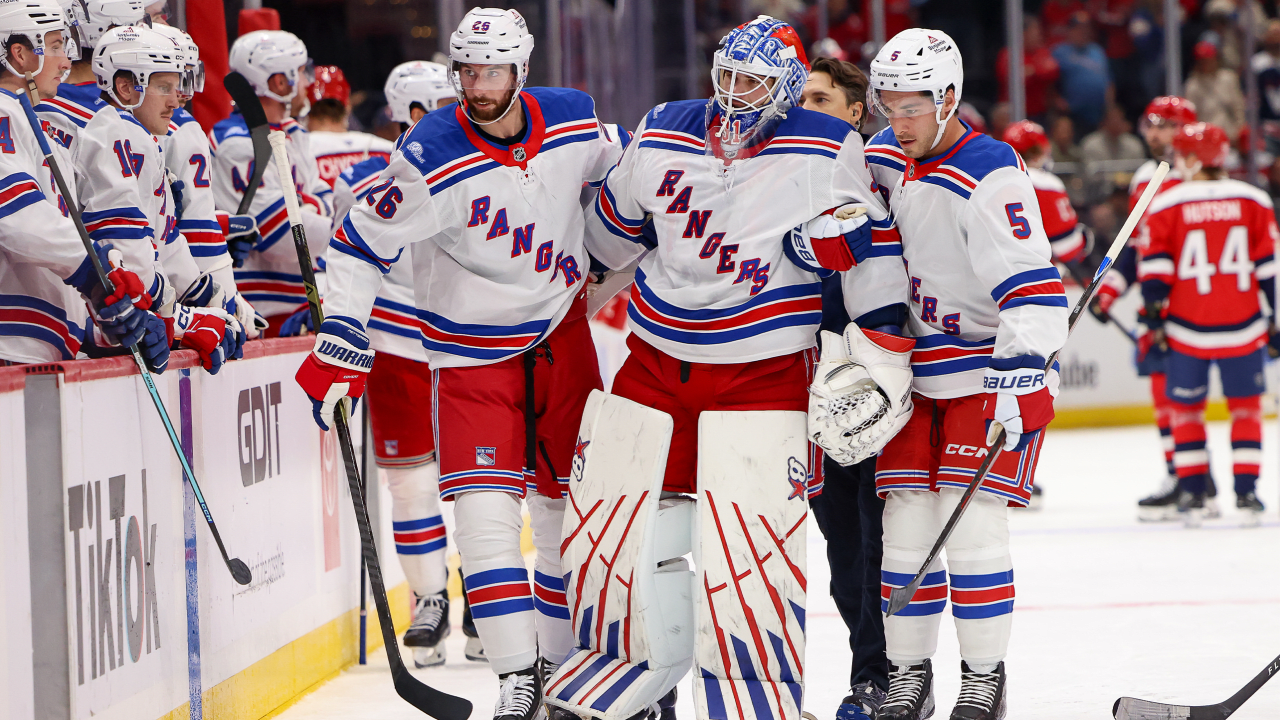
Igor Shesterkin Suffers Season-Ending Knee Injury, Leaving Rangers’ Season in Jeopardy
The New York Rangers have suffered a devastating setback just weeks into the 2026-27 NHL season, as star goaltender Igor Shesterkin has officially been ruled out for the remainder of the year following a right knee injury sustained Friday night against the Washington Capitals.
The Rangers confirmed Saturday that their franchise goaltender would miss the rest of the season, delivering a crushing blow to a team that had opened the campaign with considerable momentum.
Shesterkin suffered the injury midway through the second period of New York’s 3-1 loss to Washington. While scrambling back into position during a Capitals power play, the 30-year-old netminder jammed his right skate against the goalpost, causing his leg to bend awkwardly beneath him. (NHL.com)
Shesterkin remained on the ice in visible pain before being assisted to the locker room by teammates Sean Durzi and Marcus Pettersson. He was unable to put any weight on his injured leg.
The incident immediately raised concerns throughout the Rangers organization, particularly given Shesterkin’s importance to the team’s success.
“It’s awful, you know? He’s a pillar of this team. It stinks,” Rangers captain J.T. Miller told reporters following Friday’s defeat. (Associated Press)
For New York, the injury represents considerably more than the loss of its starting goaltender. It removes arguably the most important piece of a roster attempting to rebound from a disappointing previous season.
A Promising Start Comes to an Abrupt End
Shesterkin had been exceptional through the opening weeks of the season, posting a 3-1-0 record with a 1.75 goals-against average and a .926 save percentage entering Friday’s matchup.
The former Vezina Trophy winner appeared to be returning to the dominant form that established him among the NHL’s elite goaltenders.
His early-season performance even included an unusual milestone. On October 1, Shesterkin became the first goaltender in Rangers history to score a goal, sending the puck the length of the ice into an empty net during a 5-1 victory over the Tampa Bay Lightning.
New York had won four consecutive games entering Friday and appeared to be developing consistency under head coach Mike Sullivan.
Now, that momentum faces its most significant challenge yet.
The Rangers experienced similar difficulties last season when Shesterkin missed approximately a month with a lower-body injury. New York ultimately finished last in the Eastern Conference, demonstrating just how difficult life can become without its franchise goaltender.
Rangers Face Major Questions in Goal
With Shesterkin sidelined, New York must now navigate the remainder of the season with considerable uncertainty surrounding its goaltending situation.
Twenty-four-year-old Dylan Garand replaced Shesterkin against Washington, stopping 11 of the 12 shots he faced. Although the Rangers ultimately fell 3-1, Garand has already demonstrated some encouraging potential in limited NHL action.
The young netminder recorded a 22-save shutout against the Detroit Red Wings on October 2 and posted a .948 save percentage across three starts last season.
However, asking a relatively inexperienced goaltender to assume a substantial workload over an entire NHL season presents a considerably different challenge.
Complicating matters further is the status of veteran Joonas Korpisalo, whom New York acquired from the Boston Bruins during the offseason. Korpisalo was placed on injured reserve last week with a lower-body injury and remains week-to-week.
The Rangers entered Saturday facing injuries to both of their established NHL goaltenders, potentially forcing management to explore additional options. (Associated Press)
Whether New York relies on Garand, waits for Korpisalo’s return, or pursues outside help could become one of the defining decisions of its season.
What Shesterkin’s Absence Means for New York
Perhaps the greatest concern surrounding Shesterkin’s injury is the pressure it places on the Rangers’ remaining roster.
For years, New York has relied heavily on its elite goaltending to overcome defensive inconsistencies and remain competitive against the Eastern Conference’s strongest opponents.
Without Shesterkin, the Rangers may no longer have the luxury of allowing opponents extended offensive-zone possessions or surrendering high-danger scoring opportunities with the expectation that their goaltender will consistently bail them out.
That responsibility now shifts toward Sullivan’s defensive structure and the team’s veteran leadership.
Players such as J.T. Miller, Alexis Lafrenière and the rest of New York’s offensive core will also face increased pressure to generate consistent scoring production, particularly if the Rangers struggle to maintain their previous level of goaltending.
Friday’s defeat offered an early glimpse of those challenges. Lafrenière opened the scoring with a first-period power-play goal, but Washington eventually took control behind goals from Timothy Liljegren and Boone Jenner before Tom Wilson added an empty-netter.
The loss dropped New York to 4-2-0, ending its four-game winning streak. (NHL.com)
While the Rangers remain in a competitive position early in the standings, maintaining that success without Shesterkin will require significant adjustments.
The injury could also influence the organization’s long-term direction. Should New York struggle over the coming months, management may be forced to evaluate whether pursuing immediate goaltending help is worth sacrificing future assets or whether a more patient approach would better serve the franchise.
For a team hoping to reestablish itself as a legitimate playoff contender, neither scenario is particularly appealing.
An Early Test That Could Define the Season
There is still plenty of hockey remaining, and the Rangers possess enough experienced talent to remain competitive. However, replacing an elite goaltender for an entire season is among the most difficult challenges an NHL organization can face.
Shesterkin’s absence fundamentally changes the outlook for a team that entered October hoping to put last season’s disappointment behind it.
Sullivan must now find a way to maintain the Rangers’ early momentum while establishing confidence in an uncertain goaltending situation. The team’s defensive performance, offensive consistency and ability to withstand adversity will become increasingly important as the season progresses.
For New York, the question is no longer simply whether the Rangers can return to the postseason.
It is whether they can remain in the playoff conversation without the player who has so often been responsible for keeping them there.