

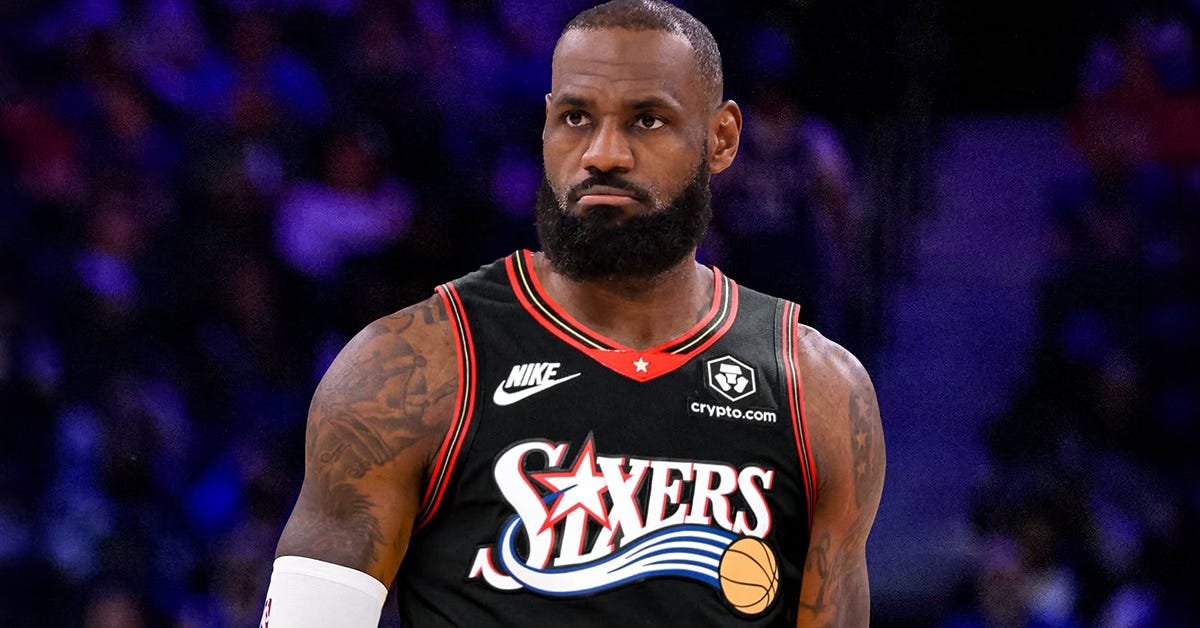
Why Philadelphia? LeBron James Reveals What Drew Him to the 76ers
LeBron James could have chosen the storybook ending.
Cleveland was sitting there. A return home, one final run in the city where everything started, and eventually the chance to walk away wearing the same uniform he wore on draft night more than two decades ago.
Instead, James chose Philadelphia.
At first glance, it was one of the more surprising decisions of his career. But during the latest episode of Mind the Game, James gave a clearer picture of what pulled him toward the 76ers. And the more he explained it, the more Philadelphia started to make sense.
This wasn’t about nostalgia. It was about unfinished business — just not necessarily LeBron’s.
Joel Embiid has already built a Hall of Fame-caliber résumé. He’s been an MVP, a scoring champion and one of the most dominant big men of his generation. Yet every spring, the same conversation eventually finds its way back to Philadelphia.
Where is the deep playoff run?
Where is the championship?
James knows exactly what separates great careers from the ones people talk about differently 20 years later. At this stage, another championship would certainly add to his own legacy, but helping Embiid finally reach the top presents a different kind of challenge. LeBron described himself as potentially being that “final little piece” Philadelphia has been searching for.
That’s an interesting role for a player who has spent most of his career being the biggest piece on the board.
Then there’s Tyrese Maxey.
James’ relationship with Maxey helped open the door to Philadelphia, with LeBron speaking highly of the person and player Maxey has become. On the court, the fit is equally intriguing. Maxey doesn’t need LeBron to manufacture every opportunity for him. His speed changes games on its own, and at this point in James’ career, playing alongside a guard capable of constantly pressuring a defense could prove invaluable.
Philadelphia also gave James something he probably didn’t expect when this process began: Jaylen Brown.
Brown’s arrival dramatically changed the complexion of the roster. He’s been through championship basketball. He can defend. He doesn’t need the offense built entirely around him. And perhaps most importantly, he gives Philadelphia another player who understands what basketball looks like when the regular-season lights turn off and every possession starts carrying weight.
LeBron also seems genuinely intrigued by VJ Edgecombe. His praise of the young guard wasn’t casual. James pointed toward Edgecombe’s physical tools and defensive potential, even suggesting he possesses the ability to eventually put himself into the All-Defensive conversation.
Put those pieces together — Maxey’s speed, Brown’s two-way presence, Edgecombe’s athleticism, Embiid in the middle and Nick Nurse pulling the strings — and suddenly Philadelphia isn’t just an interesting destination for LeBron.
It’s a basketball experiment worth watching.
And maybe that’s what makes this move so fitting.
James is 41 years old. He’s entering season No. 24. There really isn’t another individual box he needs to check. The scoring record is his. The championships are there. So are the MVPs, All-NBA selections and two decades worth of moments that have already secured his place in basketball history.
What is left is curiosity.
How long can he keep doing this? Can he adapt his game one more time? Can he walk into a locker room filled with established stars, accept a different role and become the veteran presence that pushes another superstar toward the one accomplishment he still hasn’t reached?
Cleveland would have been poetic.
Philadelphia is complicated.
Maybe that’s exactly why LeBron chose it.
If this truly is the final chapter of his career, James isn’t spending it looking backward at everything he’s already accomplished.
He’s taking one more swing at something he hasn’t done before.
Giants Face an Early Crossroads After Jaxson Dart Injury
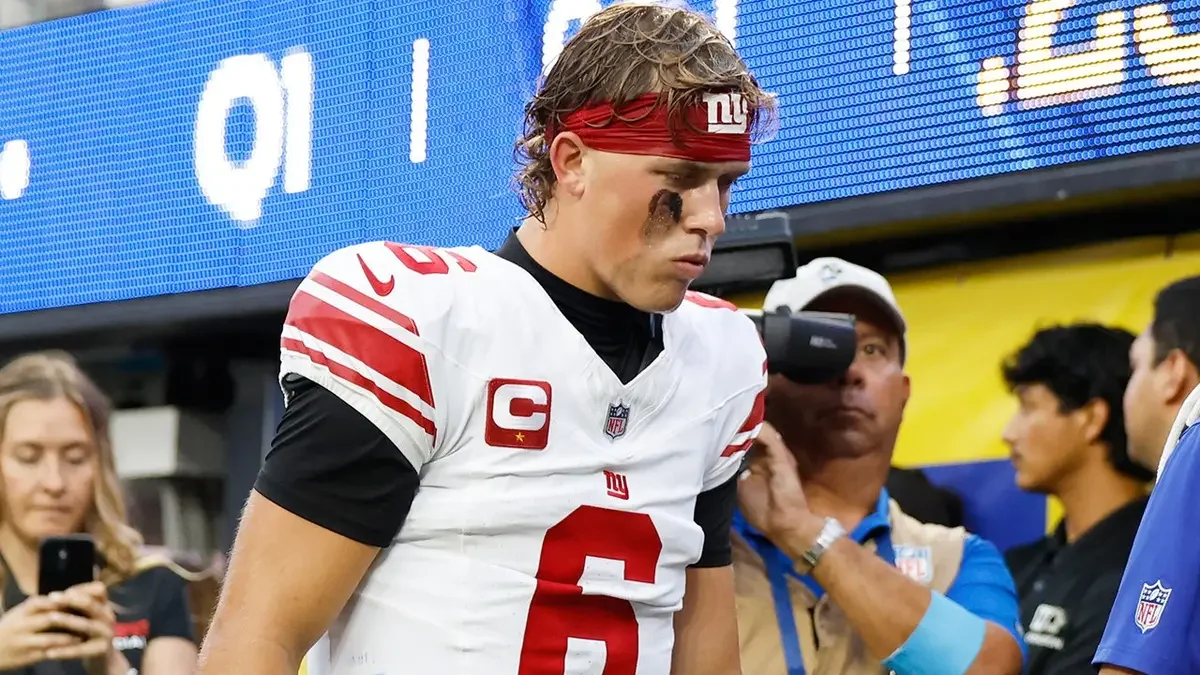
Just two weeks into the 2026 season, the New York Giants have been dealt a devastating blow. Quarterback Jaxson Dart will miss the remainder of the regular season after suffering a serious left knee injury during New York’s 28-6 loss to the Los Angeles Rams. Dart was injured on the Giants’ opening drive after being hit by two Rams defenders, bringing an abrupt end to what had been a promising start to his second NFL season. (Giants)
The timing makes the injury especially difficult for New York. Dart opened the season with an impressive performance against Dallas, becoming the first quarterback in NFL history to begin a season with at least three passing touchdowns, 50 rushing yards and a passer rating of 130. After an encouraging rookie year, the 23-year-old appeared ready to take another step toward establishing himself as the Giants’ long-term franchise quarterback. (Giants)
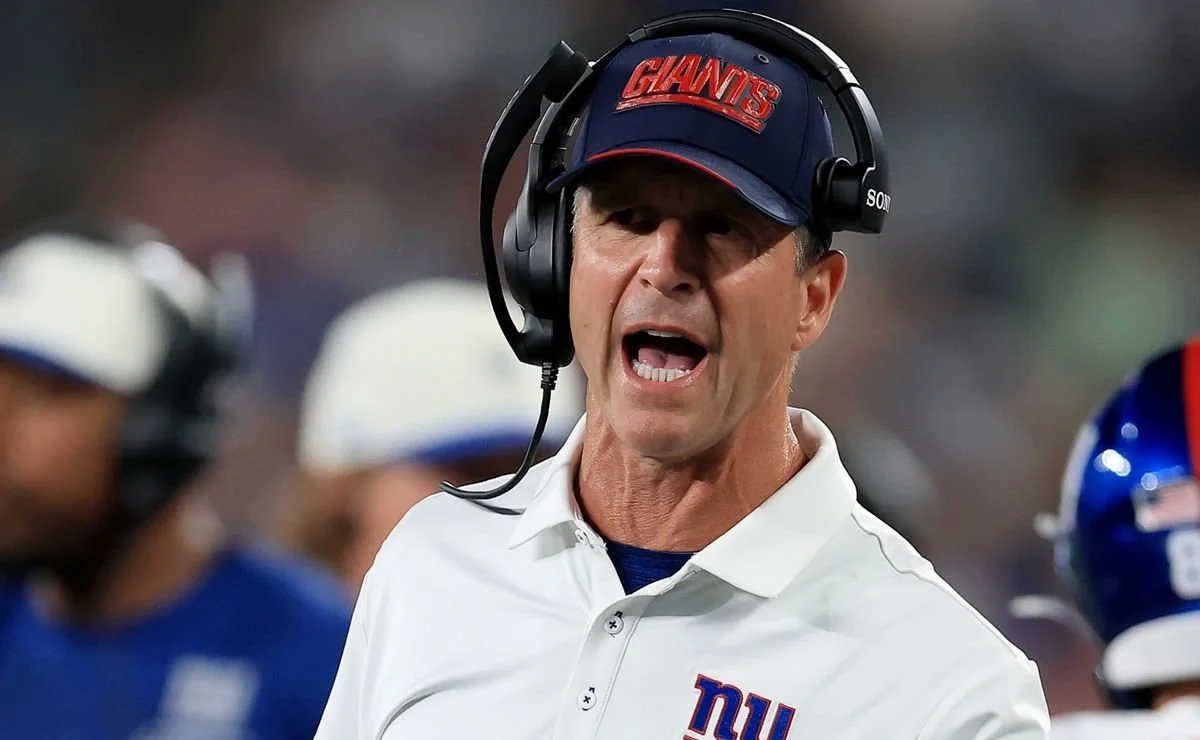
Now, new head coach John Harbaugh faces his first major test in New York. The Giants hired the Super Bowl-winning former Ravens coach in January, hoping his experience could bring stability and sustained success back to the organization. Harbaugh arrived after 18 seasons in Baltimore, where he accumulated 180 regular-season victories, six division championships and 12 playoff appearances. (Giants)
For the immediate future, the Giants are handing the offense to veteran Jameis Winston. Harbaugh has confirmed Winston will start and said the coaching staff will reshape the game plan around what he does best rather than simply asking him to replicate Dart’s role. Winston now has an opportunity to keep a talented Giants offense featuring Malik Nabers and Cam Skattebo competitive while Dart recovers. (Giants)
But Winston may not be the only answer New York explores. Jake Haener is currently on the practice squad, and Harbaugh has confirmed that the Giants intend to add another quarterback, preferably a veteran. The organization is keeping its options open, with Harbaugh saying a potential trade is also among the possibilities. (Giants)
That creates one of the most interesting quarterback situations in football. New York could allow Winston to take control of the offense, promote Haener for additional depth, or look outside the organization for another veteran capable of competing for snaps. Any outside addition would likely begin as insurance, with Dart still viewed as the quarterback around whom the Giants have been building.
At 1-1 with 15 games remaining, the Giants’ season is far from finished. But without Dart, the direction of 2026 suddenly looks much different. Harbaugh was brought to New York because of his experience navigating difficult seasons and building winning teams. His ability to steady the Giants—and whatever solution New York finds at quarterback—could now determine whether a season that began with considerable promise can survive the loss of its young franchise quarterback. (Giants)
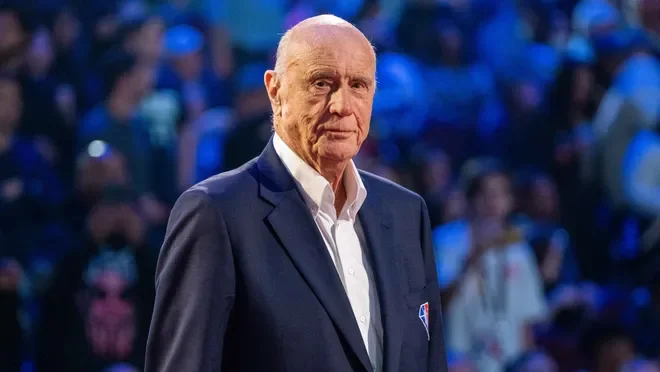
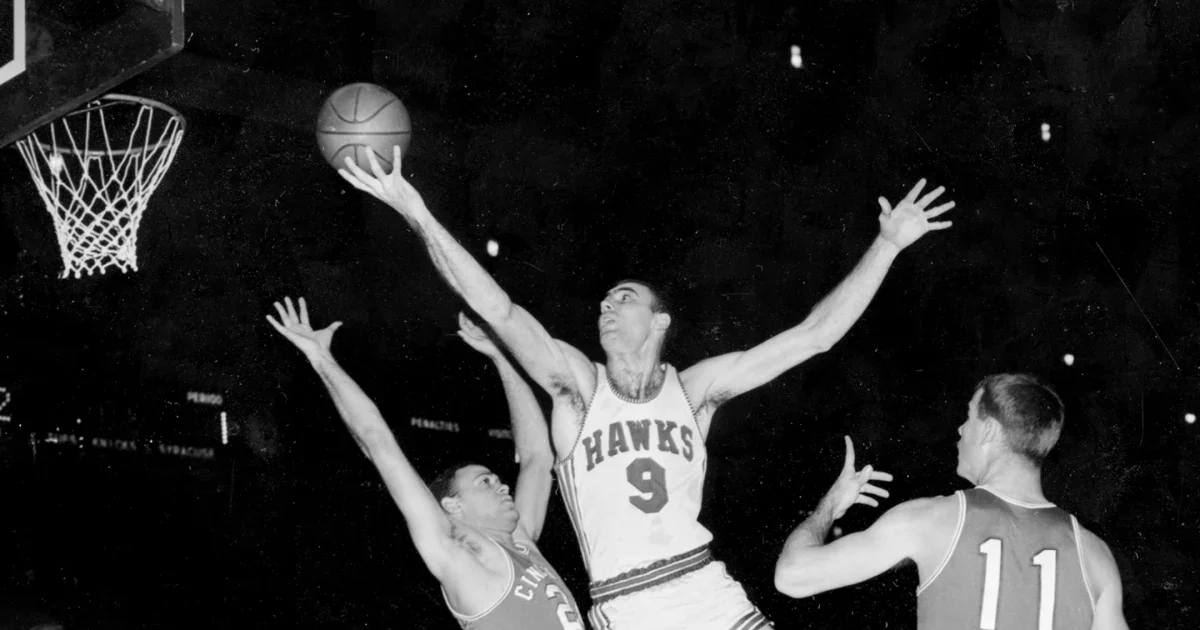
Remembering Bob Pettit: Honoring the Life and Legacy of an NBA Pioneer
Bob Pettit passed away today, September 24th, 2026 at the age of 93. He left behind a legacy stretching back to the NBA’s formative years. Before the modern power forward, before the enormous television contracts and before professional basketball became the worldwide spectacle it is today, Pettit was setting standards that future generations would chase.
Bob Pettit wasn’t simply one of the NBA’s earliest superstars. He was one of the players who helped build the foundation for the NBA we know today. (NBA.com)
Long before the NBA became a global league filled with versatile big men, massive television audiences, and multimillion-dollar superstars, Bob Pettit was helping establish what greatness looked like.
Born in Baton Rouge, Louisiana, in 1932, Pettit’s path to basketball immortality was far from guaranteed. He was cut from his high school varsity team as a sophomore before developing into a state champion and eventually becoming a star at LSU. With the Tigers, Pettit led the SEC in scoring in each of his three varsity seasons and helped LSU reach its first Final Four in 1953. His No. 50 became the first jersey number retired in any sport at LSU. (LSU Sports)
Selected second overall by the Milwaukee Hawks in the 1954 NBA Draft, Pettit quickly proved that his success would translate to the professional level. He averaged 20.4 points and 13.8 rebounds as a rookie, earning the 1955 NBA Rookie of the Year award. One year later, Pettit became the recipient of the NBA’s first regular-season Most Valuable Player award. He would capture the honor again in 1959. (NBA.com)
Pettit’s greatest team accomplishment came in 1958 with the St. Louis Hawks. Facing Bill Russell and the powerhouse Boston Celtics in the NBA Finals, Pettit delivered one of the defining performances of his career. He scored 50 points in Game 6, leading St. Louis to a 110-109 victory that secured the NBA championship. It remains the only championship in Hawks franchise history. (NBA.com)
By the time Pettit retired in 1965, his résumé was remarkable: two NBA MVP awards, 11 All-Star selections in 11 seasons, 10 All-NBA First Team selections, four All-Star Game MVP awards, two scoring titles and an NBA championship. He finished with 20,880 points and 12,849 rebounds while averaging an extraordinary 26.4 points and 16.2 rebounds per game. Most significantly, Pettit became the first player in NBA history to surpass 20,000 career points. (NBA.com)
But Pettit’s importance goes beyond statistics.
At 6-foot-9, Pettit helped create the blueprint for what would eventually become the modern power forward. At a time when big men were generally expected to remain near the basket, Pettit could face the rim and score from farther away while still dominating the glass. His combination of shooting, scoring, physical rebounding and mobility was unusual for a player his size. The Basketball Hall of Fame describes him as one of the first big men to play facing the basket, while the NBA has credited him with helping define the modern power-forward position. (The Naismith Basketball Hall of Fame)
In many ways, the versatility expected from today’s NBA forwards can be traced back to players like Pettit. The game has changed dramatically, but the idea of a big man being more than simply an interior player was something Pettit demonstrated decades before it became commonplace.
His life after basketball was impressive in its own right. Pettit returned to Louisiana and built a lengthy career in banking, investing and financial consulting. During his playing career, he had even worked in his family’s real estate and insurance business during NBA offseasons—a reminder of just how different life was for professional athletes during the league’s early years. He eventually co-founded financial consulting company Equitas Capital Investors and remained in the financial world for decades. (louisianalife.com)
Basketball, however, never disappeared from his life. Pettit remained closely connected to LSU and was honored with a statue outside the school’s basketball arena. His No. 9 was also retired by the Hawks, and he was selected to the NBA’s 25th, 35th, 50th and 75th Anniversary Teams. (NBA.com)
Bob Pettit may be gone, but his impact on basketball will live on for generations, forever remembered as a champion, a pioneer, and one of the NBA’s first true legends.
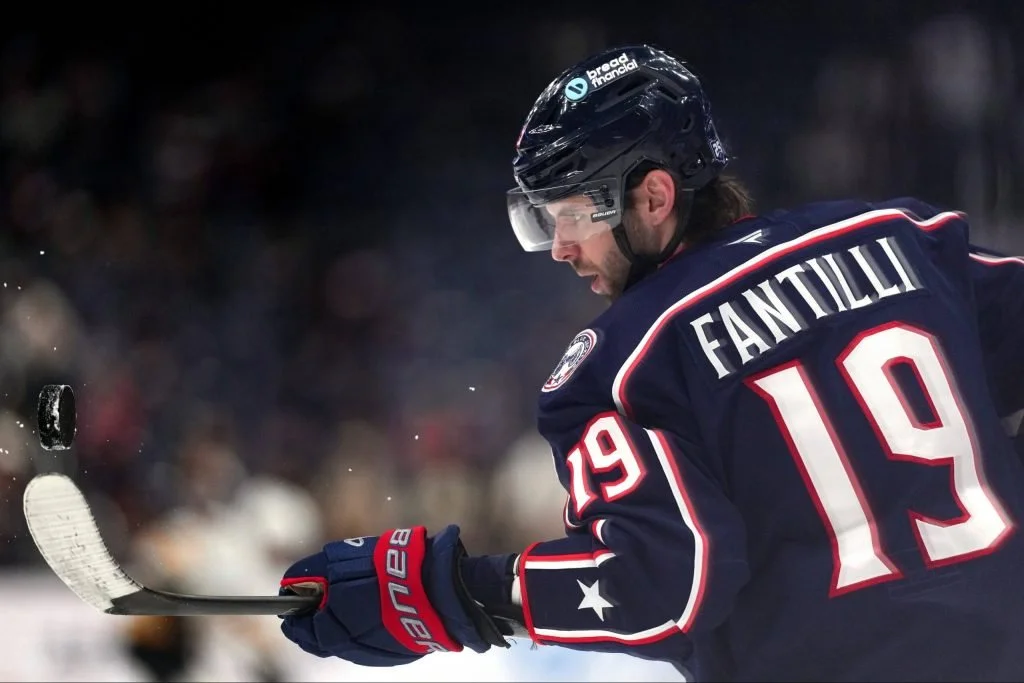
Adam Fantilli’s Contract Holdout Continues as Blue Jackets Training Camp Moves Forward
The Columbus Blue Jackets have begun training camp without arguably their most important young player, as star center Adam Fantilli remains unsigned amid an ongoing contract dispute.
Fantilli, a restricted free agent, did not report for the opening of Blue Jackets camp and will not participate until a new contract is reached. The 21-year-old and Columbus have spent months negotiating a long-term extension, but the two sides have yet to agree on Fantilli’s value. General manager Don Waddell has maintained that discussions have remained amicable and that he remains confident a deal will eventually get done. (NHL)
The situation has become more complicated following several massive contracts for other young NHL stars. Anaheim’s Leo Carlsson received a five-year, $90 million deal after the Ducks matched an offer sheet, while Cutter Gauthier signed a six-year extension carrying a $13.5 million annual cap hit. Waddell acknowledged that Carlsson’s deal changed the marketplace during negotiations with Fantilli. (NHL)
Fantilli has certainly built a strong case for a significant payday. Selected third overall in the 2023 NHL Draft, he has recorded 67 goals and 140 points through his first 213 NHL games. After scoring a career-high 31 goals in 2024-25, Fantilli followed it up with 24 goals and a career-best 59 points last season while playing all 82 games. (Reuters)
His absence is particularly significant considering the role Columbus planned for him this season. Fantilli was expected to open camp as the Blue Jackets’ No. 1 center alongside Kent Johnson and Kirill Marchenko, with head coach Rick Bowness planning to give him even more responsibility. Bowness also revealed that Fantilli called him before camp and emphasized that the young center still wants to be in Columbus. (NHL)
Now, the clock is beginning to matter.
Columbus opens its regular season on October 1 against the Buffalo Sabres, leaving increasingly little time for Fantilli to sign, join his teammates and prepare for the season. For a Blue Jackets organization attempting to end a six-year playoff drought, getting its franchise center back on the ice could be one of the biggest priorities before opening night. (NHL)
For now, both sides appear focused on finding a way to keep Fantilli in Columbus. However, the longer the contract standoff continues, the more questions it could create about his long-term future with the organization. Fantilli remains under team control as a restricted free agent, so a holdout does not mean an immediate departure, but failing to reach a deal that satisfies both sides could influence how he views his future when he eventually has greater control over where he plays.
Fantilli has the potential to become one of the faces of the Blue Jackets for years to come. Columbus now has to determine what that future is worth. If the two sides cannot find common ground, this contract dispute could eventually become about more than just this season — and Fantilli could explore other options when his contractual situation gives him the opportunity.
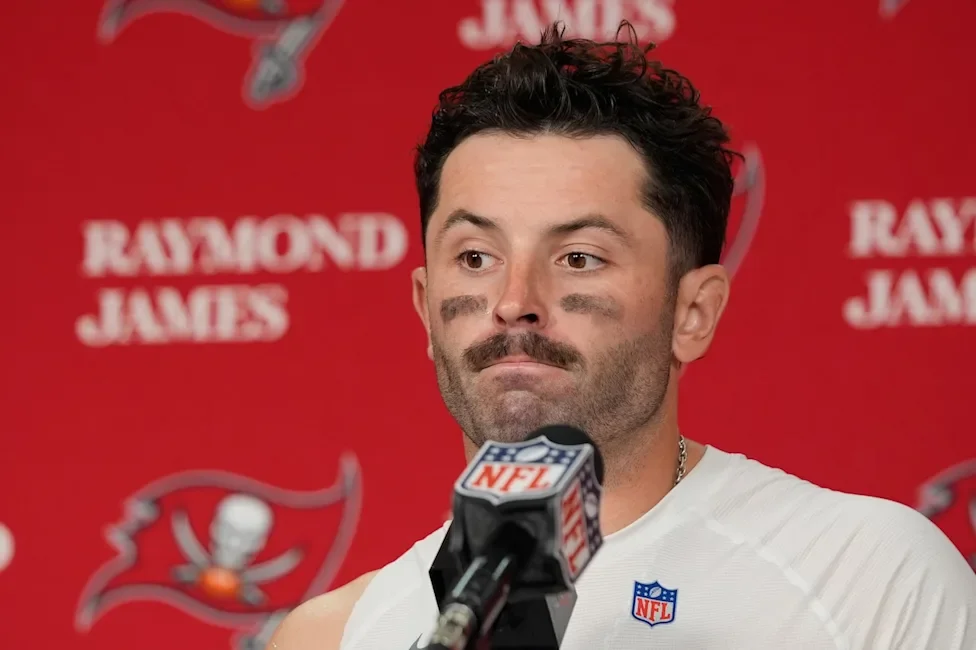
Browns Get the Last Laugh in Baker Mayfield’s Revenge Game
Baker Mayfield had another opportunity to get revenge against the franchise that once made him the No. 1 overall pick. Instead, his former team walked out of Tampa with the last laugh.
The Cleveland Browns defeated Mayfield and the Tampa Bay Buccaneers 23-19 on Sunday, earning their first victory of the season and improving to 1-1 after a disastrous opening week. Mayfield, who Cleveland selected first overall in the 2018 NFL Draft before eventually trading him in 2022, fell to 0-2 in his career against his former team.
Mayfield finished the afternoon 21-of-34 for 182 yards, one touchdown and one interception, but Cleveland’s defense made life difficult for its former quarterback. The Browns consistently generated pressure, sacking Mayfield three times and intercepting him in the first quarter.
On the other side, Deshaun Watson delivered one of his strongest performances in a Browns uniform, completing 24 of 30 passes for 238 yards, two touchdowns and no turnovers. Cleveland found itself trailing 16-6 during the third quarter before Watson connected with rookie Denzel Boston for a 55-yard touchdown. He later found Blake Whiteheart for a 17-yard score with 3:51 remaining, putting Cleveland ahead 23-19.
Then things got bizarre.
With Tampa Bay driving for a potential game-winning touchdown and reaching Cleveland’s 28-yard line at the two-minute warning, lightning and torrential rain forced the game into a two-hour, 12-minute weather delay. Players returned to their locker rooms while fans were instructed to seek shelter as Raymond James Stadium was hammered by the storm.
More than two hours later, Mayfield and the Buccaneers returned to the field with one final chance to steal the game. Tampa Bay advanced into the red zone, but Cleveland’s defense refused to break. A holding penalty helped push the Buccaneers backward before Mayfield’s fourth-down attempt for Emeka Egbuka fell incomplete, sealing one of the strangest Browns victories in recent memory.
A Completely Different Browns Team From Week 1
Perhaps the most encouraging part of the victory was how different Cleveland looked compared with its season opener.
The Browns entered Week 2 following an ugly 34-10 loss to the Jacksonville Jaguars, a game in which Cleveland fell behind 24-0 early in the second quarter. Against Tampa Bay, the Browns remained within striking distance throughout the first half, trailing only 9-6 at halftime before responding when the Buccaneers stretched their advantage to 16-6.
The improvement was especially noticeable offensively. Watson protected the football, Cleveland converted several crucial third downs during its eventual game-winning drive, and the Browns scored 17 points after falling behind by 10. The defense also responded after struggling in Week 1, producing pressure, forcing a turnover and ultimately making the biggest stop of the afternoon with the game on the line.
For Mayfield, the long-awaited revenge will have to wait.
For Cleveland, a season that looked concerning after just one week suddenly has some life. After enduring a 10-point deficit, their former franchise quarterback and more than two hours of brutal Florida weather, the Browns emerged from Tampa with a 23-19 victory and their first win of the 2026 season.
Jeremiah Smith Makes Ohio State History, Becomes Buckeyes’ All-Time Receiving Yards Leader
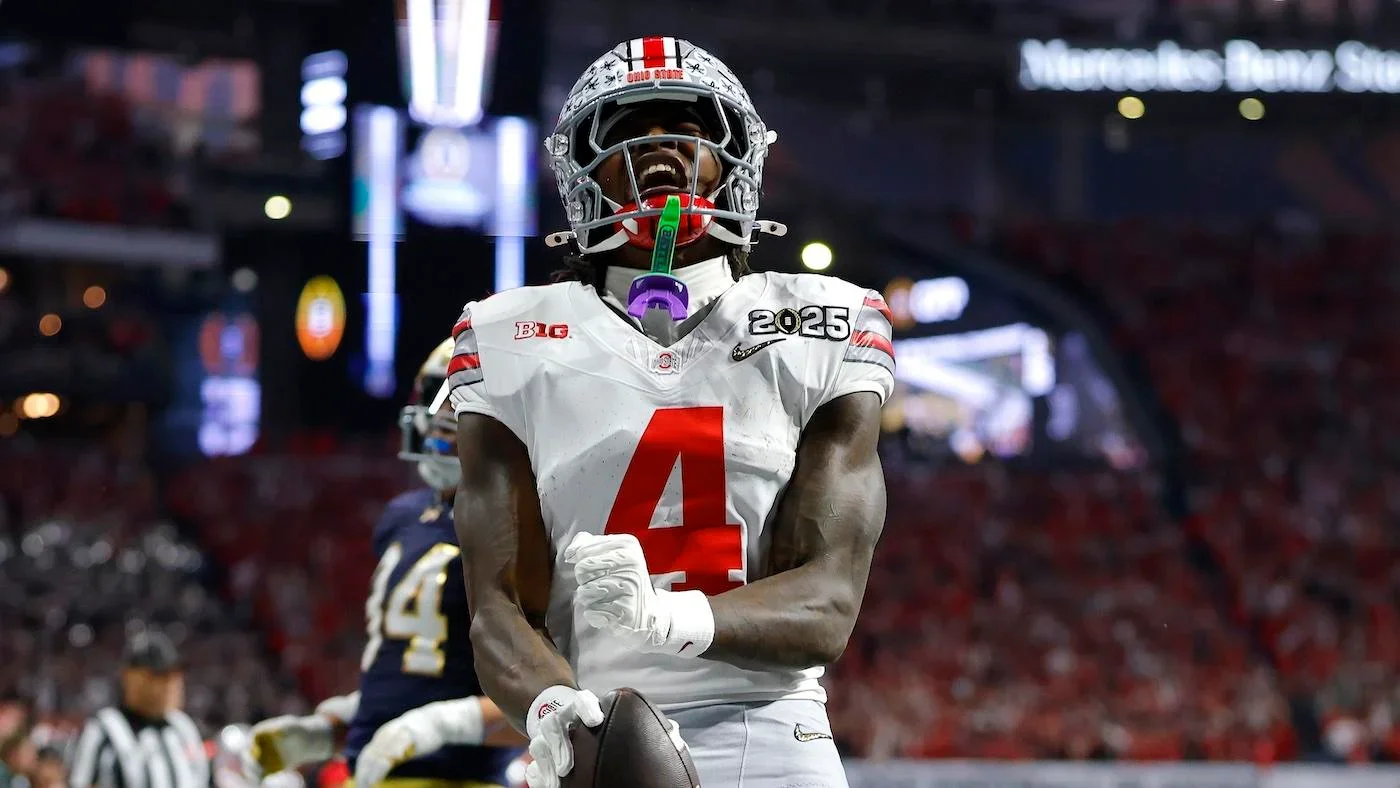
Jeremiah Smith has spent his Ohio State career rewriting the record books. Now, just three games into his junior season, the superstar wide receiver owns one of the biggest records of them all.
Smith became Ohio State’s all-time leader in career receiving yards during the Buckeyes’ 59-3 victory over Kent State on Saturday, surpassing former Ohio State receiver Michael Jenkins’ previous record of 2,898 yards.
He finished the game with five receptions for 85 yards, bringing his career total to 2,958 receiving yards. Even more impressive is how quickly Smith reached the milestone. The junior has needed only 33 games to establish himself as the most productive receiver by yardage in the history of a program known for producing NFL-caliber wideouts.
Smith arrived in Columbus in 2024 as one of the most highly anticipated recruits in the country and immediately lived up to the hype. As a true freshman, he caught 76 passes for 1,315 yards and 15 touchdowns while helping lead Ohio State to a national championship. His postseason included an unforgettable Rose Bowl performance against Oregon, where he recorded 187 receiving yards and earned Rose Bowl Offensive MVP honors.
There was no sophomore slump, either.
Smith followed his historic freshman campaign with 87 receptions for 1,243 yards and 12 touchdowns in 2025. His 87 catches ranked third in Ohio State single-season history, while his performance earned him unanimous All-American honors and his second consecutive Big Ten Richter-Howard Receiver of the Year award. Through his first two collegiate seasons, Smith accumulated 2,558 receiving yards and 27 touchdowns — both Big Ten records for a receiver over his first two years.
Now a junior, Smith has continued adding to an already remarkable résumé. Through Ohio State’s first three games of 2026, he has 21 receptions for 400 yards and three touchdowns, pushing his career numbers to 184 receptions, 2,958 receiving yards and 30 receiving touchdowns.
And he might not be finished rewriting Ohio State history.
Smith currently ranks fourth in program history with 184 career receptions, only 21 behind Emeka Egbuka’s school record of 205. His 30 career receiving touchdowns also leave him five behind Chris Olave’s Ohio State record of 35.
From national champion as a freshman to unanimous All-American as a sophomore and Ohio State’s career receiving-yardage leader as a junior, Smith has packed an extraordinary amount of production into less than three full seasons.
Ohio State has produced a long list of elite receivers — Cris Carter, David Boston, Michael Jenkins, Jaxon Smith-Njigba, Chris Olave, Garrett Wilson, Marvin Harrison Jr. and Emeka Egbuka among them.
When it comes to receiving yards, however, Jeremiah Smith now stands above them all.
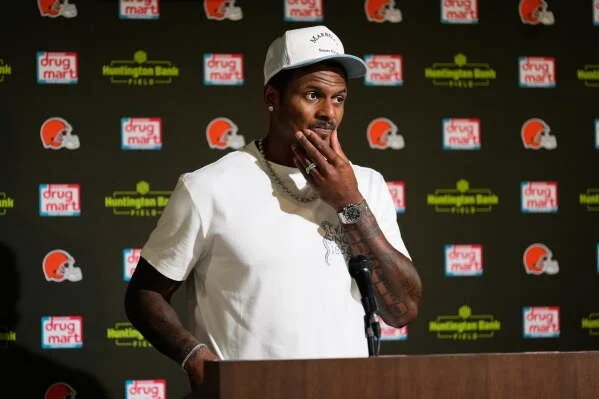
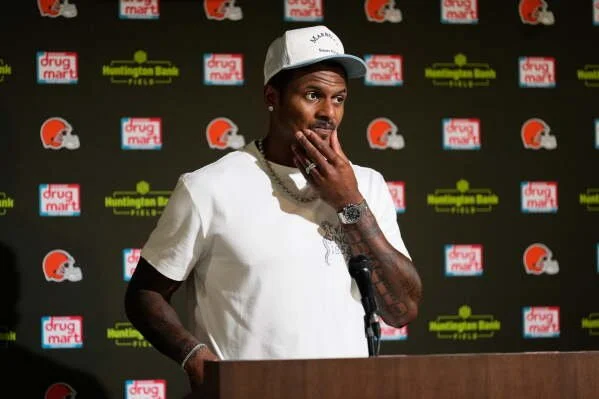
Deshaun Watson and the Browns Are Heading Toward an Unprecedented Cleveland Homecoming
The Cleveland Browns have dealt with quarterback controversies for most of the franchise’s return to the NFL. They have cycled through starters, draft picks, veterans, prospects and supposed franchise saviors for nearly three decades.
But this feels different.
The Browns aren’t simply dealing with another quarterback controversy in 2026. They’re dealing with a bizarre situation in which the quarterback the organization has chosen to start appears to have an increasingly fractured relationship with the very fan base he’s supposed to represent.
And when Deshaun Watson walks onto the field at Huntington Bank Field for Cleveland’s Week 3 home opener, the Browns may finally discover just how fractured that relationship has become.
A Quarterback Fighting His Own Fan Base
Watson had an opportunity this summer to begin repairing his relationship with Cleveland.
Instead, things seemingly got worse.
During Cleveland’s preseason game against Buffalo, Browns fans repeatedly booed Watson as he completed just 5 of 12 passes for 36 yards with an interception. Afterward, Watson called the reaction “disrespectful” and described it as “personal.” He also said that he receives more love from fans when playing on the road. (The Washington Post)
Watson later walked those comments back, explaining that his emotions had gotten the better of him. (The Washington Post)
But the damage had already been done.
For a quarterback desperately needing to rebuild trust with Cleveland, confronting the fan base was almost the worst possible response.
The frustration isn’t occurring in a vacuum. Cleveland traded three first-round picks to Houston for Watson in 2022 and immediately gave him a five-year, $230 million fully guaranteed contract. Since then, Watson has started only 19 games entering this season while dealing with suspension, injuries and inconsistent performance. (Cleveland Browns)
Then came Week 1.
Watson’s first regular-season start in nearly two years ended with Cleveland losing 34-10 to Jacksonville. The Browns fell behind 31-0 early in the third quarter, and Watson struggled to generate explosive offense before connecting with Denzel Boston on a late 46-yard touchdown. Head coach Todd Monken refused to pin the loss entirely on his quarterback, emphasizing that the problems extended throughout the team. (Reuters)
That’s fair.
But quarterbacks don’t exist in a vacuum either.
And when you’re Deshaun Watson in Cleveland, every performance carries the weight of everything that came before it.
The Strange Decision to Go Back to Watson
That’s what makes Cleveland’s decision even more fascinating.
The Browns didn’t stumble into this situation because they had nobody else.
They had Shedeur Sanders.
Sanders started seven games as a rookie in 2025, and although his statistical results were inconsistent—56.6% completions, 1,400 yards, seven touchdowns and 10 interceptions—he developed something Watson has struggled to establish in Cleveland:
A connection with the fan base. (Yahoo Sports)
That difference became impossible to ignore during the preseason.
Sanders received considerable support from Cleveland fans. Watson received boos.
Yet Cleveland went back to Watson anyway.
Monken’s explanation was straightforward: after evaluating the entire offseason, training camp, preseason and joint practices, the coaching staff believed Watson was ahead of Sanders and gave Cleveland the best opportunity to move the football and score points. (Cleveland Browns)
From a coach’s perspective, that’s the only calculation that ultimately matters.
But organizationally, it has created an incredibly awkward dynamic.
Cleveland is trying to revive a quarterback relationship that much of its fan base appears ready to leave behind while simultaneously keeping a young quarterback on the bench whom those same fans have embraced.
Even ESPN analyst Dan Orlovsky was stunned by the dynamic after Watson’s preseason comments. Orlovsky criticized Watson’s response to the fans and argued that the contrast between Cleveland’s feelings toward Watson and Sanders had become impossible to ignore. (Awful Announcing)
There is an important distinction, however: saying the team itself isn’t rallying around Watson requires more evidence.
Public reporting from this summer actually showed Watson and Sanders working out together with Browns teammates before training camp, and Watson had reportedly served as a mentor to Sanders during his rookie season. (Dawgs By Nature)
So this isn’t necessarily a locker-room mutiny.
It’s something stranger.
The organization and its fans appear to be moving in opposite directions.
Week 3 Could Be Unlike Anything We’ve Seen
And that’s what makes Cleveland’s Week 3 home opener so fascinating.
The Browns play their first two games of the season on the road before returning home to face Carolina. (Yahoo Sports)
That means Cleveland fans have been waiting.
Watson has already heard boos at Huntington Bank Field during the preseason.
Imagine the response when the games actually count.
If Watson returns to Cleveland struggling—and especially if the Browns return home winless—the atmosphere could become extraordinary.
NFL fans boo quarterbacks all the time. We’ve seen struggling quarterbacks booed off their own fields. We’ve seen former stars return as villains. We’ve seen fan bases demand backups.
But it’s difficult to remember many situations quite like this one.
Usually, the backup quarterback is popular because the starter is playing poorly.
In Cleveland, this goes much deeper.
Watson represents one of the largest investments the Browns have ever made. The franchise surrendered enormous draft capital and guaranteed $230 million believing he would finally solve the quarterback problem that had haunted Cleveland for decades.
Four years later, Cleveland is still searching for stability.
Meanwhile, Sanders represents something entirely different: youth, possibility and a potential future beyond the Watson era.
That contrast could make Week 3 feel less like a home opener and more like a referendum.
Every incompletion could produce murmurs.
Every three-and-out could bring boos.
And every mistake could bring the same name raining down from the stands:
“SHE-DEUR! SHE-DEUR! SHE-DEUR!”
If that happens, Monken and the Browns will face a problem that goes far beyond deciding which quarterback gives them the best chance to win.
They’ll have a starting quarterback attempting to lead an offense while potentially playing against the emotions of his own stadium.
The Browns Created This Situation
Ultimately, this isn’t exclusively a Deshaun Watson problem.
It’s a Cleveland Browns problem.
The Browns made the trade.
The Browns handed Watson the contract.
The Browns continued attempting to make the relationship work.
And in 2026, after Sanders spent a season developing and building support among Cleveland fans, the Browns made another decision:
Go back to Watson.
Maybe Watson plays well enough to quiet everything.
Winning has a remarkable ability to change the atmosphere surrounding an NFL team.
But if he doesn’t?
Week 3 could become one of the most uncomfortable home openers Cleveland has ever experienced.
Watson has already made it clear that he hears the boos.
Soon, he’ll have to walk back into the stadium producing them.
And if Cleveland’s season is already going sideways when he does, those preseason boos may sound like a whisper compared with what’s waiting for him.
The NHL’s Player Empowerment Era Has Arrived — And We’ve Seen This Story Before
NHL Stars Are Beginning to Take Control
For decades, the NHL has operated with an unwritten expectation: when a player signs a long-term contract, he is committing himself to that franchise for the foreseeable future. Trade requests certainly existed, but hockey culture generally encouraged players to keep frustrations behind closed doors and leave roster decisions to management.
That dynamic is beginning to change.
The NHL has entered what increasingly looks like its own era of player empowerment, with star players becoming more willing to use their status, contractual leverage and public voice to influence where they play.
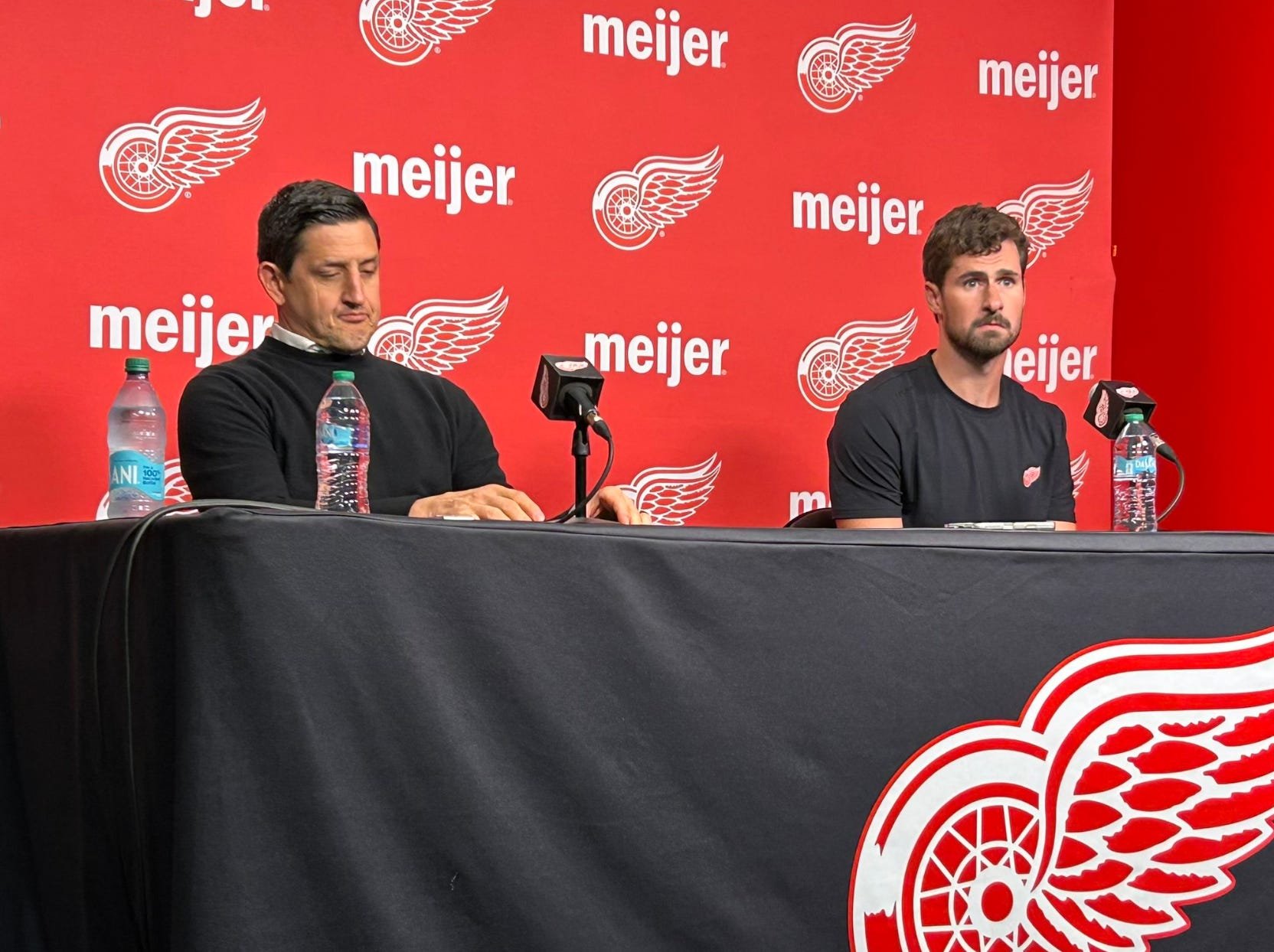
The 2026 offseason has pushed that trend into the spotlight. Ottawa captain Brady Tkachuk requested a trade and ultimately landed with the Florida Panthers, joining his brother Matthew. Former Vancouver captain Quinn Hughes was traded to Minnesota while still under contract with the Canucks. Detroit captain Dylan Larkin requested a trade despite having five years remaining on his contract, while Winnipeg superstar goaltender Connor Hellebuyck publicly confirmed his own request with five seasons remaining on his deal. Columbus winger Kirill Marchenko has also faced questions about his future after reports that he does not intend to sign a long-term extension with the Blue Jackets. (Sportsnet.ca)
The most significant part of this movement isn’t simply that players want to leave. It’s when they’re willing to ask.
Hellebuyck, for example, is entering only the third season of the seven-year, $59.5 million contract he signed with Winnipeg in 2023. Larkin similarly has substantial term remaining on his contract with Detroit. (NHL)
That challenges one of hockey’s traditional assumptions: that signing a long-term contract essentially settles a player’s future until the deal approaches expiration.
Increasingly, the contract establishes the financial relationship between player and team — but doesn’t necessarily guarantee that relationship will last for the entire term.
No-trade and no-movement clauses add another layer. A star who possesses one can potentially limit the number of destinations available to his current team. Even without one, a superstar can influence the market simply by making his intentions clear. Teams considering surrendering major assets for that player have to consider whether he actually wants to be there long term.
The NHL hasn’t suddenly become a league in which players can choose their teams at will. General managers still control the contracts, and a trade request does not obligate a franchise to make a deal. Detroit GM Steve Yzerman, for example, publicly declined to guarantee that Larkin’s request would be granted. (NHL)
But something important has changed.
NHL stars are becoming increasingly comfortable asking the question:
Why should the team be the only side that gets to decide when it’s time to move on?
The NBA Already Went Through This Revolution
If the NHL’s current situation feels unfamiliar to hockey fans, basketball fans have watched a version of this story unfold for nearly a decade.
The NBA’s modern player-empowerment movement didn’t begin with one transaction, but the period from 2010 through 2020 fundamentally changed expectations surrounding superstar movement.
In many ways, the foundation for the NBA’s modern player-empowerment era can be traced back to LeBron James and “The Decision” in 2010.
After seven seasons with his hometown Cleveland Cavaliers, James reached unrestricted free agency as arguably the biggest star in basketball. Rather than allowing his original franchise or traditional expectations to dictate the next chapter of his career, James took control of the decision himself.
On July 8, 2010, James announced that he was leaving Cleveland to join the Miami Heat, where he would team up with fellow stars Dwyane Wade and Chris Bosh. The move immediately created one of the most talented superstar combinations in NBA history and changed the balance of power across the league.
James had not demanded a trade or forced his way out of an existing contract. He had fulfilled his contractual obligations to Cleveland and earned the right to become an unrestricted free agent. But the significance of his decision went far beyond ordinary free agency.
LeBron demonstrated the enormous influence a superstar could have over the direction of the league by taking control of his own career and choosing to join forces with other elite players rather than waiting for a front office to build a championship roster around him. Miami reached four consecutive NBA Finals with James, Wade and Bosh, winning championships in 2012 and 2013. (NBA.com)
Kevin Durant’s 2016 decision was also an early symbol of the shift, even though it was not a trade request. Durant had fulfilled his contract with Oklahoma City and reached unrestricted free agency, giving him every contractual right to choose his next destination. He used that freedom to join a 73-win Golden State Warriors team featuring Stephen Curry, Klay Thompson and Draymond Green. (NBA.com)
The significance went beyond Durant changing teams. One of basketball’s biggest stars had prioritized control over his career path and chosen the situation he believed best suited him.
Then came Kyrie Irving.
In 2017, just one year after winning a championship alongside LeBron James, Irving requested a trade from Cleveland despite still having multiple years of contractual control remaining. He wanted an opportunity to become the focal point of his own team, and Cleveland eventually sent him to Boston. (NBA.com)
Kawhi Leonard followed with his exit from San Antonio in 2018. Jimmy Butler requested out of Minnesota shortly before the 2018-19 season and was eventually traded to Philadelphia. (NBA.com)
And once that door opened, the concept expanded.
James Harden became one of the clearest examples. He wanted out of Houston in 2020 and was traded to Brooklyn. Barely a year later, he wanted another change, this time resulting in a 2022 trade from Brooklyn to Philadelphia. Harden would eventually seek another move and land with the Los Angeles Clippers. (ESPN.com)
Bradley Beal demonstrated another form of empowerment. His contract with Washington contained a full no-trade clause, giving him extraordinary influence over potential destinations. When Washington eventually moved him in 2023, Beal waived that clause specifically to facilitate a trade to Phoenix. (NBA.com)
By that point, the NBA’s power structure had clearly evolved.
Signing a four- or five-year contract no longer necessarily meant a superstar would spend four or five years with that franchise. The contract guaranteed the player money and gave the team contractual rights, but elite players discovered that star power itself could become leverage.
A team could technically refuse a request.
The harder question was whether it wanted to spend an entire season dealing with an unhappy franchise player, constant media questions and uncertainty about the organization’s future.
That calculation helped turn the trade request from an extraordinary measure into a recognizable part of NBA roster building.
Is the NHL Becoming the NBA?
The NHL hasn’t reached the NBA’s level of player empowerment yet.
But the similarities are becoming difficult to ignore.
The early stages of NBA player empowerment weren’t simply about stars demanding trades. They represented a philosophical change in how athletes viewed contracts and careers.
Previous generations often treated the franchise as the central institution and the player as one part of it.
The modern superstar increasingly views his career as the central institution.
Teams have always been willing to trade players when management believes a different direction is best. Player empowerment applies similar logic from the athlete’s perspective: if organizations can decide that a relationship no longer works for them, why shouldn’t players be able to express the same conclusion?
That mentality is beginning to appear more openly in hockey.
And the situations involving Tkachuk, Hughes, Larkin, Hellebuyck and Marchenko could matter beyond the players themselves. Younger NHL stars are watching what happens.
If a captain can request a trade with several years remaining on his contract, another star may feel more comfortable doing the same thing. If one player successfully uses contractual leverage to influence his destination, others and their agents learn from it.
That is essentially how norms changed in the NBA.
What once seemed dramatic became precedent. Precedent became leverage. And leverage eventually became an expected part of superstar-team relationships.
There are still major differences between the sports. One NBA superstar can transform a roster more dramatically because only five players are on the court at once. NHL teams also operate under different roster, salary-cap and contractual dynamics. Hockey’s culture has traditionally placed greater emphasis on the team over the individual, something Colorado captain Gabriel Landeskog referenced when discussing the recent wave of NHL trade requests. He described the situation as different from the traditional expectation that players remain with the organizations controlling their rights until they earn free agency. (Sportsnet.ca)
That cultural resistance could slow hockey’s transformation.
It may not stop it.
Because player empowerment ultimately comes down to leverage, and elite NHL players have more leverage than the average player.
A franchise may hold the contract. But the player holds something equally important: his performance, his reputation, his willingness to stay and, in some cases, contractual control over where he can be traded.
The NBA learned that lesson during the late 2010s.
The NHL may be learning it now.
Brady Tkachuk, Quinn Hughes, Dylan Larkin, Connor Hellebuyck and Kirill Marchenko aren’t all identical cases, just as Durant, Irving, Leonard, Butler, Beal and Harden weren’t identical cases in basketball.
But collectively, they point toward the same larger change.
The balance of power between NHL stars and their organizations is shifting.
The question is no longer whether NHL players will ask for greater control over their careers.
It’s how far that control will eventually go.

Rick Bowness and The Future of The Columbus Blue Jackets
Dean Evason was fired early Monday Evening by the Blue Jackets front office. For many of the Columbus faithful, this was long overdue. There was an obvious, growing frustration within the organization as well as fans— as Columbus has a strong, young core with barely any results to show this season.
The Blue Jackets have just 11 regulation wins on the year—19 including overtime, and currently sit in last place in the Eastern Conference. Although the Eastern Conference is very competitive and a 19-19-7 record is nothing to be discouraged about, the frustration has mainly stemmed by the ways in which they are losing.
Columbus has 14 blown leads this season— 9 of which occurred in the 3rd period. The Blue Jackets lead the entire league in blown 3rd period leads. They have consistently put themselves in positions to win almost every night they touch the ice. However, the serious tactical and mental hurdles have been evident since the start and Evason just couldn’t find the solutions.
Evason had implemented several tactics, specifically the “dump and chase”. Although this tactic can be effective in certain systems, this strategy did not compliment Columbus’ roster and caused issues amongst players.
The Blue Jackets organization seemed to be contemplating the decision to move on from Evason behind closed doors for quite some time— as Rick Bowness was immediately announced new head coach in the very same statement as Evason’s firing. The front office announced Monday:
“We’ve relieved head coach Dean Evason and assistant coach Steve McCarthy of their duties and hired veteran NHL coach Rick Bowness as the club’s head coach.”
Bowness has coached the most games in NHL history as a head coach or assistant— 2,726 games in total. After retiring in 2024 with the Winnipeg Jets, Bowness was not expected to make a return to coaching. “There’s only a few teams I would’ve come out of retirement for and this is certainly one of them.”, Bowness stated in his opening press conference.
He clearly sees the potential of Columbus’ roster and wants to accomplish something special this season. Bowness has stressed the importance of playing with grit, confidence, and willingness to control possession— especially late in games.
With just 36 games left, Columbus is still looking to turn their season around and make a late playoff push. The Blue Jackets making the playoffs this year would be instrumental in retaining future UFA’s Mason Marchment and Charlie Coyle— as well as RFA’s Adam Fantilli, Cole Sillinger, and captain Boone Jenner heading into the 2026-2027 season.

Building Your Own Legacy: The Story of Curt Cignetti and The Indiana Hoosiers
In the modern era of college football, nothing is constant. Whether its NIL, the transfer portal, or coaches leaving for better opportunities— everything is changing.
The CFP era has turned into complete chaos since the NCAA began allowing players to make money through their name, image, and likeness in 2021. Athletic departments are going all in. Alumni all over the country are putting together millions, if not billions of dollars, to give their alma maters an edge.
Universities and their NIL funding collectives have set a standard— raise as much money possible in order to obtain as many 5-star recruits and players from the transfer portal as they can.
However, the most dominant team of the season has completely shocked everyone with their sudden success against the biggest brands in college football. The Indiana Hoosiers are by no means your traditional program. Since Curt Cignetti was hired by Indiana in late 2023, over 50 players have transferred to Indiana on scholarship.
This can be very common when a new coach arrives. A whole system must be set in place— coaching staff, trainers, and players that fit their preferred style. But what separates Cignetti from the rest is that he is not interested in seeking the most glamorous recruits and transfer portal prospects. Cignetti’s first 13 transfers going into Indiana all came from his former program, James Madison.
No disrespect to James Madison— but they are not the typical hub for the most talented players in the nation. Cignetti’s philosophy is about building the toughest and smartest team possible— regardless of the ratings— regardless of what the experts say. In fact, Indiana’s roster consists of zero 5-star recruits.
The NIL era has exposed many big brands in the sport. You simply cannot create a successful program by throwing money at the biggest names—expecting them to perform. Building a culture and developing players will always separate the good teams from the great ones.
Fernando Mendoza is a prime example of talent being developed, not bought. Mendoza was a 3-star recruit out of high school. He showed promising flashes at Cal, throwing 30 touchdowns in his first two seasons. Cignetti took a chance and offered Mendoza a spot on the Hoosiers roster through the transfer portal.
This season, Mendoza went off—throwing for 41 touchdowns and over 3,000 yards. He capped off the season by winning the Heisman Trophy along with becoming a Big Ten Champion.
Cignetti does not buy into the hype in regards to blue chip programs. The Indiana Hoosiers have statistically been one of the worst football programs of all time. Out of 136 D1 programs, the Hoosiers rank 127 in winning percentage (.424).
Last year in Cignetti’s first season, the Hoosiers finished 11-2 overall— with their only losses coming to the eventual National Champions and National Runner-ups in Ohio State and Notre Dame, respectively.
Most coaches would see this job as a stepping stone, in hopes to one day get an offer from the Penn States or Alabamas or Ohio States of the world. However, in October, Cignetti signed an 8-year extension with the Indiana Hoosiers. He is in it for the long haul. He wants to make Indiana a winner.
This season, the Hoosiers are currently 15-0 with a chance to bring home their first ever National Championship on January 19th against the Miami Hurricanes. Regardless of the outcome, Cignetti has put Indiana Football on the map— building his own legacy.

Four Divisional Titles On The Line For The 2025-2026 NFL Season Finale
Week 17 is officially in the books. As Week 18 approaches, all but two spots are locked for the 2026 NFL Playoffs. Apart from the final two spots, four divisional titles and seeding is still undetermined. The #1 seeds will be rewarded with first-round byes. Several teams must also play for higher seeding in order to gain home-field advantage.
Final Playoff Spots
The season finale will feature a winner-take-all game between divisional rivals. The AFC North title will be settled on Sunday Night Football between the Pittsburgh Steelers and the Baltimore Ravens. The NFC South title will likely be determined Saturday evening between the Carolina Panthers and Tampa Bay Buccaneers. However, there is a caveat. If first place Carolina wins, they obviously win the NFC South. In the scenario where Tampa Bay wins, they still need help on Sunday. The New Orleans Saints will take on the Atlanta Falcons. Although neither team can make the playoffs, the Falcons own the tie-breaker between Tampa. This means that if Atlanta wins, Carolina makes the playoffs regardless of a win or loss on Saturday.
Summary
Steelers Win = Pittsburgh makes Playoffs
Ravens Win = Baltimore makes Playoffs
Panthers Win OR Falcons Win = Carolina makes Playoffs
Buccaneers Win AND Falcons Lose = Tampa Bay makes Playoffs
#1 Seeds
The NFC #1 Seed is simple. The Seattle Seahawks will play the San Francisco 49ers for a winner-take-all game to determine not only the #1 seed but also the NFC West title. Similarly, this exact scenario happened last year between NFC North rivals, in which the Detroit Lions defeated the Minnesota Vikings for the #1 seed and division title.
Three teams can claim the AFC’s #1 seed depending on the outcomes in Week 18. Here are the scenarios.
The current first place Denver Broncos control their own destiny. They will clinch the #1 seed and a first-round bye with a win on Sunday against the Los Angeles Chargers. However, if the Broncos lose, the second place New England Patriots will own the top seed with a win against the Miami Dolphins. The third place Jacksonville Jaguars path is not nearly as simple and requires three outcomes. They must win Sunday against the Tennessee Titans along with Broncos’ and Patriots’ losses. Although, this dream scenario for the Jaguars could turn into a nightmare with a loss/tie and a Texans’ win, as Houston would win the AFC South title outright.
Summary
Broncos Win = Denver #1 Seed
Patriots Win AND Broncos Loss = New England #1 Seed
Jaguars Win AND Broncos/Patriots Loss = Jacksonville #1 Seed/AFC South Title
Texans Win AND Jaguars Loss/Tie = Houston AFC South Title

LeBron James Scoring Streak Ends. Lakers Still Win In Dramatic Fashion.
LeBron James’ scoring streak of 10 points or more ended Thursday Night in Toronto at 1,297 games. With Luka Dončić out, the Lakers offensive scheme shifted with Austin Reaves as the 1st option and LeBron James as the 2nd. Reaves had another outstanding performance with 44 points and 10 assists. On the other hand, James recorded a poor shooting night from the field making just 4 of his 17 shots (0/5 from the 3-point line). He did register 11 assists and no turnovers but the Raptors ultimately held James to just 8 points (last regular season game in single digits since Jan. 5, 2007).
However, the most notable play of the night came on James’ 11th and final assist. With the score tied at 120, the Raptors double-teamed Austin Reaves. Reaves fed LeBron the ball with 4 seconds left. James drove to the basket and unexpectedly passed to Rui Hachimura in the corner. Hachimura let it fly and sunk the three, leaving Scotiabank Arena stunned.
The Raptors ended the streak but the Lakers still came away with the win 123-120. Most viewers were expecting James to take the final shot in the dying seconds of the game to potentially salvage the streak. In poetic fashion, LeBron made the right play and passed to the open shooter, something he is often criticized for. When asked post-game, Hachimura stated, “(LeBron) told me right before this, I got you. It’s going to come to you”.
With James essentially being the 3rd option most nights when Luka is on the court, the streak had become an ongoing distraction. In his post-game interview, LeBron seemed to be more relieved rather than disappointed. James was asked about his feelings on the streak ending. His response was simply, “None. We won”.