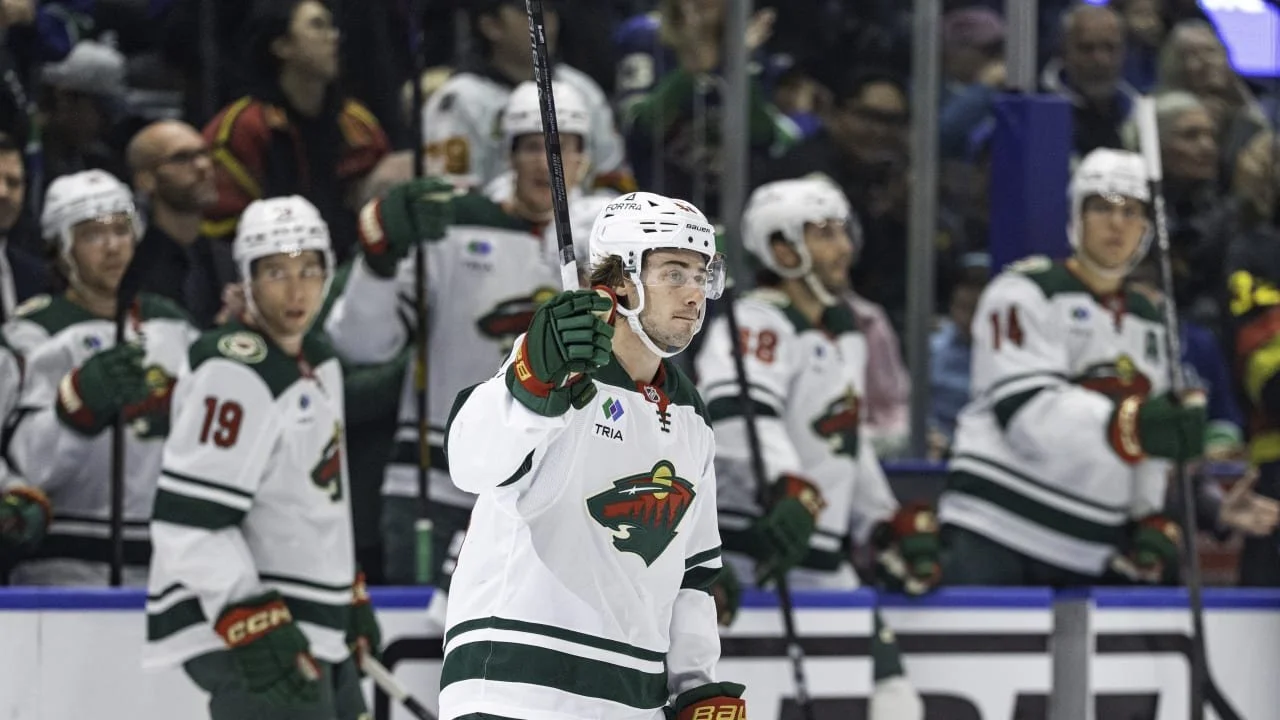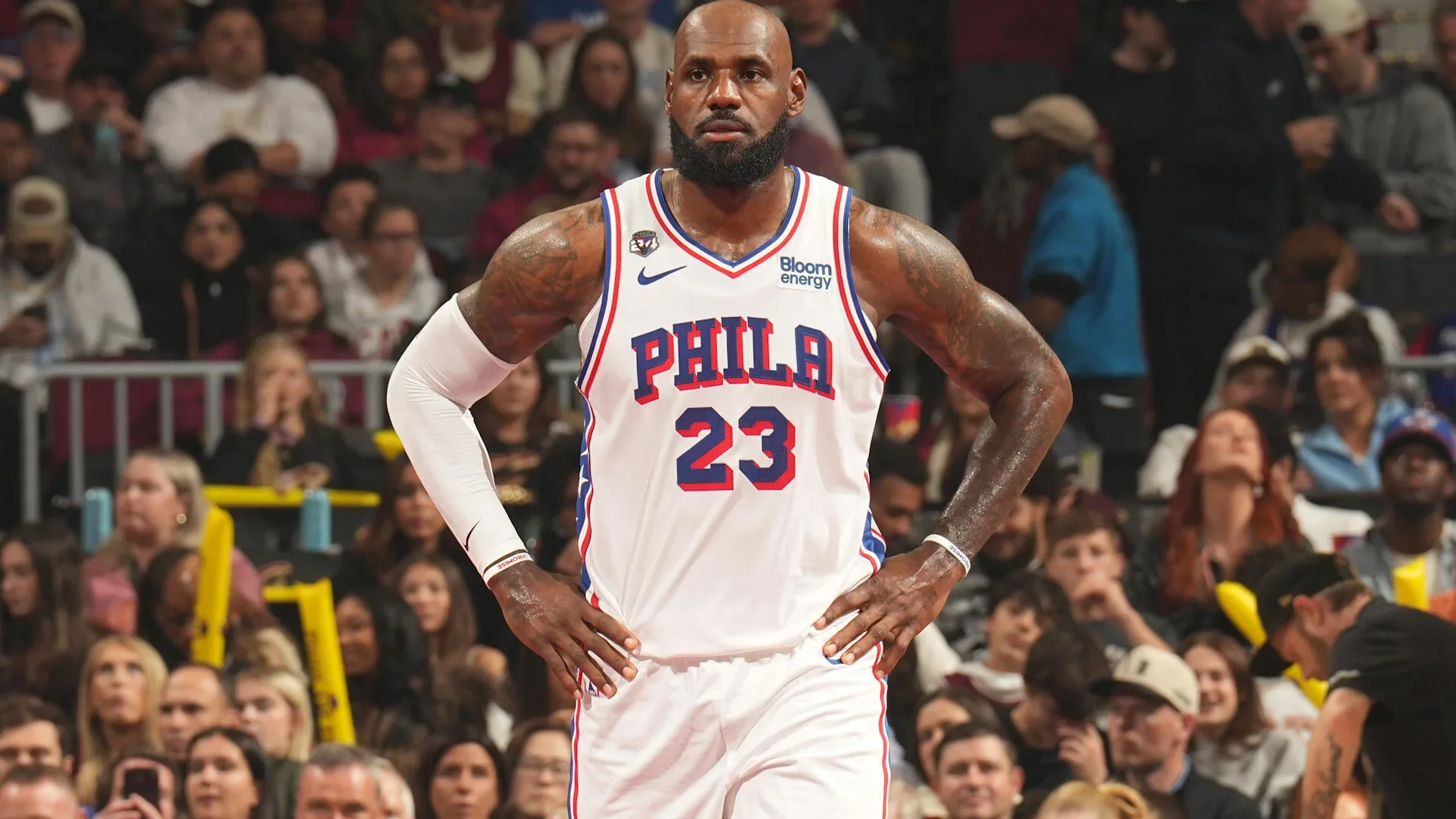
Cavaliers Dominate 76ers in NBA Cup as LeBron James Struggles in Return to Cleveland
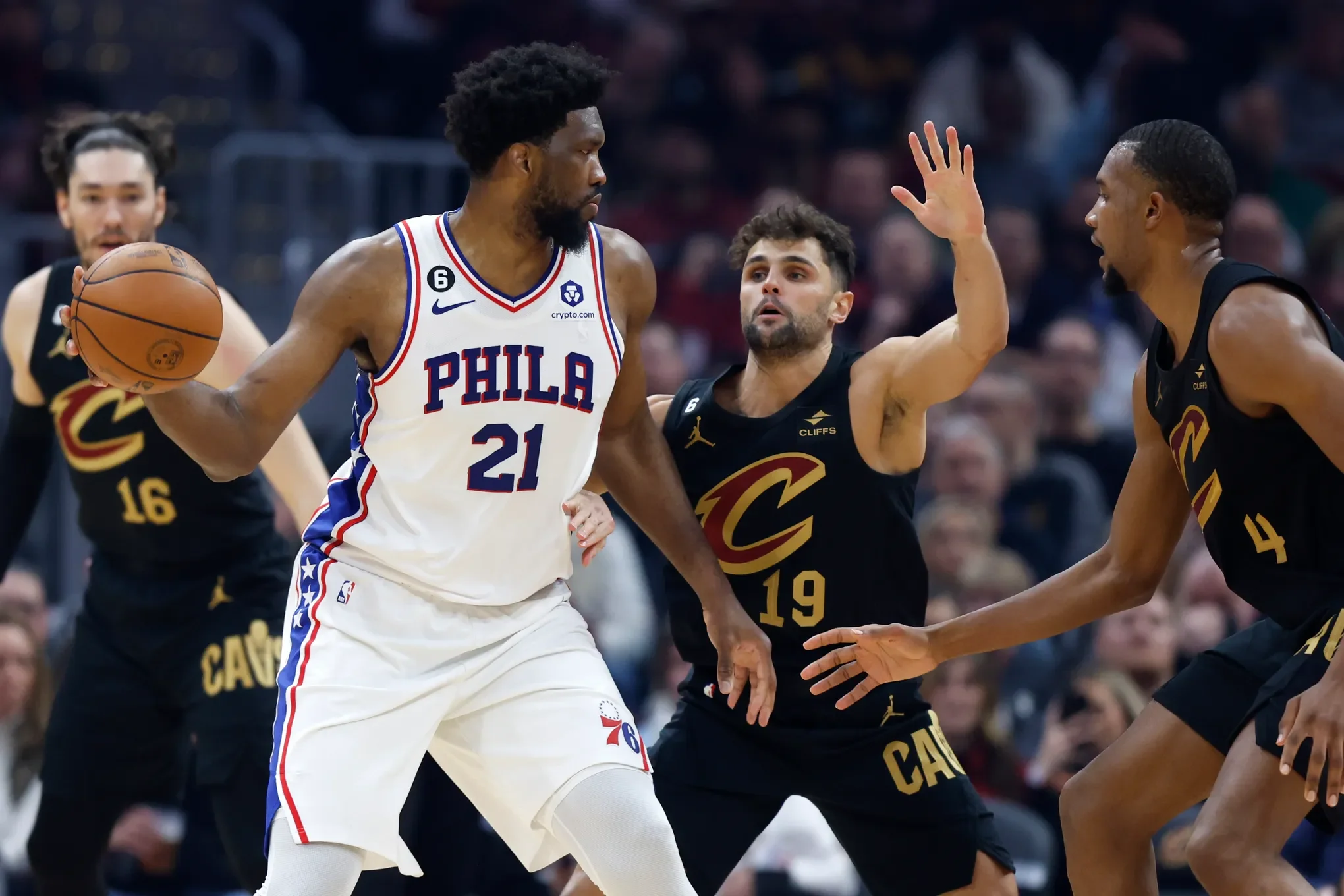
CLEVELAND, Ohio — LeBron James returned to the city where his NBA career began Friday night, but the Cleveland Cavaliers made certain that his homecoming would not end in celebration. Behind a balanced offensive performance and an impressive defensive effort, Cleveland defeated the Philadelphia 76ers 119-95 at Rocket Arena in Emirates NBA Cup group play.
The victory was particularly significant for a Cavaliers team looking to regain momentum after an inconsistent opening stretch of the season. Cleveland improved to 5-4 while handing Philadelphia just its second loss of the year, snapping the 76ers’ five-game winning streak and improving to 1-0 in NBA Cup group play. (NBA)
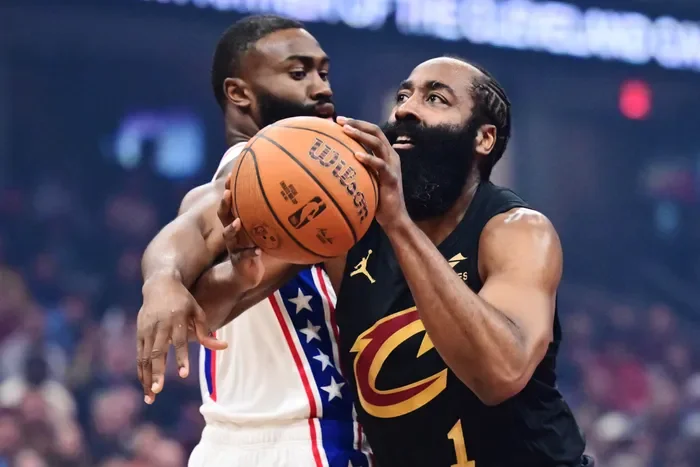
Donovan Mitchell led Cleveland with 23 points, eight assists and seven rebounds, while Evan Mobley contributed 22 points. James Harden added 17 points against his former team as the Cavaliers controlled much of the contest despite facing one of the Eastern Conference’s most talented rosters. (AP)
However, the biggest storyline entering Friday’s matchup was not Cleveland’s recent struggles or Philadelphia’s impressive start. It was the return of the most accomplished player in Cavaliers franchise history, now wearing a 76ers uniform.
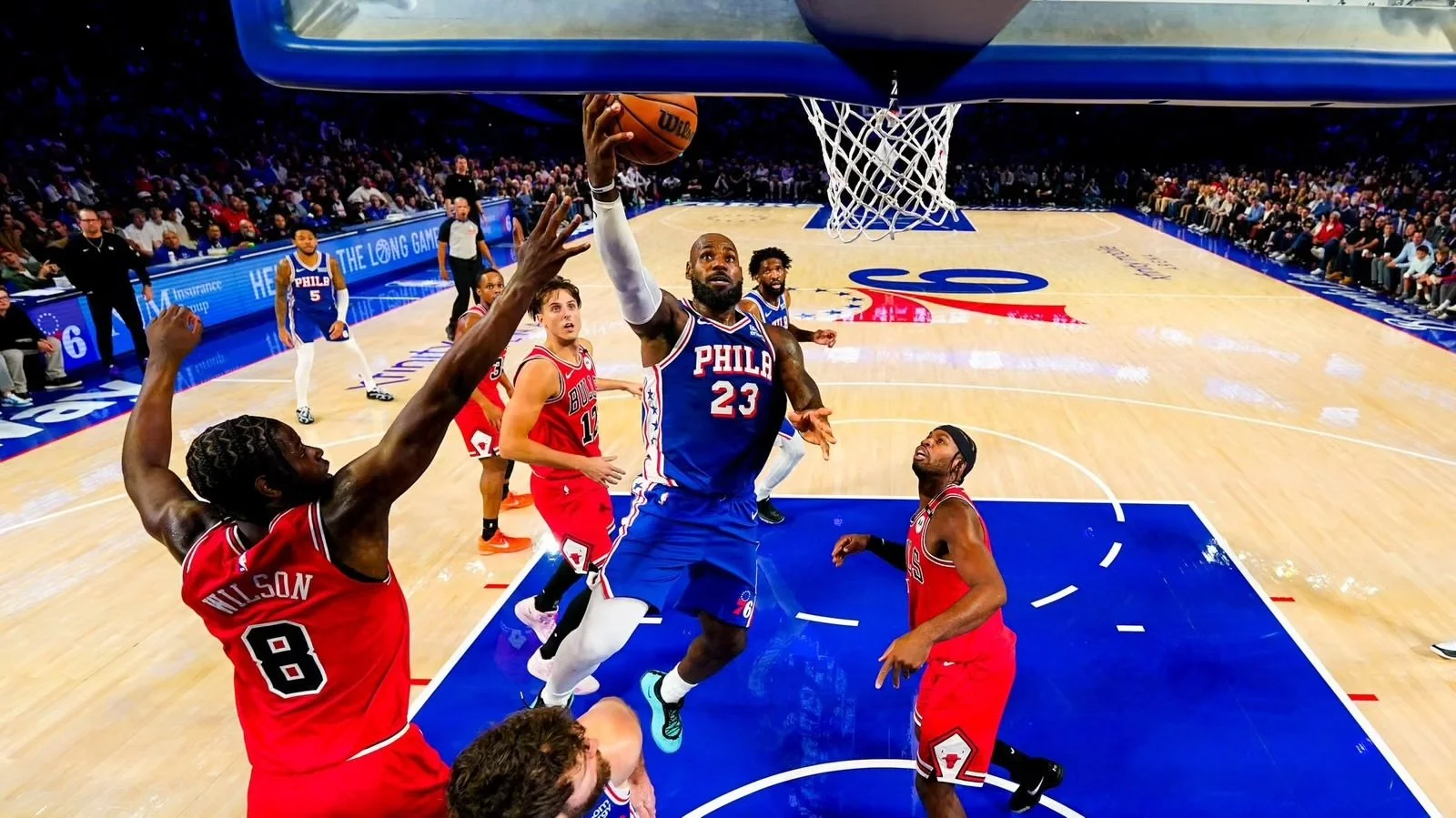
LeBron James Returns to Cleveland, but Struggles Against Former Team
For the first time since joining Philadelphia during the offseason, James returned to Cleveland as an opposing player. The Akron native, who spent 11 seasons with the Cavaliers across two separate tenures, remains one of the most important figures in Cleveland sports history.
James famously delivered the Cavaliers their first NBA championship in 2016, leading Cleveland back from a 3-1 deficit against the Golden State Warriors in the NBA Finals. The championship ended a 52-year major professional sports title drought for the city and permanently established his legacy in Northeast Ohio.
Friday’s atmosphere reflected that complicated but enduring relationship. Fans throughout Rocket Arena wore James jerseys representing different stages of his career, including his years with Cleveland, Miami and Los Angeles. He received an enthusiastic reception during introductions, although some fans booed when he touched the basketball during the first half. (PhillyVoice)
Unfortunately for James, the performance itself was among his most difficult appearances in Cleveland.
The 42-year-old finished with just eight points on 3-of-12 shooting, missing all four of his three-point attempts while committing six turnovers. He played approximately 31 minutes before exiting late in the fourth quarter with the outcome already decided.
It marked only the 10th single-digit scoring performance of his 24-year NBA career in the regular season. More remarkably, it was his first time scoring fewer than 10 points in a regular-season game in Cleveland after 396 consecutive such appearances reaching double figures. (AP)
The contrast was difficult to overlook. For more than a decade, Cleveland fans watched James dominate opponents inside the same building. On Friday, they watched their own team prevent him from finding an offensive rhythm.
Cavaliers Take Control Behind Mitchell and Mobley
While James struggled, Cleveland’s current stars delivered the kind of performance the organization has been looking for early in the season.
Mitchell controlled the offense with his combination of scoring and playmaking, finishing with 23 points and eight assists. His ability to create opportunities for teammates helped Cleveland maintain offensive balance throughout the night.
Mobley was equally important, finishing with 22 points while shooting 8-of-13 from the field, including an impressive 3-of-4 from three-point range. His offensive versatility created problems for Philadelphia’s defense, particularly when he stretched the floor or attacked around the basket. (SI)
Cleveland established control early, taking a 33-22 advantage after the first quarter. The Cavaliers continued applying pressure in the second, building a 46-30 lead following an alley-oop dunk from Mobley.
Philadelphia managed to keep the game competitive for stretches, but Cleveland repeatedly answered whenever the 76ers threatened to close the gap.
The Cavaliers entered halftime leading 62-54 before outscoring Philadelphia 29-20 in the third quarter. Cleveland carried a 91-74 advantage into the fourth and eventually extended its lead to as many as 25 points before securing the 24-point victory. (AP)
Perhaps most encouraging for Cleveland was the team’s effort on the glass and its production throughout the lineup.
Despite playing without starting center Jarrett Allen because of a bruised right knee, the Cavaliers outrebounded Philadelphia by 14. Mario Hezonja contributed 13 points and 10 rebounds off the bench, while Peyton Watson added nine rebounds in his return from a hamstring issue.
Seven Cavaliers players finished in double figures, illustrating the balanced offensive production that allowed Cleveland to maintain control even without relying exclusively on Mitchell. (NBA)
Philadelphia’s Star-Studded Lineup Falls Flat
The 76ers entered Friday’s matchup with an 8-1 record and one of the most intriguing rosters in the NBA.
Philadelphia’s offseason additions of James and Jaylen Brown alongside Joel Embiid and Tyrese Maxey created enormous expectations for a franchise seeking another championship.
However, the team’s offensive struggles against Cleveland demonstrated that even an exceptionally talented lineup can experience difficulties when its biggest stars cannot establish consistency.
Brown led Philadelphia with 20 points, while rookie VJ Edgecombe contributed 19 and Maxey finished with 17.
Embiid endured an especially difficult evening, missing all nine of his field-goal attempts and finishing with just six points, all from the free-throw line.
Philadelphia shot only 36.5% from the field and converted 10 of its 40 three-point attempts. The combination of poor perimeter shooting, struggles around the basket and Cleveland’s rebounding advantage prevented the 76ers from generating sustained offensive momentum. (AP)
Although Philadelphia remains 8-2 and among the Eastern Conference’s early contenders, Friday’s performance provided a reminder that assembling elite individual talent does not automatically translate into consistent team execution.
The Cavaliers, meanwhile, demonstrated what can happen when their defense, rebounding and offensive balance operate together.
Cleveland Opens NBA Cup Play With Statement Victory
Beyond the emotional significance of James’ return, Friday’s matchup carried important implications for the NBA Cup.
Cleveland improved to 1-0 in group play while Philadelphia fell to 1-1. With point differential serving as a potential tiebreaker in the tournament, the Cavaliers’ 24-point margin could prove valuable as the group stage progresses. (NBA)
The win also provided a needed response following consecutive losses to the Oklahoma City Thunder.
Cleveland entered the season with expectations of competing among the Eastern Conference’s best teams, but its uneven start had raised questions about consistency. Friday’s performance offered evidence of the team’s potential when Mitchell and Mobley receive contributions from the supporting cast.
The Cavaliers will have little time to celebrate, however, as they return to Rocket Arena on Saturday to face the New York Knicks. Philadelphia will attempt to bounce back Sunday on the road against the Chicago Bulls. (AP)
A Familiar Face, but a Different Cleveland Team
James’ return was always going to be the defining storyline entering Friday night. His relationship with Cleveland extends far beyond basketball, and his contributions to the franchise remain an essential part of the city’s sports history.
But the Cavaliers ensured that the evening would ultimately be remembered for their own performance.
Mitchell and Mobley led an impressive offensive effort, Cleveland’s defense limited one of the league’s most talented teams, and the Cavaliers earned their most convincing victory of the young season.
For James, it was a disappointing homecoming in a building where he produced countless memorable performances.
For Cleveland, it was an opportunity to demonstrate that the franchise’s future belongs to the players currently wearing wine and gold.
And on Friday night, those players delivered.
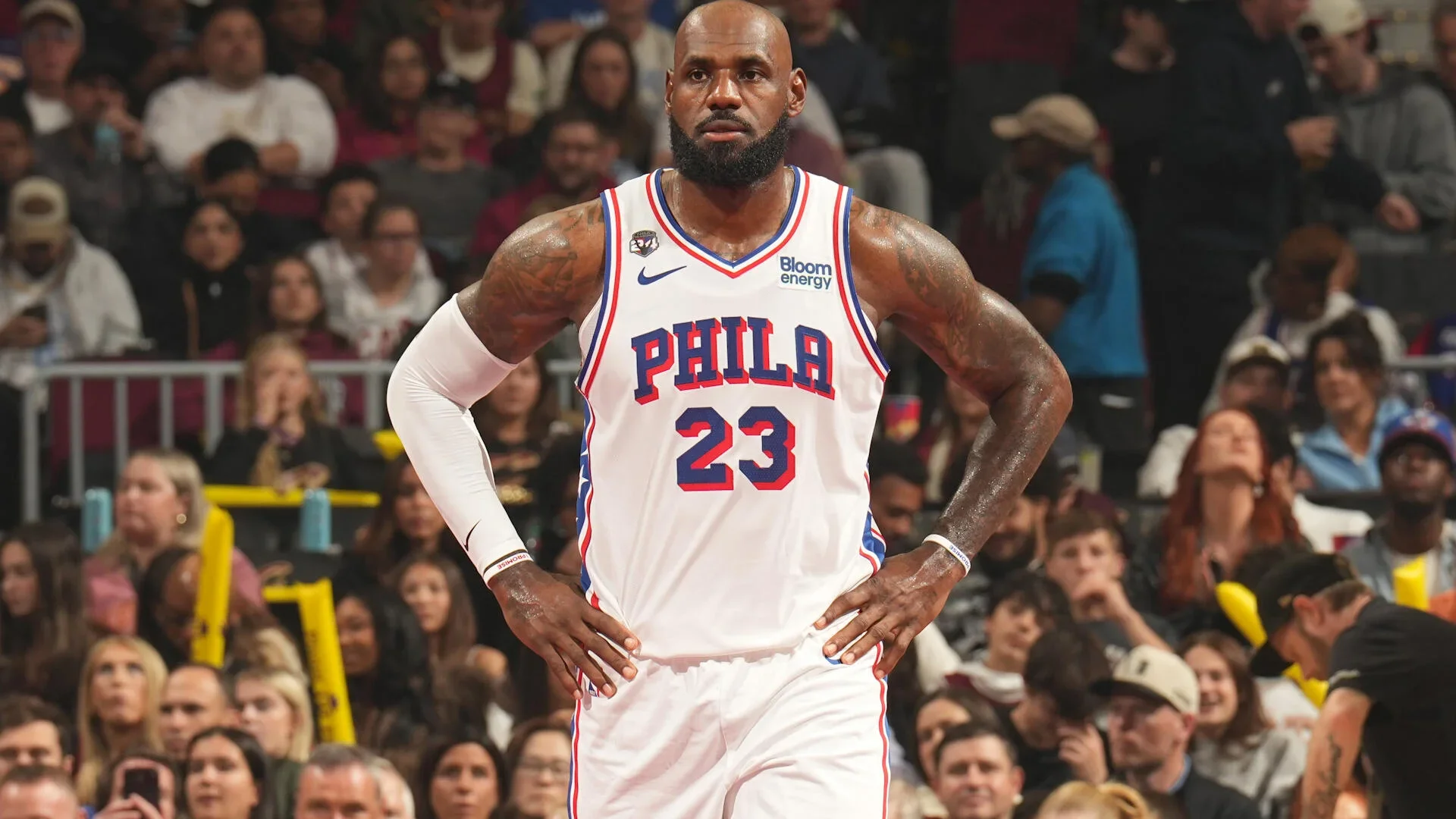
Red Wings Continue Moving Forward Without Larkin, Defeat Panthers 5-3 in Impressive Road Victory
SUNRISE, Fla. — The Detroit Red Wings are continuing to prove that their season will not be defined by the uncertainty surrounding captain Dylan Larkin. Despite the ongoing situation involving their longtime leader, Detroit secured an impressive 5-3 victory over the Florida Panthers on Monday night at Amerant Bank Arena, earning its third win in four games.
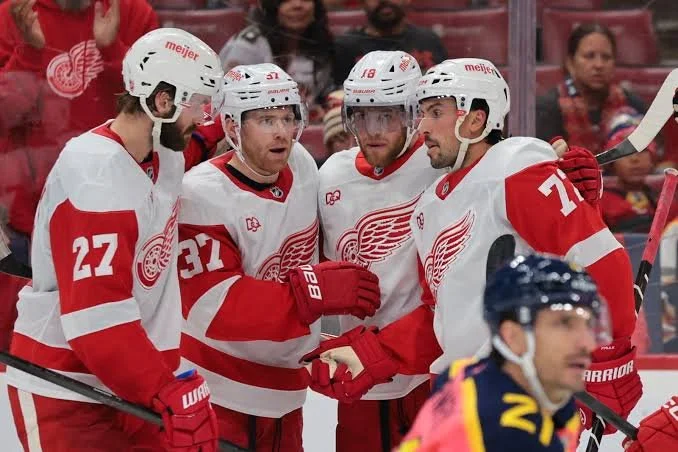
Justin Faulk and Michael Brandsegg-Nygård scored just 45 seconds apart early in the third period, helping Detroit pull away from a Florida team that entered the contest riding a three-game winning streak. Carter Mazur, Alex DeBrincat and Emmitt Finnie also scored for the Red Wings, while goaltender Daniil Tarasov made 23 saves against his former team.
The victory improved Detroit’s record to 7-5-3 through 15 games, giving the Red Wings 17 points in an increasingly competitive Atlantic Division. More importantly, it provided another encouraging indication that Detroit’s remaining roster is capable of competing despite the absence of one of its most important players. (NHL)
Detroit Takes Control in the Third Period
The Red Wings wasted little time establishing themselves against Florida, opening the scoring just over five minutes into the first period.
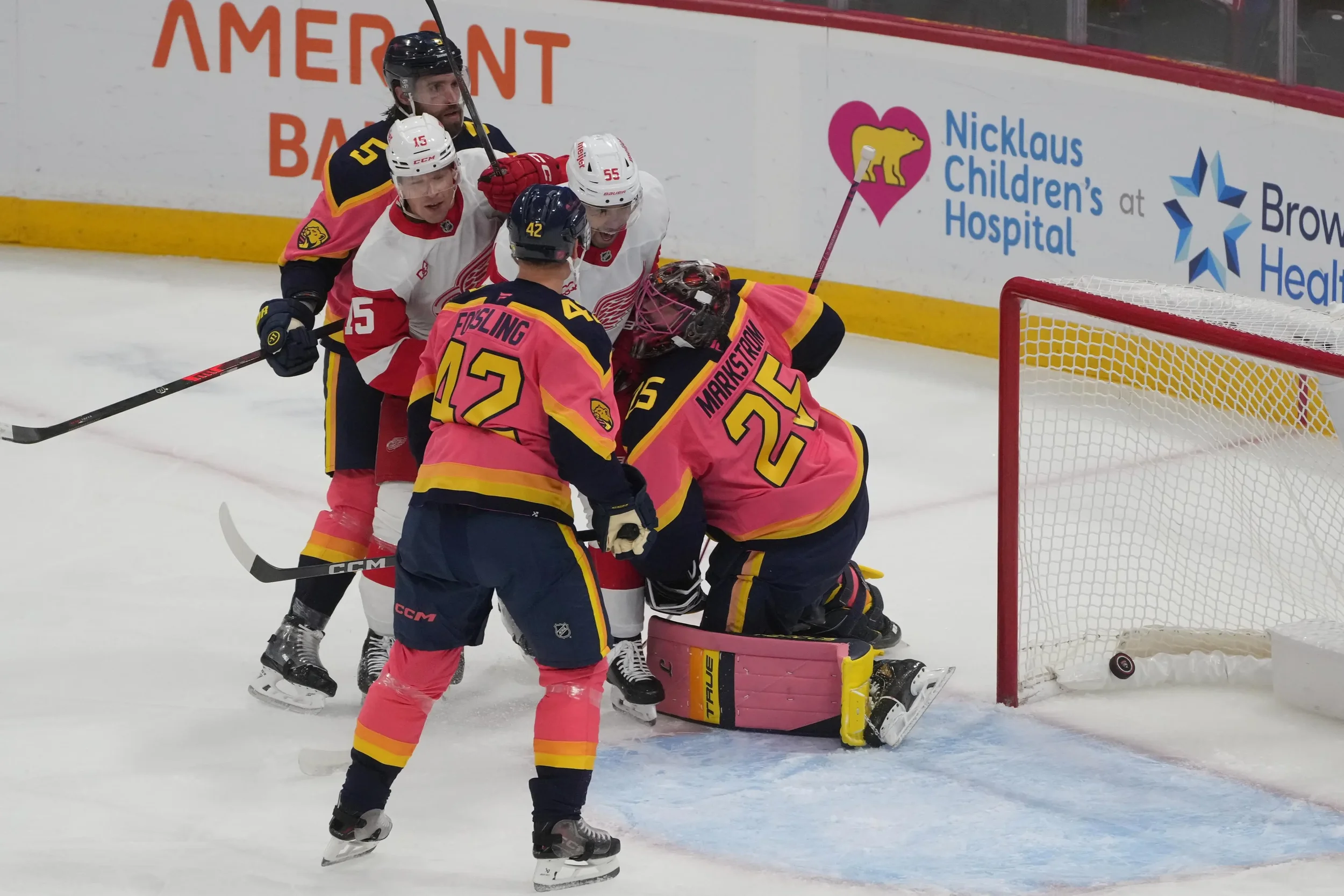
Mazur recorded his first career NHL goal at the 5:26 mark, collecting a puck along the boards following a play from Moritz Seider before firing a wrist shot past Panthers goaltender Jacob Markstrom. The milestone was particularly meaningful for the 24-year-old forward, who has dealt with injuries throughout his development.
Florida responded later in the opening period when Sam Reinhart scored his eighth goal of the season, tying the contest at one.
Detroit regained the advantage early in the second period when DeBrincat finished an odd-man rush for his seventh goal of the campaign. Viktor Arvidsson delivered the primary assist, finding DeBrincat with an opportunity to beat Markstrom.
However, the Panthers refused to go away. Defenseman Aaron Ekblad scored a shorthanded goal late in the second period, sending the teams into the final intermission tied 2-2.
The decisive stretch came almost immediately after the third period began.
Faulk scored on the power play at 2:08, giving Detroit a 3-2 advantage. Just 45 seconds later, Brandsegg-Nygård capitalized on a pass from Lucas Raymond, extending the lead to two goals and putting the Panthers in a difficult position.
Florida made one final push when Sam Bennett scored with an extra attacker late in regulation, cutting the deficit to 4-3. However, Finnie sealed the victory with an empty-net goal in the closing seconds.
Detroit finished with five different goal scorers, while Faulk and Brandsegg-Nygård each recorded two points. Andrew Copp and Seider contributed two assists apiece. (NHL)
Red Wings Continue Adjusting to Life Without Dylan Larkin
While Monday’s victory was significant on its own, the circumstances surrounding Detroit’s roster have made the team’s recent performances particularly noteworthy.
The Red Wings remain without longtime captain Dylan Larkin, who was suspended without pay on October 29 after the organization announced that his representative had informed management he would no longer play for Detroit.
The situation represents an unusual development for an organization that has relied heavily on Larkin’s leadership and offensive production throughout much of the past decade.
Larkin, a Michigan native and former first-round selection by Detroit in 2014, has spent his entire NHL career with the Red Wings. His absence leaves a substantial void, both in the team’s offensive structure and in the dressing room.
Entering the current situation, Larkin had accumulated 649 career points in 818 games with Detroit, including six points through his first 10 appearances this season.
With his future increasingly uncertain and a potential trade remaining unresolved, the Red Wings have been forced to make adjustments earlier in the season than anticipated. (Inside the Rink)
Yet the team’s response has been encouraging.
Rather than allowing the off-ice uncertainty to derail their season, Detroit has continued finding contributions throughout its lineup.
DeBrincat and Raymond remain important offensive pieces, while younger players such as Finnie, Brandsegg-Nygård and Mazur have been given opportunities to assume larger responsibilities.
The development of Detroit’s younger players could become one of the defining storylines of the season, particularly if Larkin’s absence extends indefinitely.
Replacing an established first-line center is not something an organization can accomplish through one player alone. Instead, Detroit must rely on improved depth, balanced scoring and consistent defensive performances to compensate for the production it has lost.
Monday’s victory demonstrated how that approach can succeed.
Young Players Providing an Unexpected Boost
Perhaps the most encouraging aspect of Detroit’s recent performances has been the emergence of its younger contributors.
Finnie has already scored seven goals this season, establishing himself as an important offensive presence during the opening month. Brandsegg-Nygård added his third goal of the campaign Monday, while Mazur reached an important personal milestone with his first NHL goal.
For a franchise that has spent several seasons attempting to transition from rebuilding toward playoff contention, these developments carry considerable significance.
Detroit has invested heavily in developing younger talent capable of eventually supporting its established veterans. With Larkin unavailable, that transition has become more urgent.
The Red Wings can no longer depend on their longtime captain to consistently drive offensive opportunities or absorb difficult matchups. Those responsibilities must now be distributed throughout the lineup.
Against Florida, that collective effort was evident.
Five different players scored, multiple defensemen contributed offensively and Detroit received dependable goaltending from Tarasov.
Head coach Todd McLellan praised his team’s willingness to compete in the difficult areas of the ice, emphasizing the physical demands of facing Florida and the importance of winning battles along the boards and in front of the net.
The performance was not flawless, but Detroit demonstrated the resilience necessary to defeat a quality divisional opponent on the road. (Red Wings)
Detroit Remains in the Atlantic Division Race
Despite the encouraging victory, Detroit still faces a difficult road toward returning to the Stanley Cup Playoffs.
The Atlantic Division has emerged as one of the NHL’s most tightly contested divisions through the opening weeks of the season.
Following Monday’s action, Detroit sat at 17 points, tied with Buffalo for the fewest in the division. However, only six points separated the first-place Boston Bruins from the bottom of the standings.
That narrow margin means the Red Wings remain firmly within striking distance of the division’s leading teams despite their inconsistent opening stretch.
Detroit has also produced a 6-2-1 record over its last nine games, a notable improvement that suggests the club is beginning to establish some consistency.
Monday’s victory over Florida was particularly valuable because it came against a direct divisional opponent. The Panthers entered the matchup with an 8-4-2 record and had won three consecutive games before Detroit ended their streak.
In a division where every point could become important during the final weeks of the regular season, securing regulation victories against Atlantic opponents carries additional weight. (CBS Sports)
Can Detroit Sustain Its Success Without Its Captain?
The Red Wings have demonstrated that they can win without Larkin. The more difficult question is whether they can sustain that success over an entire season.
There is a considerable difference between responding to adversity over several games and maintaining playoff-level production across an 82-game schedule.
Larkin’s absence removes an established offensive contributor from Detroit’s lineup, placing additional pressure on players who are still developing at the NHL level.
The Red Wings will need continued production from DeBrincat and Raymond, reliable defensive performances from Seider and their veteran defensemen, and consistency from their goaltending tandem.
Perhaps most importantly, they must avoid allowing the uncertainty surrounding Larkin’s future to become a distraction as the season progresses.
For now, Detroit appears to be handling that challenge.
The Red Wings have won three of their last four games and are finding ways to remain competitive against quality opponents. Their latest victory also demonstrated an ability to respond after allowing Florida to erase two separate one-goal leads.
Detroit will have little time to celebrate, however, with a road matchup against the Tampa Bay Lightning scheduled for Tuesday night.
The back-to-back provides another immediate test of the team’s depth and ability to maintain momentum. (NHL)
A Team Determined to Move Forward
For an organization attempting to end its lengthy postseason drought, the circumstances surrounding Larkin have introduced another unexpected obstacle.
The Red Wings entered the season hoping to build on their developing roster and establish themselves as legitimate playoff contenders. Losing their captain under such unusual circumstances was hardly part of that plan.
However, the team’s recent performances suggest that Detroit is not prepared to allow one player’s absence to dictate the direction of its season.
The emergence of younger contributors, improved offensive balance and continued competitiveness within the Atlantic Division have provided reasons for optimism.
There are still significant questions surrounding Detroit’s long-term outlook, particularly regarding how the organization will eventually resolve Larkin’s situation.
But Monday night’s victory offered a reminder that the Red Wings still have a season to play, regardless of what happens with their captain.
And as Detroit continues collecting points without him, the attention is gradually shifting away from the player who is missing and toward the players who are stepping forward.
For a franchise desperate to return to the postseason, that may be the most encouraging development of all.
Avalanche Rally Past Blackhawks for Third Consecutive Victory as Colorado Builds Momentum
CHICAGO, IL — The Colorado Avalanche continued their recent surge Monday night, overcoming an early two-goal deficit to defeat the Chicago Blackhawks 5-2 at the United Center, securing their third consecutive victory.
Nazem Kadri and Jaden Schwartz each scored twice as Colorado responded to a difficult opening period with five unanswered goals. The victory improved the Avalanche to 9-5-1 on the season, including four wins in their last five games, as the team continues to build momentum following an inconsistent start to the 2026-27 campaign.
Mackenzie Blackwood made 21 saves for Colorado, while T.J. Hughes contributed two assists. Devon Toews added an empty-net goal to complete the comeback, extending Colorado’s recent dominance over Chicago.
The Blackhawks, meanwhile, dropped to 4-10-1 and suffered their third consecutive defeat, continuing a difficult stretch that has seen them lose six of their last seven games. (NHL)
Chicago Jumps Ahead Before Colorado Responds
Despite entering the matchup struggling to generate consistent offense, Chicago wasted little time establishing an early advantage.
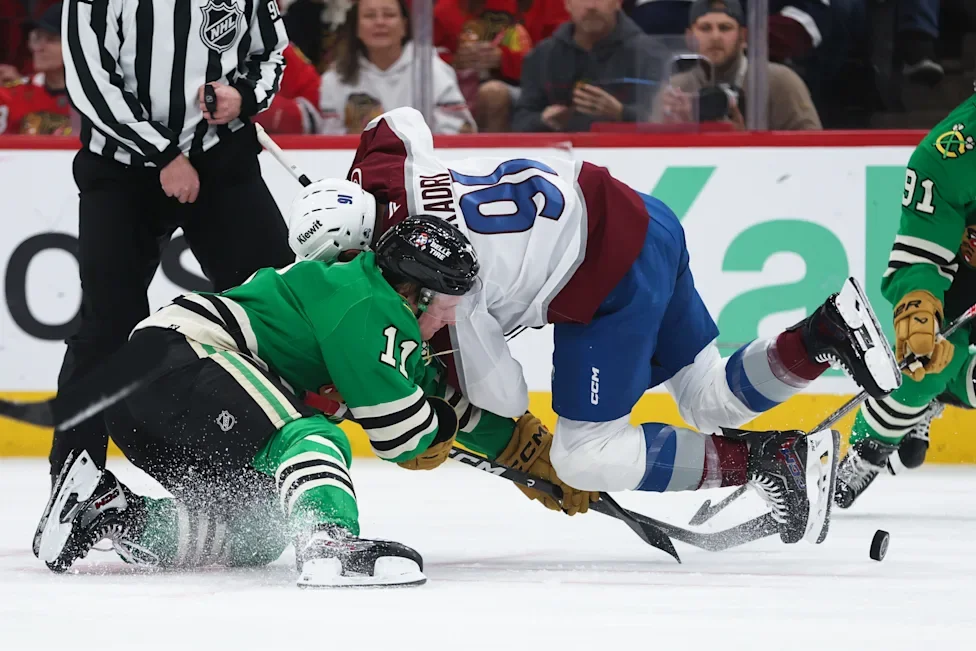
Defenseman Wyatt Kaiser opened the scoring just 57 seconds into the first period when his shot from the blue line deflected off Colorado defenseman Cale Makar and slipped past Blackwood.
The Blackhawks doubled their advantage at the 7:05 mark when rookie Roman Kantserov finished a two-on-one opportunity created by Connor Bedard. Bedard carried the puck into the offensive zone before delivering a cross-ice pass that Kantserov converted for his team-leading sixth goal of the season.
The assist extended Bedard’s point streak to six games, providing another encouraging individual performance despite Chicago’s struggles in the standings.
Colorado appeared to cut into the deficit midway through the period when Martin Necas found the back of the net, but Chicago successfully challenged the play for goaltender interference against Gabriel Landeskog, preserving its 2-0 lead.
However, the Avalanche quickly shifted momentum with two goals separated by just 26 seconds.
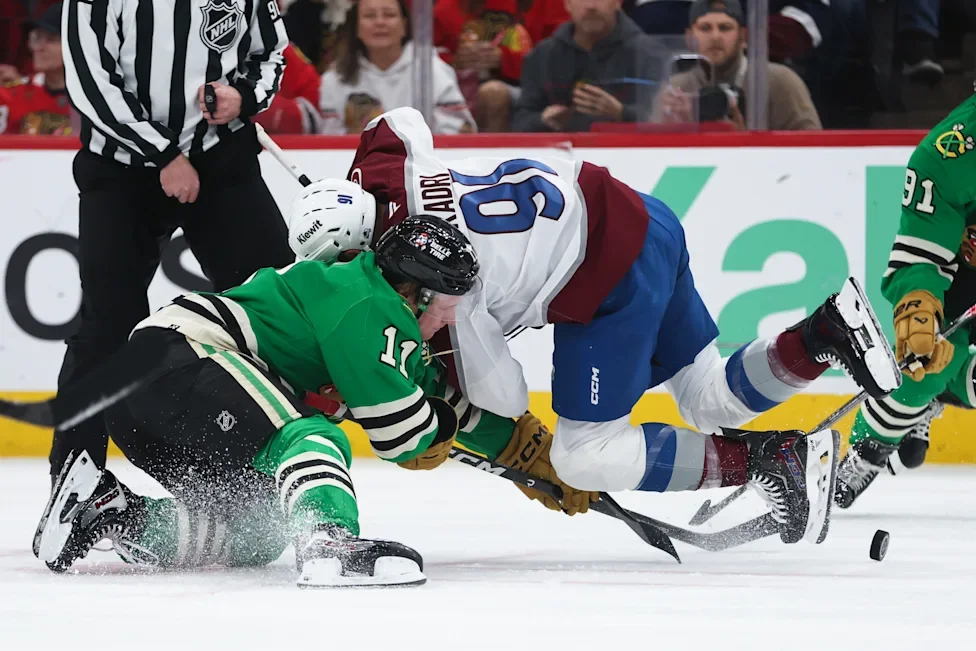
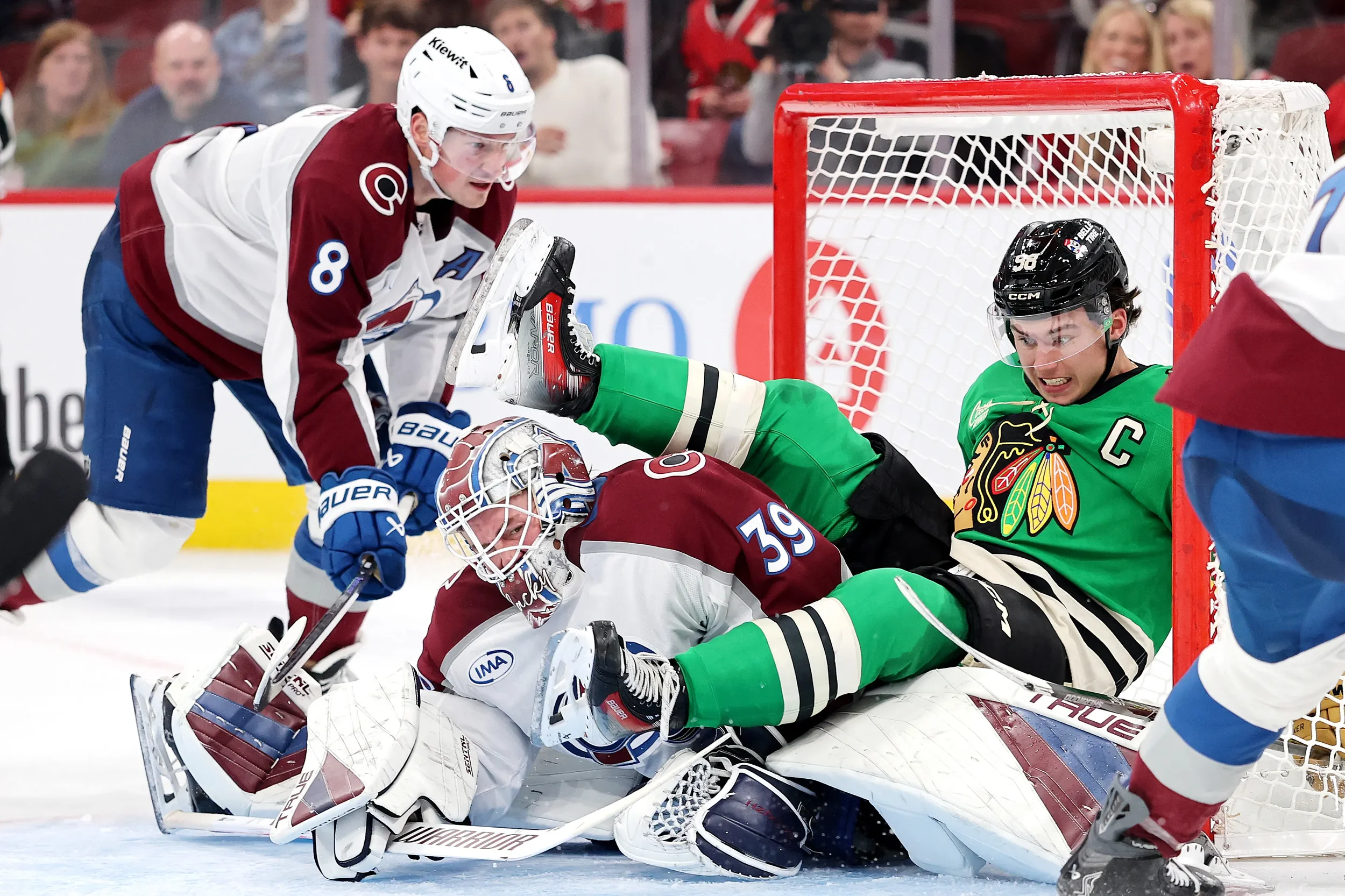
Kadri started the comeback at 15:23, diving toward the crease to push a loose puck past Chicago goaltender Spencer Knight following an initial shot from Landeskog.
Schwartz followed almost immediately, receiving a pass from Hughes before scoring from the left faceoff circle at 15:49 to tie the game.
What had appeared to be an encouraging opening period for Chicago quickly turned into a missed opportunity, with Colorado erasing the entire deficit before the first intermission. (NHL)
Kadri and Schwartz Take Control in Second Period
Colorado carried its momentum into the second period, gradually establishing greater control of possession and limiting Chicago’s offensive opportunities.
The Avalanche finally took their first lead at 13:38 when Kadri redirected a shot from Makar past Knight during a power play.
The goal came shortly after Bedard was penalized for holding Kadri, giving Colorado the opportunity to capitalize with the man advantage.
Kadri’s second goal of the night was his fourth of the season, with all four coming over his previous six games. His recent scoring production has provided Colorado with another offensive weapon as the Avalanche attempt to climb the Central Division standings.
Schwartz added his second goal with just 10.6 seconds remaining in the period, redirecting a shot from Sam Malinski to extend Colorado’s advantage to 4-2.
The late goal was particularly damaging for Chicago, which had entered the second period tied before surrendering two unanswered goals.
Schwartz’s performance continued a productive stretch in which he has recorded three goals and an assist over his last three games.
Colorado entered the final period with a two-goal advantage after completely reversing the game’s early momentum. (CBS Sports)
Blackwood Holds Chicago Scoreless Over Final Two Periods
While Colorado’s offensive comeback highlighted the victory, Blackwood’s performance in net played an equally important role.
After allowing two goals during the opening seven minutes, Blackwood settled into the game and prevented Chicago from scoring again.
The Avalanche goaltender finished with 21 saves on 23 shots, posting a .913 save percentage.
Chicago generated opportunities to reduce the deficit during the third period, including a dangerous chance from Frank Nazar that struck both the crossbar and post. However, the Blackhawks were unable to capitalize.
Colorado’s defensive structure improved significantly following its difficult opening minutes, limiting second-chance opportunities and forcing Chicago to work for sustained offensive pressure.
The Blackhawks also failed to convert on all four of their power-play opportunities, further complicating their attempt to mount a comeback.
Toews eventually secured the victory with an empty-net goal at 17:38 of the third period, giving Colorado its fifth unanswered goal and completing the 5-2 final score.
The Avalanche finished with a 29-23 advantage in shots on goal, while Knight made 24 saves in the loss. (Reuters)
Patrick Kane Exits With Injury as Chicago’s Struggles Continue
Adding to Chicago’s frustrations was the loss of veteran forward Patrick Kane, who exited the game late in the second period and did not return.
Kane left with an upper-body injury, and Blackhawks head coach Jeff Blashill indicated afterward that the veteran would miss the team’s next couple of games.
The injury creates another obstacle for a Chicago team already struggling to generate consistent offensive production.
Despite encouraging performances from younger players such as Bedard and Kantserov, the Blackhawks have struggled to maintain leads and produce complete 60-minute performances.
Monday’s defeat marked the second consecutive game in which Chicago surrendered a multi-goal advantage.
The Blackhawks also entered the matchup having lost five of their previous six games, and their latest defeat continued a concerning early-season trend.
With Chicago sitting at 4-10-1 through 15 games, the team faces growing pressure to find consistency before falling further behind in the Western Conference playoff race. (Chicago Hockey Now)
Colorado Finding Its Rhythm After Inconsistent Start
For the Avalanche, Monday’s victory represents another encouraging development as the team attempts to establish consistency during the opening month of the season.
Colorado has now won three consecutive games and four of its previous five, improving to 9-5-1 and strengthening its position in the Central Division.
Perhaps more importantly, the Avalanche are beginning to receive meaningful offensive contributions beyond their established stars.
Nathan MacKinnon and Makar remain central to Colorado’s offensive identity, but the emergence of secondary scoring from players such as Kadri and Schwartz provides the team with greater flexibility.
Both players demonstrated their value Monday, combining for four of Colorado’s five goals while helping turn an early deficit into a convincing road victory.
The Avalanche also continue to enjoy considerable success against Chicago, improving to 15-4-0 over their last 19 meetings with the Blackhawks.
That sustained success illustrates the gap that has existed between the two franchises in recent seasons, with Colorado remaining a perennial postseason contender while Chicago continues developing its younger roster.
However, Colorado’s early-season inconsistencies have demonstrated that talent alone does not guarantee success.
The Avalanche will need to maintain their improved defensive play and balanced offensive production against stronger opponents if they hope to continue climbing the Western Conference standings. (CBS Sports)
Avalanche Look to Extend Winning Streak Against Columbus
Colorado will have little time to celebrate its latest victory, as the Avalanche travel to Columbus to face the Blue Jackets on Tuesday night.
The matchup presents an opportunity for Colorado to extend its winning streak to four games and continue building momentum during a demanding stretch of the schedule.
Chicago, meanwhile, will travel to Florida on Wednesday to face the Panthers, beginning a challenging three-game road trip that also includes matchups against the Tampa Bay Lightning and Carolina Hurricanes.
For the Avalanche, the most encouraging aspect of Monday’s victory was not simply the final score, but the manner in which they responded to adversity.
Trailing 2-0 less than eight minutes into the game, Colorado refused to allow its early mistakes to dictate the outcome.
Instead, the Avalanche responded with five consecutive goals, received contributions throughout the lineup, and shut down Chicago’s offense over the final two periods.
Three consecutive victories do not erase the inconsistencies that characterized Colorado’s opening weeks, but they provide evidence of a team beginning to find its identity.
With Kadri and Schwartz producing offensively, Blackwood providing stability in net, and Colorado’s established stars continuing to influence games, the Avalanche appear to be moving in the right direction.
If that balance continues, Colorado’s recent winning streak could represent the beginning of a much more sustained run as the NHL season progresses. (NHL)
76ers Improve to 7-1 With Win Over Bulls as LeBron James Eyes Another Championship Run
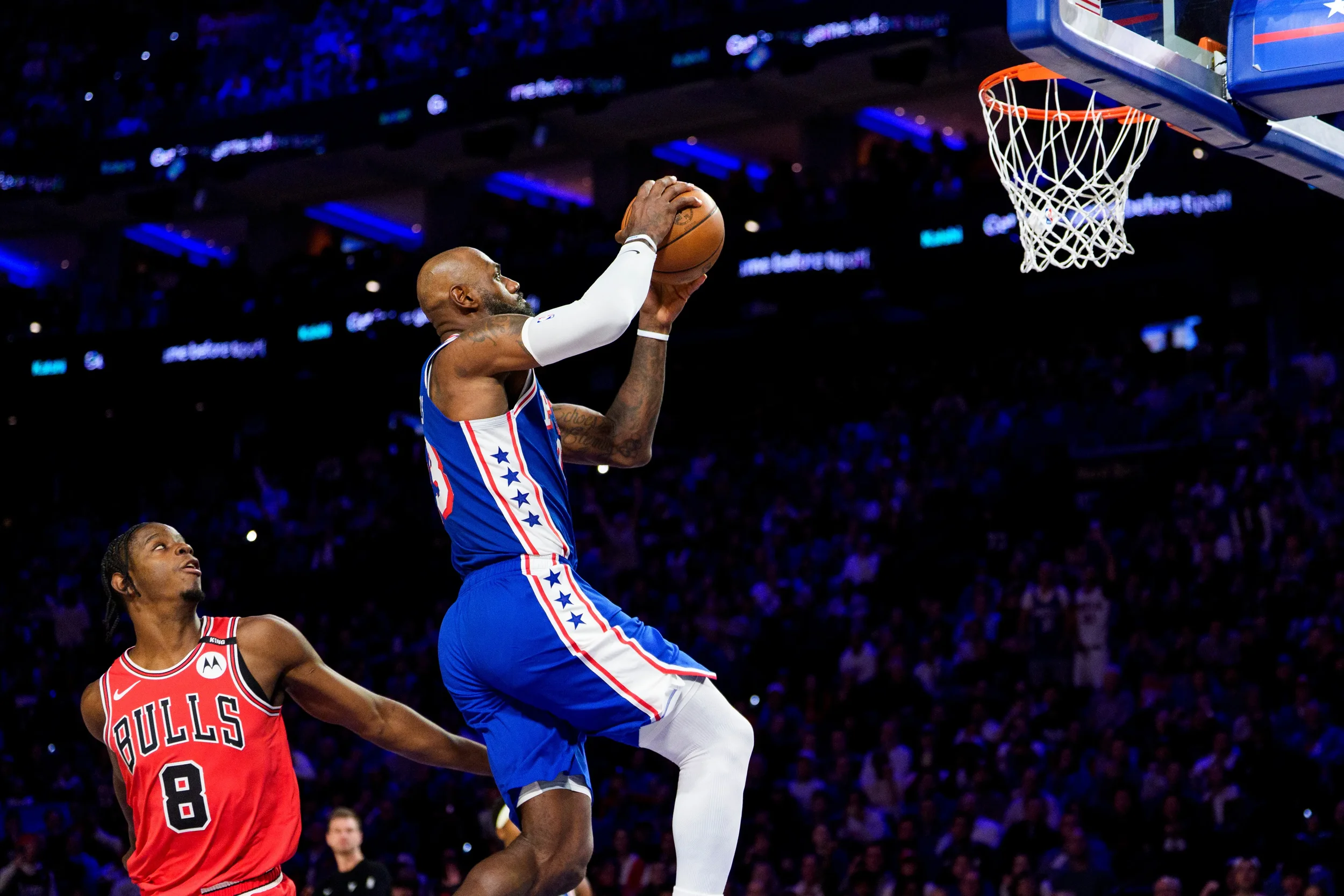
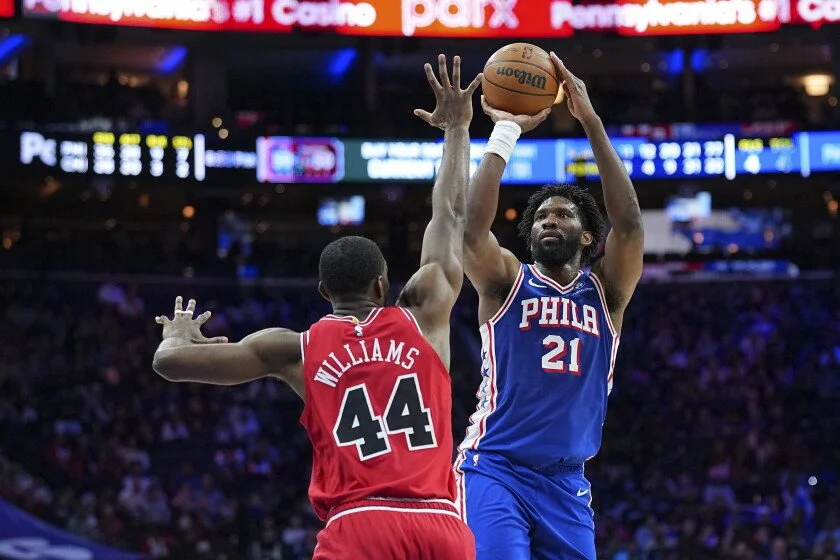
PHILADELPHIA, PA — The Philadelphia 76ers continue to establish themselves as one of the NBA’s early championship contenders, improving to 7-1 following a convincing 126-107 victory over the Chicago Bulls on Monday night at Xfinity Mobile Arena.
Led by Tyrese Maxey, Jaylen Brown, and LeBron James, Philadelphia secured its fourth consecutive victory while maintaining its position atop the Eastern Conference standings. The 76ers have quickly demonstrated why their star-studded roster entered the season with enormous expectations, combining offensive firepower with an increasingly balanced approach on both ends of the floor.
For James, now in his 24th NBA season, Philadelphia’s impressive opening stretch carries additional significance. Throughout his legendary career, the four-time NBA champion has experienced numerous deep postseason runs, including eight consecutive NBA Finals appearances from 2011 through 2018.
The question surrounding Philadelphia is no longer simply whether this roster possesses enough talent to compete in the Eastern Conference. Instead, the conversation is beginning to shift toward whether James can lead a third different franchise to an NBA championship. (NBA)
Maxey Leads Balanced Philadelphia Offense
Philadelphia’s offensive depth was on full display Monday night, with all five starters scoring at least 15 points in a performance that overwhelmed Chicago as the game progressed.
Maxey led the 76ers with 26 points and 11 assists, scoring 15 of his points in the fourth quarter to help put the game out of reach. Brown contributed 25 points and 11 rebounds, while rookie VJ Edgecombe delivered one of his strongest performances of the young season with 21 points on 9-of-12 shooting.
James finished with 15 points, nine assists, and seven rebounds, continuing to demonstrate his ability to influence games without needing to dominate the scoring column. Joel Embiid added 15 points and eight rebounds while playing 24 minutes.
Philadelphia carried a narrow 64-59 advantage into halftime before taking control during the third quarter. A 15-2 run extended the lead to 83-66, creating separation that Chicago struggled to overcome.
The Bulls briefly reduced the deficit to single digits in the fourth quarter, but Maxey responded with timely scoring, including a three-pointer that restored Philadelphia’s double-digit advantage. Brown later connected on consecutive late three-pointers to eliminate any realistic possibility of a Chicago comeback.
Rookie Caleb Wilson led the Bulls with 24 points and seven rebounds, while Norman Powell added 18 points. Chicago fell to 1-6, suffering its fifth consecutive defeat.
Philadelphia finished shooting 52.7% from the field and recorded 36 assists, illustrating the offensive chemistry developing among its established stars and younger contributors. (CBS Sports)
LeBron’s Influence Extends Beyond Scoring
Perhaps the most encouraging development for Philadelphia has been James’ willingness to embrace a more balanced offensive role.
For much of his career, James has served as both the primary scorer and offensive facilitator for championship-caliber teams. However, Philadelphia’s roster provides him with an opportunity to distribute those responsibilities among several established offensive threats.
Maxey has emerged as the team’s leading perimeter scoring option, Brown provides another reliable offensive weapon, and Embiid remains one of the league’s most accomplished centers when healthy.
Meanwhile, Edgecombe has quickly developed chemistry with James, particularly in transition. Against Chicago, the rookie repeatedly benefited from James’ exceptional court vision, converting opportunities created by long outlet passes and quick offensive possessions.
That combination could become particularly important as the season progresses. James no longer needs to carry the same offensive workload he maintained throughout his prime, potentially allowing him to conserve energy for the physical demands of another postseason run.
For Philadelphia, the greatest advantage of its roster construction may be that its most accomplished player does not need to be its leading scorer every night. (Philadelphia Inquirer)
History Suggests Philadelphia’s Start Could Be Significant
For James, a 7-1 opening record is familiar territory. Some of his most successful teams have produced similarly impressive starts, with two particularly notable examples eventually reaching the NBA Finals.
2016-17 Cleveland Cavaliers: 7-1 Start, NBA Finals Appearance
One of the clearest historical comparisons comes from the 2016-17 Cleveland Cavaliers, who opened their season with seven victories in their first eight games.
Coming off Cleveland’s historic 2016 NBA championship, James and the Cavaliers began their title defense with six consecutive victories before suffering their first loss against the Atlanta Hawks.
Cleveland rebounded with a victory over Washington in its eighth game, improving to 7-1.
The Cavaliers eventually finished the regular season 51-31, earning the second seed in the Eastern Conference. Despite some inconsistencies throughout the regular season, Cleveland became nearly unstoppable once the postseason began.
Led by James, Kyrie Irving, and Kevin Love, the Cavaliers swept the Indiana Pacers and Toronto Raptors before defeating the Boston Celtics in five games to advance to their third consecutive NBA Finals.
Cleveland entered the championship series with a remarkable 12-1 postseason record, but the addition of Kevin Durant to the Golden State Warriors proved too difficult to overcome.
The Warriors defeated Cleveland in five games, ending the Cavaliers’ hopes of repeating as champions.
For Philadelphia, that Cleveland team offers an important reminder that an impressive opening record can translate into a deep postseason run, even if it does not guarantee a championship. (Cavaliers History) (NBA)
2019-20 Los Angeles Lakers: Championship Expectations Fulfilled
Another important comparison comes from the 2019-20 Los Angeles Lakers, who started the season 7-1 after acquiring Anthony Davis to pair with James.
Los Angeles quickly established itself as one of the NBA’s most formidable teams, using the combination of James’ playmaking and Davis’ scoring and defensive versatility to overwhelm opponents.
The Lakers eventually won 24 of their first 27 games, establishing themselves as the team to beat in the Western Conference.
Unlike the 2016-17 Cavaliers, the Lakers ultimately finished the job.
Los Angeles concluded the pandemic-interrupted regular season with a 52-19 record before advancing through the Western Conference playoffs.
The Lakers defeated the Portland Trail Blazers, Houston Rockets, and Denver Nuggets to reach the NBA Finals, where they faced Jimmy Butler and the Miami Heat.
James and Davis led Los Angeles to a six-game series victory, delivering the franchise’s 17th NBA championship and James’ fourth career title.
James also earned his fourth NBA Finals MVP award, becoming the first player in league history to win the award with three different franchises.
The similarities between that Lakers team and Philadelphia’s current roster are intriguing. Both feature James alongside an elite center, surrounded by talented offensive contributors capable of shouldering significant responsibility.
The 2020 Lakers demonstrated what could happen when James was paired with another dominant star and a supporting cast capable of performing consistently throughout the postseason. (NBA)
Can Philadelphia Follow the Same Championship Blueprint?
Although the 76ers’ 7-1 start is encouraging, the larger challenge will be sustaining their success throughout an 82-game regular season and into the playoffs.
Philadelphia’s roster arguably provides James with one of the deepest collections of offensive talent he has played alongside.
Maxey offers explosive perimeter scoring, Brown brings championship experience from his time in Boston, and Embiid remains capable of controlling games around the basket.
Edgecombe’s early development provides another encouraging element, particularly given his ability to contribute without demanding a significant share of offensive possessions.
However, Philadelphia will need to address several potential concerns before the postseason.
Embiid’s health remains particularly important, especially considering his injury history and the team’s need to manage his workload throughout the regular season.
James’ age also introduces questions about how Philadelphia will approach his minutes and availability over the coming months.
At 41 years old, James is attempting something unprecedented: remaining a central contributor to a championship contender in his 24th NBA season.
The 76ers must also continue developing their defensive consistency and bench production, particularly against stronger opponents capable of exploiting weaknesses that rebuilding teams like Chicago cannot.
A Difficult Road Ahead
Philadelphia’s upcoming schedule will provide an opportunity to evaluate how its impressive start translates against more competitive opponents.
The 76ers will travel to Detroit on Wednesday for a rematch against the Pistons, the only team to defeat Philadelphia through its first eight games.
They will then visit Cleveland on Friday in what promises to be an emotional return for James, who delivered the Cavaliers’ first NBA championship in 2016.
Philadelphia concludes its three-game road trip Sunday with another matchup against Chicago.
The stretch should provide a clearer picture of the team’s consistency away from home and its ability to respond against opponents that have already challenged it. (Philadelphia Inquirer)
A Promising Beginning With Championship Implications
Eight games cannot determine the outcome of an NBA season, but Philadelphia’s early performance has provided legitimate reasons for optimism.
The 76ers have demonstrated offensive balance, star power, and the ability to win games without requiring James to produce extraordinary individual scoring performances.
History provides two compelling comparisons. The 2016-17 Cavaliers opened 7-1 and reached the NBA Finals, while the 2019-20 Lakers began with the same record and ultimately won the championship.
Those outcomes do not establish a formula for postseason success, but they illustrate the potential significance of Philadelphia’s early momentum.
For James, the opportunity is particularly meaningful. A championship with Philadelphia would give him five NBA titles and make him the first player to win Finals MVP with four different franchises, assuming he earned the award.
For the 76ers, the stakes are equally substantial. The franchise has not won an NBA championship since 1983 and has endured decades of postseason disappointment despite assembling several talented rosters.
With seven victories in their first eight games, Philadelphia has positioned itself among the early favorites in the Eastern Conference.
The regular season is only beginning, but the 76ers are showing signs that this could become something much bigger than another promising start.
For James and Philadelphia, the ultimate measure of success will come in June.
Cavaliers Let Fourth-Quarter Lead Slip Away as Gilgeous-Alexander Leads Thunder to 117-112 Victory
CLEVELAND, Ohio — The Cleveland Cavaliers appeared to have completed an impressive second-half comeback Monday night against the Oklahoma City Thunder, but their inability to close out the game resulted in a frustrating 117-112 defeat at Rocket Arena.
After trailing by as many as 14 points in the third quarter, Cleveland fought back behind a strong perimeter shooting performance and an 18-9 run to open the fourth. However, the Cavaliers failed to maintain their momentum, allowing Oklahoma City to regain control in the final minute.
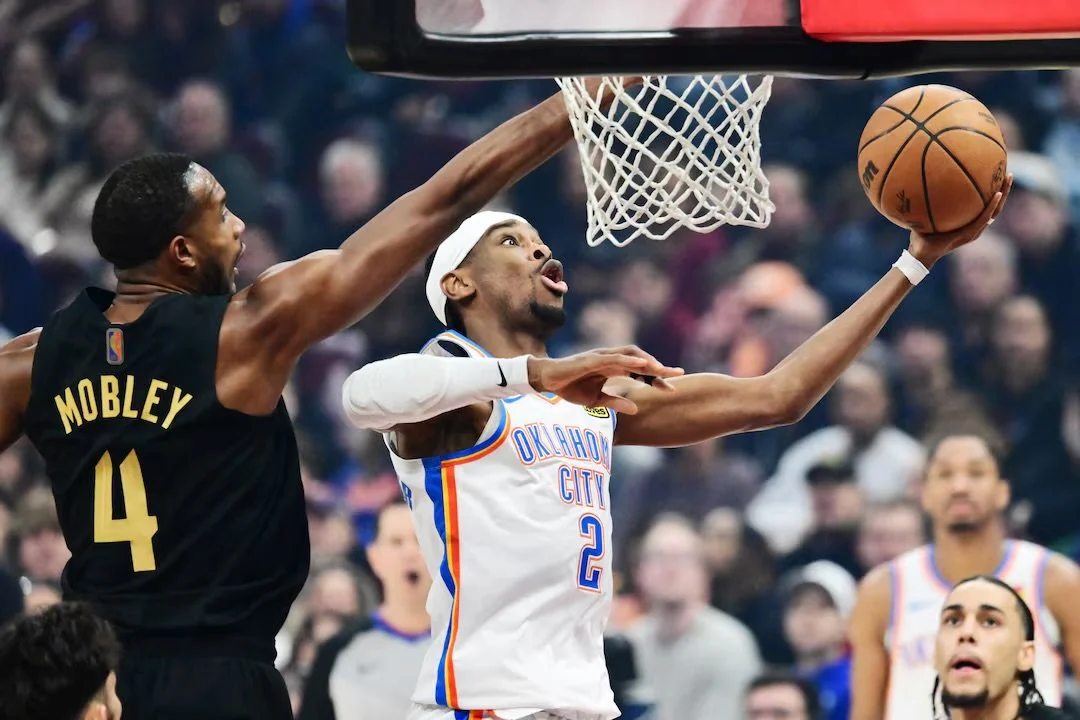
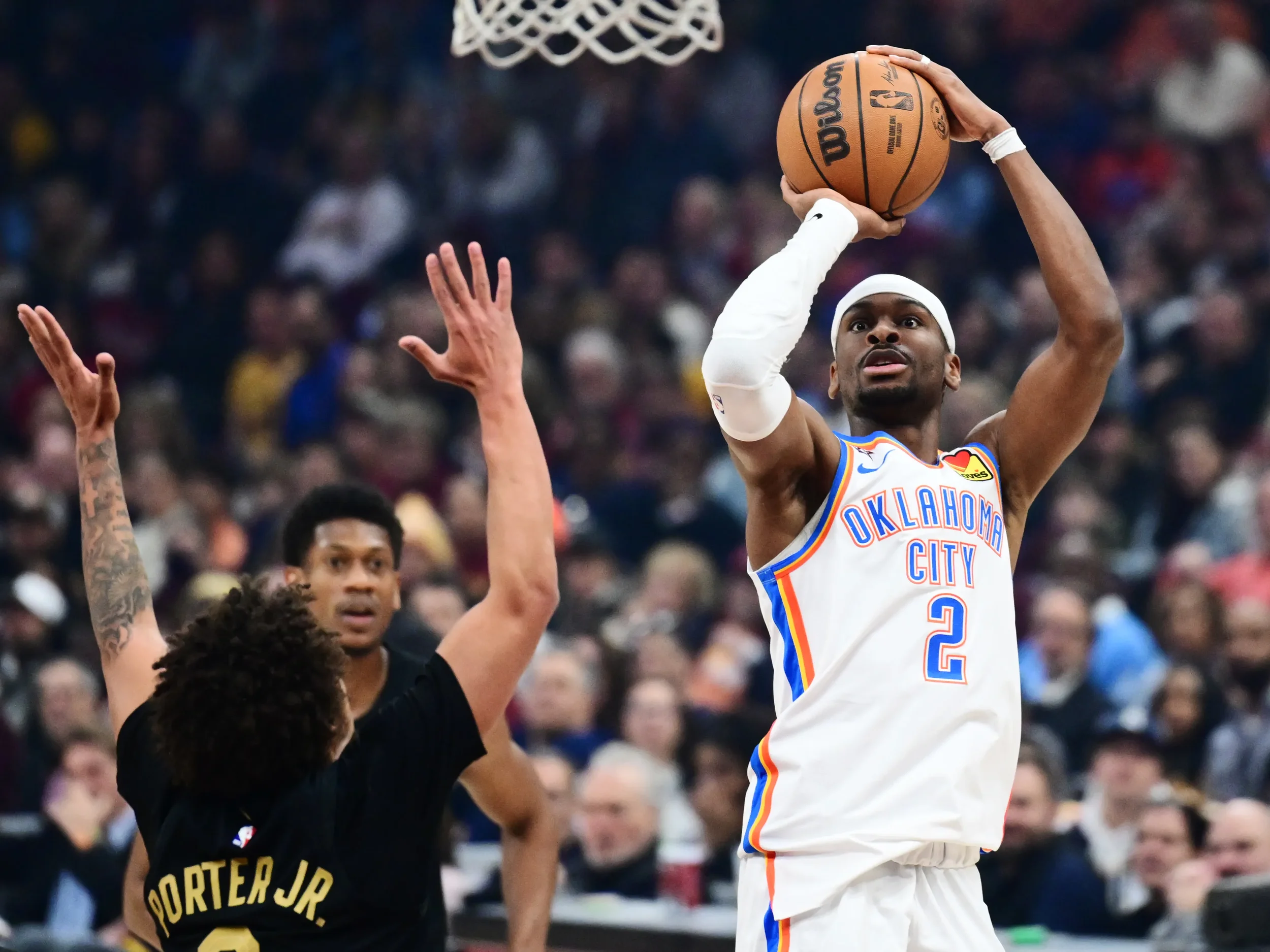
Thunder superstar Shai Gilgeous-Alexander delivered the decisive blow, connecting on a go-ahead three-pointer with 32.6 seconds remaining to cap a season-high 43-point performance.
The loss dropped Cleveland to 4-3 and marked its first home defeat of the season. Oklahoma City improved to 5-2, snapping a two-game losing streak despite continuing to deal with significant injuries throughout its roster.
For the Cavaliers, the result was particularly disappointing considering their second-half effort. Cleveland had overcome a double-digit deficit and positioned itself to secure a statement victory against one of the Western Conference’s premier teams, only to watch the opportunity disappear in the closing possessions. (NBA)
Cavaliers Overcome 14-Point Deficit to Take Control
Monday’s matchup featured a competitive opening quarter, with Cleveland establishing an early 30-26 advantage.
However, the Cavaliers struggled to maintain their offensive rhythm during the second quarter.
Oklahoma City took advantage of Cleveland’s scoring difficulties, closing the first half on a 16-6 run to establish a 59-48 halftime lead.
The Thunder continued building momentum early in the third quarter, extending their advantage to 69-55 after a pair of Gilgeous-Alexander free throws with 9:26 remaining.
Facing a 14-point deficit, Cleveland needed a significant offensive response.
The Cavaliers delivered one through their perimeter shooting.
Cleveland connected on nine of its 17 three-point attempts during the third quarter, gradually reducing Oklahoma City’s advantage while generating the offensive momentum that had been missing during the first half.
The Cavaliers outscored the Thunder 36-31 in the period, entering the fourth quarter trailing 90-84.
Cleveland then opened the final period with an 18-9 run, turning what had appeared to be a comfortable Oklahoma City advantage into a closely contested game.
The comeback demonstrated the Cavaliers’ offensive potential, particularly when their perimeter shooting created opportunities to attack the Thunder’s defense.
However, the momentum that carried Cleveland back into contention ultimately proved difficult to sustain. (AP)
Fourth-Quarter Lead Slips Away in Final Minute
The final quarter became a back-and-forth contest, featuring eight ties and eight lead changes as neither team managed to establish a comfortable advantage.
Cleveland’s comeback had given the Cavaliers an opportunity to close out the game in front of their home crowd, but Oklahoma City repeatedly answered their scoring possessions.
Gilgeous-Alexander proved to be the difference.
With the game hanging in the balance, the Thunder guard connected on his fourth three-pointer of the evening with 32.6 seconds remaining, putting Oklahoma City ahead.
Cleveland had an opportunity to respond, but Sam Merrill missed a three-point attempt from the corner.
The missed shot proved costly.
Oklahoma City’s Ajay Mitchell subsequently converted two free throws with 15.4 seconds remaining, extending the Thunder’s advantage to two possessions and leaving Cleveland with little time to recover.
The Cavaliers were unable to complete another comeback, falling 117-112.
Although Cleveland outscored Oklahoma City 28-27 in the fourth quarter, its inability to execute in the closing moments ultimately determined the outcome.
The loss highlighted an issue that can separate talented regular-season teams from legitimate championship contenders: the ability to finish close games against elite opponents.
Cleveland demonstrated that it could recover from a substantial deficit, but the Cavaliers could not produce the necessary defensive stops and offensive execution when the game was on the line. (CBS Sports)
Gilgeous-Alexander Delivers 43-Point Performance
While Cleveland’s inability to finish the game will receive considerable attention, Oklahoma City’s victory was largely the result of another exceptional performance from Gilgeous-Alexander.
The Thunder superstar scored a season-high 43 points, adding eight assists while shooting 14-of-35 from the field and 11-of-12 from the free-throw line.
His 35 field-goal attempts represented the highest single-game total by any NBA player through the first two weeks of the season.
Despite facing consistent defensive attention, Gilgeous-Alexander continued attacking Cleveland’s defense and creating scoring opportunities.
His ability to draw fouls and generate points at the free-throw line helped Oklahoma City maintain offensive production even when its perimeter shooting became inconsistent.
Most importantly, he delivered when the Thunder needed him most.
His go-ahead three-pointer in the final minute was the defining moment of the game, allowing Oklahoma City to escape with a victory after surrendering its earlier double-digit advantage.
The performance also matched his highest scoring total in 17 career games against Cleveland.
For a Thunder team dealing with several significant injuries, Gilgeous-Alexander’s ability to carry the offense remains essential to maintaining its position among the Western Conference’s top teams.
Oklahoma City also received 20 points from Ajay Mitchell, while Isaiah Hartenstein contributed 14 rebounds.
Those performances provided important support for Gilgeous-Alexander, particularly during the game’s final possessions. (AP)
Donovan Mitchell and Cavaliers Struggle to Find Consistent Offense
For Cleveland, Donovan Mitchell finished with 17 points, 11 assists and five rebounds, contributing as both a scorer and facilitator.
However, the Cavaliers lacked a dominant individual scoring performance capable of matching Gilgeous-Alexander’s production.
Rookie Meleek Thomas, making his first NBA start, tied Mitchell for the team lead with 17 points.
Evan Mobley added 16 points, but Cleveland struggled to consistently generate efficient offense throughout the contest.
The Cavaliers finished shooting 44.4% from the field, compared with Oklahoma City’s 42.9%.
Cleveland also made 18 three-pointers compared with the Thunder’s 12, providing a significant advantage from beyond the arc.
However, those advantages were offset by difficulties at the free-throw line and on the glass.
The Cavaliers converted just 14 of their 24 free-throw attempts, shooting 58.3%.
Oklahoma City, meanwhile, made 21 of its 23 attempts, an impressive 91.3%.
That difference proved particularly significant in a game decided by five points.
Cleveland also lost the rebounding battle 63-55, allowing the Thunder to generate additional possessions despite shooting a lower percentage from the field.
The Cavaliers finished with 31 assists and only seven turnovers, demonstrating effective ball movement and relatively disciplined offensive execution.
However, their inability to capitalize on free throws and secure critical rebounds ultimately undermined those positive contributions.
Against a team with Oklahoma City’s talent, small mistakes can become the difference between winning and losing. (CBS Sports)
Thunder Overcome Injuries to Snap Losing Streak
Oklahoma City entered Monday’s matchup facing considerable adversity.
The Thunder had lost two consecutive road games by more than 20 points and were attempting to regain momentum while dealing with injuries to three starters.
Those absences placed additional pressure on Gilgeous-Alexander and the team’s remaining healthy contributors.
However, Oklahoma City demonstrated the resilience that has helped establish the franchise as one of the NBA’s strongest organizations.
Despite surrendering a 14-point lead and allowing Cleveland to gain control during the fourth quarter, the Thunder remained composed in the closing minutes.
Gilgeous-Alexander provided the decisive offensive production, while the team’s supporting cast contributed enough to secure the victory.
The result improved Oklahoma City to 5-2 and provided an important response following its recent struggles.
For Cleveland, the loss was especially frustrating because the Cavaliers had an opportunity to defeat a talented but injury-depleted opponent on their home floor.
Instead, Oklahoma City’s ability to execute in critical situations proved to be the difference. (NBC Sports)
Cleveland’s Late-Game Execution Raises Questions
Although the Cavaliers are only seven games into the regular season, Monday’s defeat exposed several areas that require improvement.
Cleveland demonstrated the offensive firepower necessary to overcome a substantial deficit against a quality opponent.
However, the Cavaliers struggled to maintain that production consistently.
Their second-quarter offensive difficulties allowed Oklahoma City to establish an 11-point halftime advantage, forcing Cleveland to expend significant energy recovering during the second half.
The Cavaliers then failed to capitalize on their fourth-quarter comeback, allowing Gilgeous-Alexander to deliver the decisive basket.
Perhaps the most concerning aspect of the loss was Cleveland’s free-throw shooting.
Missing 10 free throws in a five-point defeat represents a substantial missed opportunity.
The Cavaliers also allowed Oklahoma City to control the rebounding battle, an issue that can become particularly damaging against teams with strong interior players.
Cleveland’s defensive performance against Gilgeous-Alexander also raises questions about how the team plans to contain elite perimeter scorers.
While completely shutting down a player of his caliber is unrealistic, allowing 43 points places tremendous pressure on the Cavaliers’ offense to match that production.
If Cleveland hopes to establish itself among the Eastern Conference’s strongest teams, improving its late-game execution and consistency will be essential.
The Cavaliers have demonstrated that they possess the talent to compete with elite opponents. Monday’s result showed that competing and closing out victories remain two different challenges.
Cavaliers Get Immediate Opportunity for Revenge
Cleveland will not have to wait long for another opportunity against Oklahoma City.
The teams are scheduled to meet again Wednesday night, this time at Paycom Center in Oklahoma City, completing an unusual two-game regular-season series.
The rematch provides the Cavaliers with an immediate opportunity to respond to Monday’s disappointing finish.
Cleveland will need to improve its free-throw shooting, limit second-chance opportunities and establish more consistent offensive production throughout all four quarters.
Containing Gilgeous-Alexander will also remain a priority after his 43-point performance.
For Oklahoma City, the objective will be maintaining its momentum and securing a second consecutive victory over an Eastern Conference opponent.
The Thunder have demonstrated their ability to win close games despite injuries, while Cleveland will be looking to prove that Monday’s collapse was an isolated setback rather than an indication of larger concerns.
A Missed Opportunity for Cleveland
Monday night’s defeat will be remembered as a game the Cavaliers had an opportunity to win but could not finish.
Cleveland overcame a 14-point deficit, found its offensive rhythm during the second half and entered the closing minutes with a legitimate chance to secure an important home victory.
However, missed free throws, rebounding difficulties and an inability to contain Gilgeous-Alexander in the final moments ultimately proved too costly.
The Cavaliers finished with more three-pointers, a higher field-goal percentage and significantly more assists than Oklahoma City, yet still walked away with a loss.
Those numbers illustrate how narrow the margin for error can be against championship-caliber competition.
For a Cleveland team hoping to make a deep postseason run, the defeat provides an early reminder that talent alone is not enough.
Executing in the final minutes, securing defensive rebounds and capitalizing on opportunities at the free-throw line are essential components of winning close games.
The Cavaliers have shown they can compete with some of the NBA’s best teams. Their next challenge is demonstrating that they can consistently finish those games.
Cleveland fought its way back from a 14-point deficit and put itself in position to win, but when the game reached its most important moments, Oklahoma City had the answers. The Cavaliers did not.
Bears Make Statement on Monday Night Football, Defeat Defending Champion Seahawks 34-17
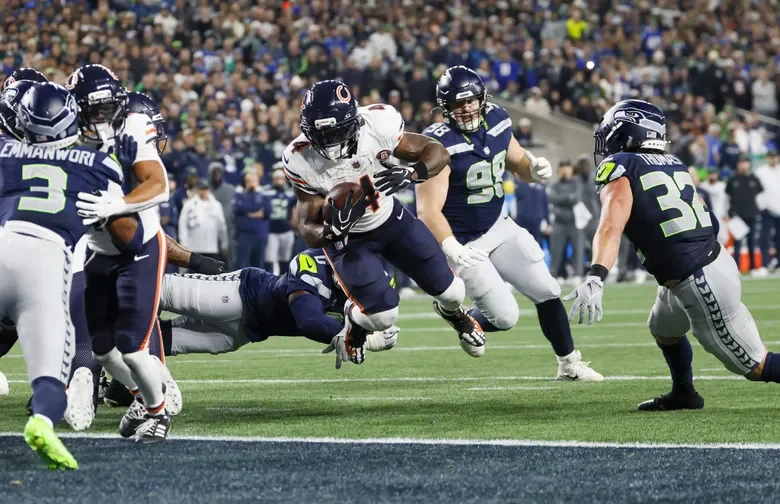
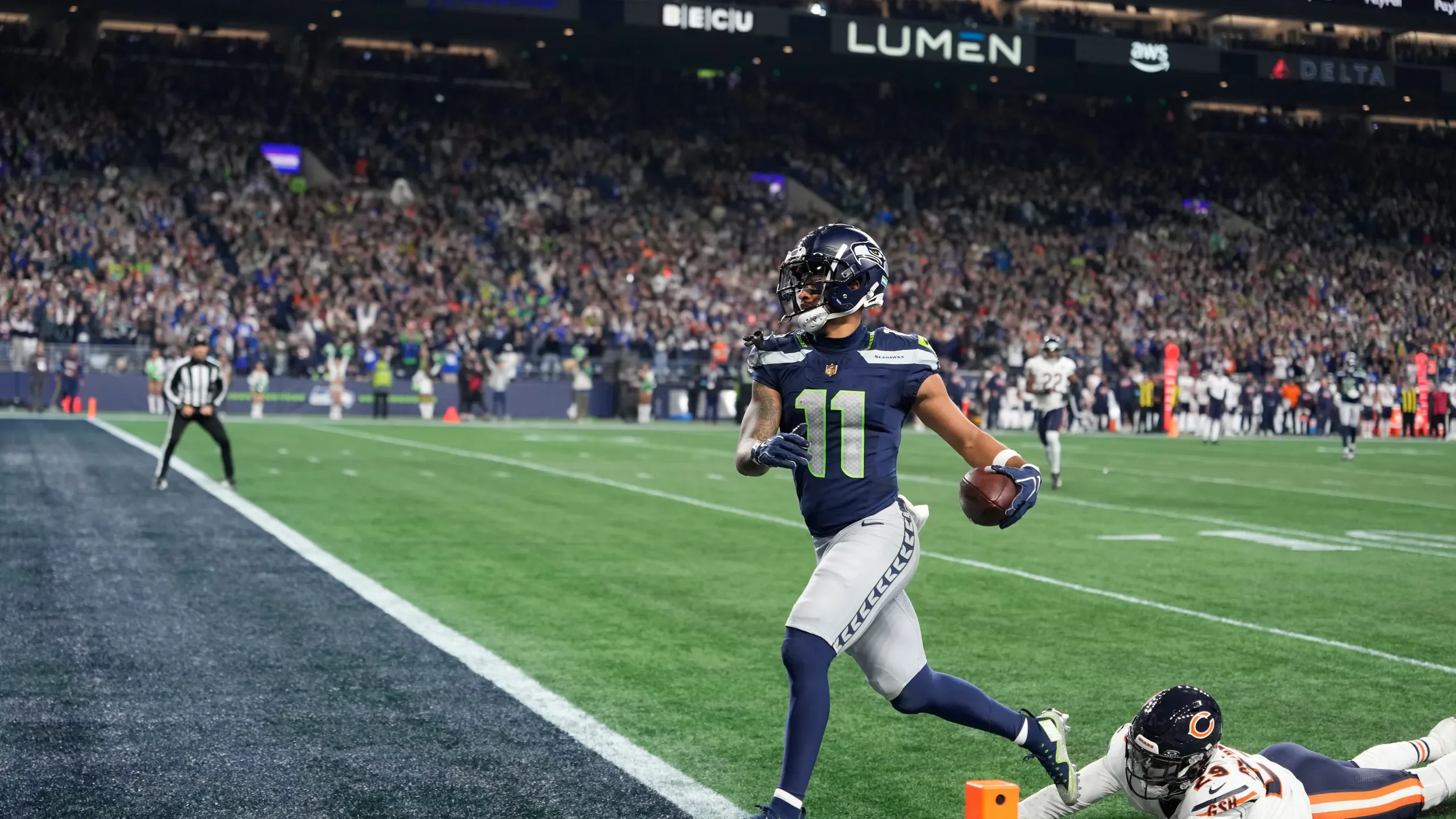
SEATTLE, Wash. — The Chicago Bears delivered one of their most impressive performances of the season Monday night, defeating the defending Super Bowl champion Seattle Seahawks 34-17 at Lumen Field behind an efficient performance from Caleb Williams, three rushing touchdowns from D’Andre Swift and a dominant defensive effort.
Chicago improved to 6-2 with its third consecutive victory, continuing to establish itself as a legitimate contender in the NFC. Meanwhile, Seattle fell to 4-4 after losing for the third time in four games, raising concerns about the defending champions’ ability to return to the postseason.
Williams completed 24 of 34 passes for 247 yards and a touchdown without committing a turnover, while Swift scored three second-half rushing touchdowns to help the Bears pull away from a Seattle team that briefly threatened a comeback in the fourth quarter.
However, Chicago’s defensive performance was equally important. Newly acquired defensive tackle Jeffery Simmons made an immediate impact in his Bears debut, helping limit Seattle to just 252 total yards and one third-down conversion on 11 attempts.
The victory represented another significant step forward for Chicago under head coach Ben Johnson, whose team continues to build momentum approaching the second half of the regular season. (NFL)
Caleb Williams Leads Chicago’s Efficient Offensive Performance
Williams entered Monday night’s matchup facing one of the NFL’s most formidable defensive units, but the former No. 1 overall pick delivered a composed performance that demonstrated his continued development.
Chicago established its offensive rhythm immediately, orchestrating a methodical 17-play opening possession that ended with Williams finding rookie wide receiver Luther Burden III for a one-yard touchdown.
The lengthy drive demonstrated the Bears’ ability to sustain possessions against a Seattle defense that had developed a reputation for limiting explosive plays and frustrating opposing quarterbacks.
Rather than relying exclusively on his ability to extend plays, Williams consistently made accurate throws, managed the pocket and avoided unnecessary mistakes.
The Bears added two Cairo Santos field goals during the first half, building a 13-9 advantage heading into halftime.
Williams finished the evening completing approximately 71% of his passes while taking only one sack. His ability to protect the football proved especially important against a Seahawks defense that had been among the league’s most difficult units to attack.
Since returning from a hamstring injury, Williams has helped Chicago win three consecutive games, providing the Bears with stability at quarterback during an increasingly important stretch of the season.
For a franchise that has spent years searching for consistent quarterback production, Williams’ performance offered another encouraging indication of his potential to become the long-term centerpiece of Chicago’s offense. (Reuters)
D’Andre Swift Scores Three Touchdowns as Bears Pull Away
While Williams directed Chicago’s passing attack, Swift provided the finishing touches to several important offensive possessions.
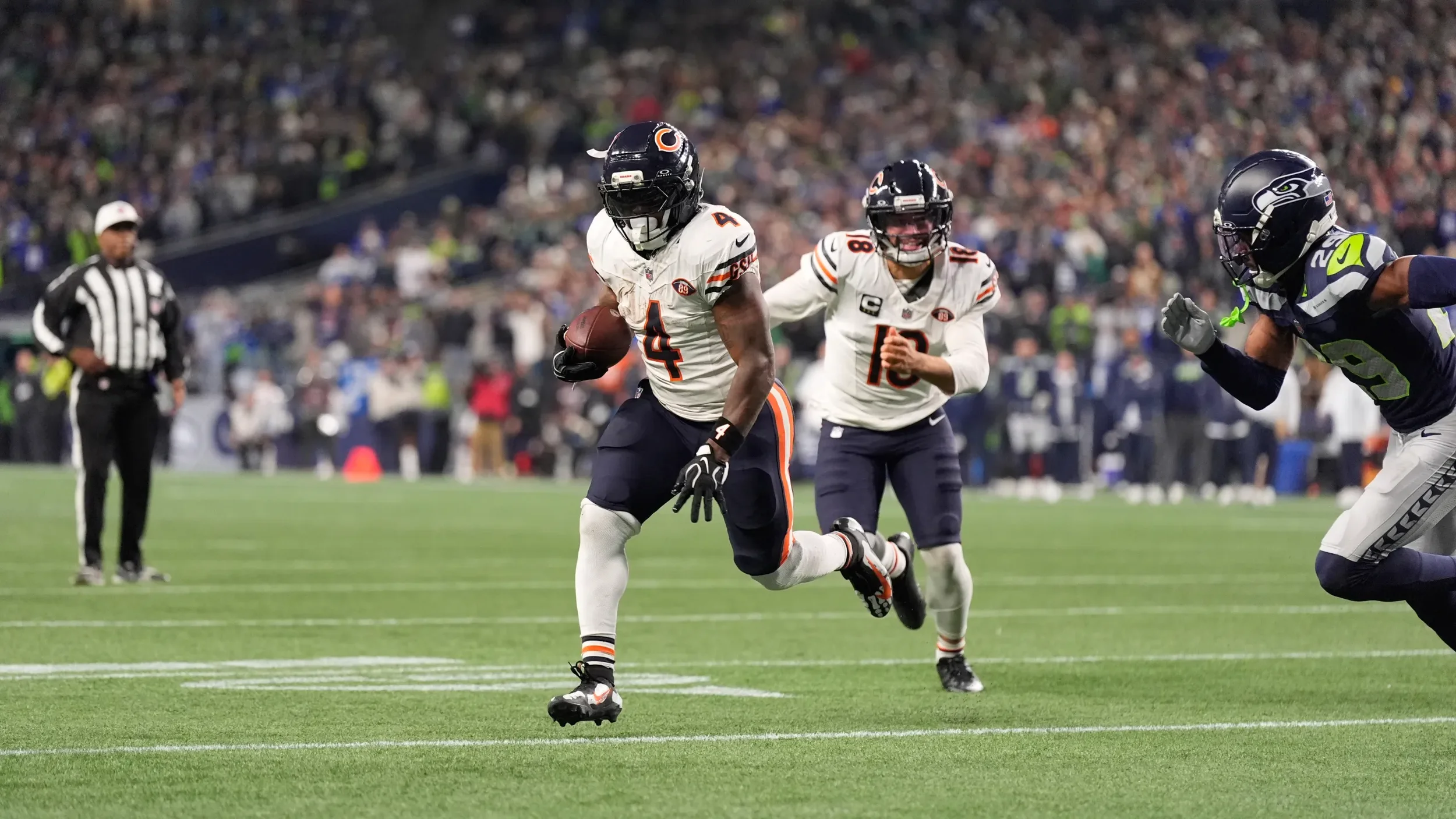
The veteran running back rushed 27 times for 69 yards and three touchdowns, delivering one of the most productive scoring performances of his career.
After Chicago entered halftime with a four-point advantage, Swift scored his first touchdown on a one-yard run in the third quarter, extending the Bears’ lead to 20-9.
His ability to finish drives near the goal line became particularly valuable as Chicago repeatedly moved the football into scoring position.
Seattle eventually narrowed the deficit to three points during the fourth quarter, but Swift responded with another touchdown to restore Chicago’s advantage.
His third rushing touchdown came following a late Seattle turnover, extending the lead to 34-17 with 4:41 remaining and effectively ending the Seahawks’ hopes of a comeback.
Although Swift did not produce overwhelming rushing yardage, his effectiveness in short-yardage situations was a significant factor in Chicago’s victory.
The three-touchdown performance also brought his season total to 10, further demonstrating his importance within Johnson’s offensive system.
For the Bears, Swift’s production provided the balance necessary to complement Williams’ passing ability and maintain offensive efficiency against a talented Seattle defense. (Bears)
Jeffery Simmons Makes Immediate Impact in Bears Debut
Perhaps the most encouraging development for Chicago came on the defensive side of the football.
Just days after acquiring Simmons from the Tennessee Titans in a major trade involving two first-round draft picks, the Bears received an immediate return on their investment.
Simmons recorded a sack on Seattle’s opening possession and continued disrupting the Seahawks’ offensive line throughout the evening.
The veteran defensive tackle finished with six tackles, a sack, an additional tackle for loss and a pass defended, helping Chicago control the line of scrimmage.
His presence was particularly noticeable against Seattle’s struggling rushing attack.
Despite recently acquiring three-time All-Pro offensive guard Quenton Nelson and welcoming back running backs Zach Charbonnet and Jadarian Price from injuries, the Seahawks managed only 81 rushing yards.
Chicago’s defensive front consistently disrupted running lanes and forced quarterback Sam Darnold into difficult passing situations.
The Bears also limited Seattle to just one successful third-down conversion on 11 opportunities, preventing the Seahawks from establishing consistent offensive possessions.
Simmons’ debut offered an early indication of why Chicago was willing to surrender significant draft capital to acquire him.
The Bears entered the season with questions surrounding their defensive front, but adding an established interior defender capable of generating pressure without relying exclusively on blitzes could dramatically improve the unit’s effectiveness.
If Simmons continues producing at this level, Chicago’s defense could become a major factor in determining how far the team advances this season. (AP)
Seahawks Briefly Threaten Fourth-Quarter Comeback
Despite struggling offensively for much of the evening, Seattle managed to remain within striking distance.
Darnold completed 17 of 34 passes for 188 yards, two touchdowns and one interception, but frequently struggled against Chicago’s defensive pressure.
The Seahawks’ most significant offensive moment of the first half came when Darnold connected with Jaxon Smith-Njigba for a 43-yard touchdown with approximately 30 seconds remaining before halftime.
The explosive play helped Seattle remain competitive despite an otherwise inconsistent offensive performance.
Smith-Njigba finished with 118 receiving yards and a touchdown, providing one of the few bright spots for Seattle’s offense.
After falling behind 20-9 in the third quarter, the Seahawks appeared to be running out of opportunities.
A blocked 33-yard field goal attempt by Jason Myers early in the fourth quarter represented another missed opportunity for Seattle.
However, the Seahawks received an unexpected opening when defensive end DeMarcus Lawrence forced a fumble by Chicago tight end Colston Loveland.
Seattle capitalized on the turnover when Darnold connected with Cooper Kupp for a seven-yard touchdown pass.
A successful two-point conversion reduced Chicago’s lead to 20-17, suddenly transforming what had appeared to be a comfortable Bears advantage into a one-possession game.
The comeback attempt proved short-lived.
Chicago responded with another touchdown drive, and Darnold subsequently threw a fourth-quarter interception that set up Swift’s third touchdown.
The sequence highlighted the difference between the two teams throughout the evening. Chicago consistently capitalized on opportunities, while Seattle struggled to maintain offensive momentum. (AP)
Defending Super Bowl Champions Continue to Struggle
For Seattle, Monday night’s defeat represented another concerning development in what has become an inconsistent season.
The Seahawks entered the year hoping to defend their Super Bowl championship, but their 4-4 record through eight games leaves them facing an increasingly difficult path back toward the top of the NFC.
Monday’s loss was particularly significant because of the margin of defeat.
Before facing Chicago, Seattle had gone 30 consecutive games across the regular season and postseason without losing by more than four points.
That streak, the fourth-longest of its kind in the Super Bowl era, ended emphatically with the Bears’ 17-point victory.
Seattle’s offensive inconsistencies have become increasingly difficult to ignore.
Despite possessing talented playmakers such as Smith-Njigba and Kupp, the Seahawks have struggled to establish a reliable rushing attack and consistently protect Darnold.
The acquisition of Nelson was intended to strengthen the offensive line, but Monday’s performance demonstrated that the problems extend beyond a single position.
Seattle also suffered another potential setback when defensive lineman Leonard Williams exited the game with a stinger and did not return.
For head coach Mike Macdonald, the challenge now becomes finding a way to stabilize an offense that has struggled to complement what remains a talented defensive unit.
With the NFC playoff race becoming increasingly competitive, Seattle cannot afford to continue losing games while waiting for its offense to develop consistency. (AP)
Chicago Continues Emerging as an NFC Contender
For Chicago, Monday night’s victory carried significance beyond improving its record to 6-2.
The Bears demonstrated that they can defeat an established championship-caliber opponent on the road while receiving meaningful contributions from all three phases of the game.
Williams provided efficient quarterback play, Swift finished important offensive possessions, and Simmons helped transform the effectiveness of Chicago’s defensive front.
The performance also highlighted the progress the organization has made under Johnson.
Chicago’s offense has become increasingly balanced, allowing Williams to operate within a structured system rather than depending on individual improvisation to generate scoring opportunities.
Defensively, the addition of Simmons provides the Bears with another proven veteran capable of influencing games against quality opponents.
There are still areas that require improvement, particularly Chicago’s ability to consistently establish an effective rushing attack between the tackles.
However, the Bears have demonstrated an ability to win games through different approaches, an important characteristic for teams hoping to compete deep into the postseason.
Their victory over Seattle also strengthens their position within an increasingly competitive NFC North division, where every win could become important in determining playoff positioning.
At 6-2, Chicago has positioned itself to compete for a postseason berth and potentially challenge for one of the conference’s higher seeds.
The question moving forward will be whether the Bears can maintain this level of performance against the remainder of their schedule. (NFL)
Looking Ahead
The Bears will return to Chicago for another nationally televised matchup when they host the Tampa Bay Buccaneers on Sunday Night Football.
The game will provide another opportunity for Williams and Chicago’s offense to build on their recent success while testing whether Simmons can continue making an immediate difference defensively.
Seattle, meanwhile, will remain at home to face the Arizona Cardinals in an important NFC West matchup.
The Seahawks will be looking to avoid their fourth loss in five games while attempting to regain the consistency that helped them capture last season’s Super Bowl championship.
For Chicago, however, Monday night’s performance represented another meaningful step toward establishing itself among the NFC’s legitimate contenders.
The Bears entered one of the league’s most difficult road environments and controlled much of the game against the defending champions.
Williams delivered the efficiency expected from a franchise quarterback, Swift provided three crucial touchdowns and Simmons immediately justified the excitement surrounding his arrival.
The victory did not guarantee anything about Chicago’s postseason future, but it provided another convincing example of the progress the organization has made.
At 6-2 and riding a three-game winning streak, the Bears are no longer simply showing signs of improvement. They are beginning to look like a team capable of making a serious impact in the NFC playoff race.
Heat Begin Finding Their Rhythm as Giannis Leads Miami Past Pacers in NBA Cup Opener
MIAMI, FL — After an unexpectedly difficult start to the 2026-27 NBA season, the Miami Heat are beginning to show signs of the team many expected them to become following their major offseason acquisitions.
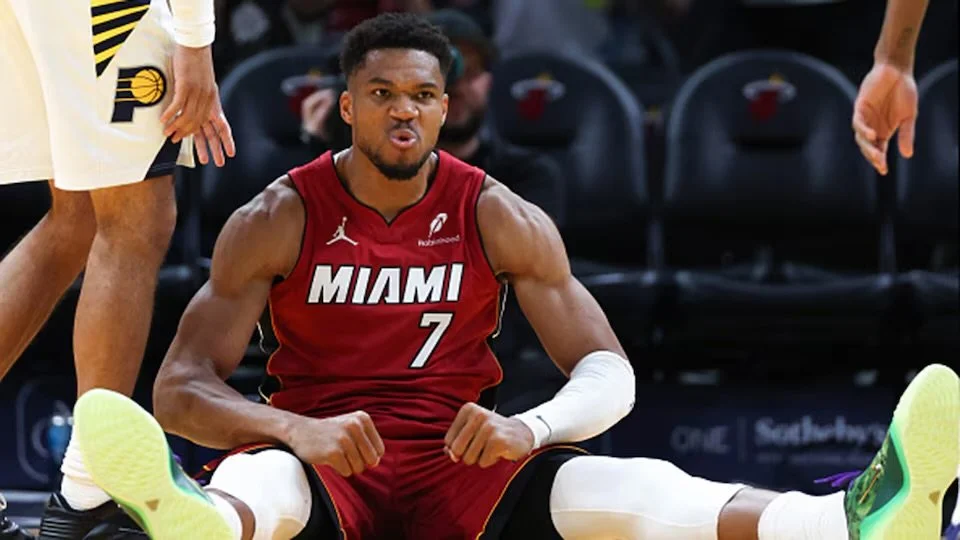
Behind a dominant triple-double from Giannis Antetokounmpo, a highly efficient performance from Bam Adebayo and a breakout shooting night from Klay Thompson, Miami defeated the Indiana Pacers 145-125 on Friday night at Kaseya Center to open NBA Cup group play with a convincing victory.
The win marked Miami’s second consecutive victory after beginning the season with four straight losses, providing some much-needed momentum for a team that entered the year with championship expectations.
Antetokounmpo finished with 31 points, 18 rebounds and 10 assists, recording his second triple-double of the season while controlling the game on both ends of the floor.
Adebayo added 27 points on 11-of-14 shooting, while Thompson delivered his best performance since joining Miami, scoring 25 points and connecting on seven three-pointers.
For the first time this season, the Heat’s collection of established stars appeared to be finding the offensive chemistry that made Miami one of the league’s most intriguing teams entering the year. (NBA)
Giannis Continues Dominant Start With Another Triple-Double
While Miami’s early-season record has been disappointing, Antetokounmpo has continued to produce at an elite level.
The former two-time NBA MVP recorded his second triple-double of the season Friday night, finishing with 31 points, 18 rebounds and 10 assists in just 31 minutes.
His ability to attack the basket, control the glass and create scoring opportunities for teammates proved instrumental in Miami’s offensive success.
Antetokounmpo repeatedly forced Indiana’s defense to collapse into the paint, creating opportunities for Miami’s perimeter shooters and allowing the Heat to generate quality possessions throughout the contest.
The 31-year-old superstar also demonstrated his ability to operate within an offense featuring multiple established scoring threats, something that will be essential as Miami continues developing its chemistry.
Rather than relying exclusively on isolation opportunities, Antetokounmpo was able to facilitate the offense while still maintaining his usual scoring production.
His performance was particularly important during Miami’s second-quarter turnaround, when the Heat erased an early deficit and began taking control of the game.
For a team still adjusting to the addition of multiple high-profile players, Antetokounmpo’s versatility remains the foundation of its offensive identity. (NBA)
Klay Thompson Delivers Breakout Performance From Beyond the Arc
Perhaps the most encouraging development for Miami came from Thompson, who finally delivered the type of perimeter shooting performance the Heat envisioned when they acquired him.
Thompson scored 25 points and knocked down seven three-pointers, providing the offensive spacing Miami desperately needed during its disappointing opening stretch.
His shooting was particularly effective during the third quarter, when Miami began separating itself from Indiana.
After entering halftime with a seven-point advantage, the Heat opened the second half on a 10-0 run.
Thompson connected on a three-pointer to extend Miami’s lead to 78-61 before adding consecutive shots from beyond the arc that helped push the advantage to 21 points.
His ability to consistently punish Indiana’s defense from the perimeter created additional space for Antetokounmpo and Adebayo to operate near the basket.
Thompson’s performance also carried historical significance.
The veteran sharpshooter moved within 55 three-pointers of Ray Allen’s career total of 2,973, which currently ranks third in NBA history.
For Miami, however, the immediate importance of Thompson’s performance goes beyond individual milestones.
If the Heat can consistently receive this level of perimeter production, opposing defenses will face a difficult challenge deciding whether to protect the paint against Antetokounmpo or contest Thompson’s opportunities from three-point range. (NBA)
Bam Adebayo Provides Efficient Scoring as Miami’s Offense Comes Together
While Antetokounmpo and Thompson attracted much of the attention, Adebayo quietly delivered one of Miami’s most effective performances of the young season.
The veteran center scored 27 points while converting 11 of his 14 field-goal attempts, adding nine rebounds in a highly efficient offensive showing.
Adebayo’s ability to score without requiring a high volume of shots provided Miami with another reliable option throughout the contest.
His versatility also helped create favorable matchups against an Indiana team struggling with injuries and limited depth.
With Antetokounmpo attracting significant defensive attention, Adebayo was able to take advantage of opportunities closer to the basket while maintaining his effectiveness as a secondary offensive option.
The combination of Antetokounmpo, Adebayo and Thompson accounted for 83 of Miami’s 145 points.
That level of production illustrates the offensive potential of a team that has struggled to establish consistency through the opening weeks of the season.
For Miami to become a legitimate contender in the Eastern Conference, developing a sustainable offensive balance between its established stars will be essential. Friday’s performance offered an encouraging example of what that balance could look like. (Reuters)
Heat Overcome Slow Start Before Taking Control in Second Half
Despite the comfortable final margin, Miami initially struggled to contain Indiana’s offense.
The Pacers erupted for 42 points in the opening quarter, connecting on several perimeter opportunities while establishing an early 42-36 advantage.
Indiana briefly extended its lead to eight points during the second quarter, threatening to hand Miami another disappointing defeat.
However, the Heat responded with their most impressive stretch of the evening.
Miami closed the first half on a 22-7 run, completely reversing the momentum and taking a 68-61 lead into halftime.
The Heat then opened the third quarter with 10 unanswered points, extending their advantage to 17 before Thompson’s perimeter shooting pushed the lead beyond 20.
Miami outscored Indiana 67-46 across the second and third quarters, turning an early deficit into a commanding advantage.
Although the Pacers reduced the margin to 15 points entering the fourth quarter, the Heat never allowed Indiana to seriously threaten their lead.
Miami scored another 42 points in the final period, completing its highest-scoring performance of the season with a 20-point victory.
The Heat finished with 64 points in the paint, repeatedly exploiting Indiana’s defensive weaknesses while maintaining consistent offensive production throughout the second half. (NBA)
Indiana’s Injury Problems Continue to Mount
While Miami’s performance was impressive, the Pacers entered Friday’s contest dealing with significant personnel challenges.
Indiana had just 11 available players, with star guard Tyrese Haliburton sidelined by a hamstring injury that is expected to keep him out for at least several weeks.
The Pacers also lost Obi Toppin before the game after he experienced back problems ahead of the team’s morning shootaround.
Those absences left Indiana with limited options against a Miami roster featuring several accomplished veterans.
Quenton Jackson led the Pacers with 24 points, while Andrew Nembhard contributed 22 points and nine assists.
Jarace Walker added 14 points, and Pascal Siakam finished with 13.
Indiana also played without head coach Rick Carlisle, who was attending his father’s funeral in New York. Assistant coach Lloyd Pierce served as acting head coach.
Despite Indiana’s strong opening quarter, the Pacers struggled to maintain their offensive production once Miami increased its defensive pressure.
The loss marked Indiana’s third consecutive defeat and immediately placed the team in a difficult position in NBA Cup group play.
With only four group-stage games determining which teams advance to the knockout rounds, an opening defeat by 20 points creates an early disadvantage. (NBA)
Miami’s Supporting Cast Provides Encouraging Contributions
Beyond the performances of Miami’s three biggest offensive contributors, the Heat received valuable production from several additional players.
Pelle Larsson scored 18 points off the bench, providing an important scoring boost when Miami rotated away from its starting lineup.
Davion Mitchell also delivered an impressive all-around performance, finishing with 15 points and 11 assists.
Mitchell’s playmaking helped keep Miami’s offense organized, allowing the Heat to continue generating scoring opportunities without becoming overly dependent on Antetokounmpo.
Andrew Wiggins contributed another 12 points, giving Miami five players who reached double figures.
That distribution of scoring represents an encouraging development for a team that entered the season attempting to integrate several established players into a cohesive rotation.
While Miami’s star power has never been in question, the Heat’s long-term success will depend heavily on their ability to generate consistent contributions throughout the lineup.
Friday’s performance demonstrated how dangerous Miami can become when its supporting cast complements the production of its stars. (Reuters)
NBA Cup Victory Could Mark Turning Point for Miami
The victory also provides Miami with an encouraging beginning to its NBA Cup campaign.
Competing in East Group B, the Heat now hold an early advantage after securing their first group-stage victory.
The 20-point margin could become especially important as the tournament progresses, with point differential serving as a potential tiebreaker when determining which teams advance.
However, the larger significance of Friday’s result may be what it means for Miami’s regular-season outlook.
After opening the year with four consecutive defeats, questions had already begun emerging about whether the Heat’s revamped roster could develop the chemistry necessary to compete against the Eastern Conference’s best teams.
The addition of Antetokounmpo and Thompson created enormous expectations, but assembling established stars does not automatically translate into immediate success.
Miami’s offense has required time to develop an identity, particularly with multiple players accustomed to having significant offensive responsibilities.
Friday’s victory suggested that the process may finally be producing results.
The Heat will now travel to Los Angeles for a Monday matchup against the Lakers, providing another opportunity to determine whether their recent improvement can translate into sustained success. (NBA)
Heat Beginning to Show Their Championship Potential
It would be premature to declare Miami’s early-season struggles over after just two consecutive victories, particularly considering Indiana’s injury-depleted roster.
Nevertheless, Friday’s performance provided several reasons for optimism.
Antetokounmpo continues to produce at an MVP-caliber level, Adebayo remains one of the league’s most versatile frontcourt players, and Thompson demonstrated that he can still change the complexion of a game with his perimeter shooting.
Perhaps most importantly, Miami’s offense appeared increasingly comfortable operating with all three players contributing simultaneously.
The Heat scored 145 points, received substantial production from their supporting cast and overcame an early deficit without abandoning their offensive approach.
Those are encouraging developments for a team that entered the season with ambitions extending well beyond simply qualifying for the playoffs.
Miami still has considerable work ahead, particularly defensively after surrendering 125 points to a short-handed opponent.
However, the offensive potential that made the Heat one of the league’s most intriguing teams is beginning to emerge.
After four consecutive losses to open the season, Miami has responded with back-to-back victories and a statement performance in its NBA Cup opener.
The Heat are far from a finished product, but Friday night offered their clearest indication yet that their new-look roster may finally be finding its rhythm.
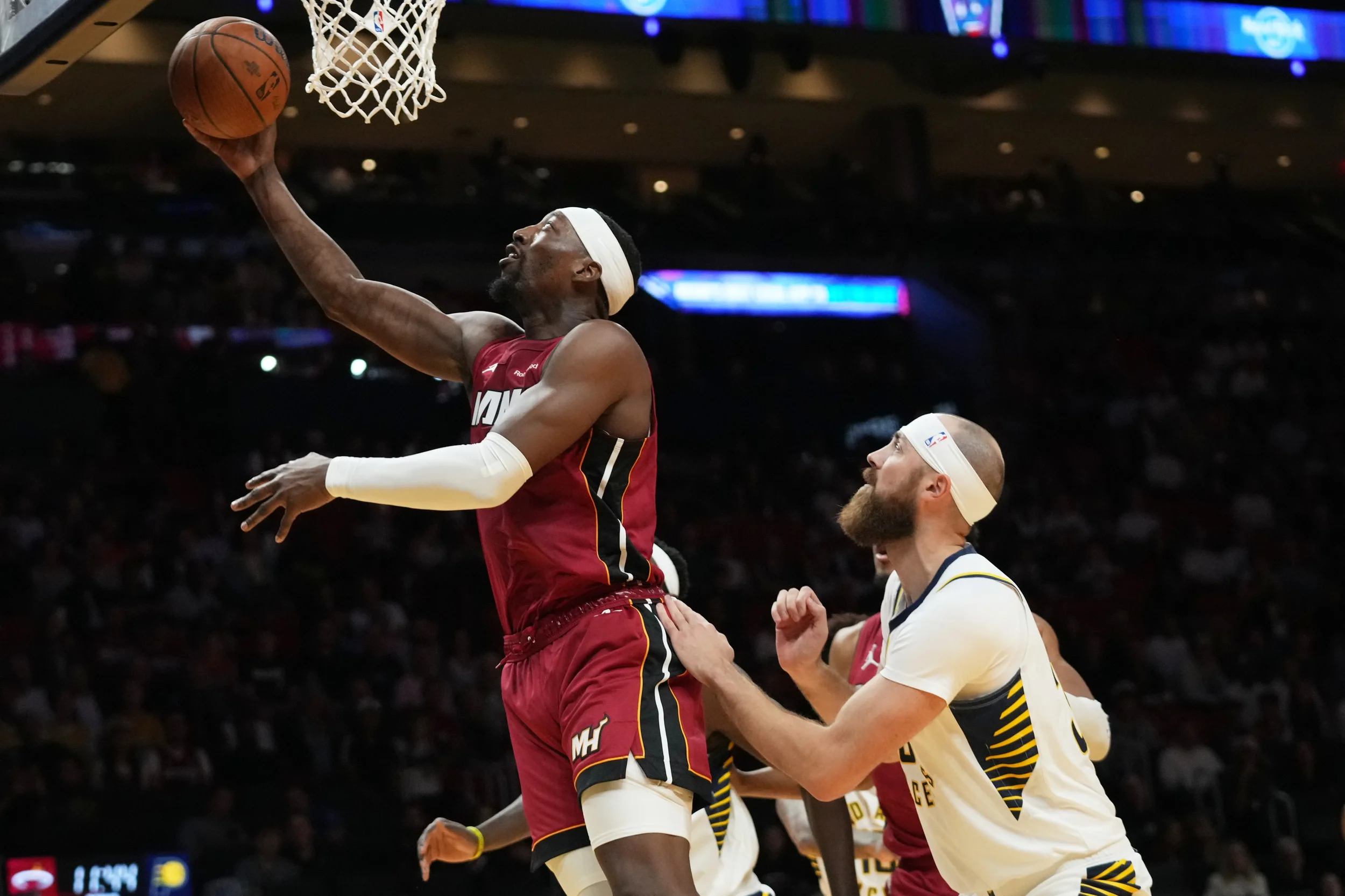
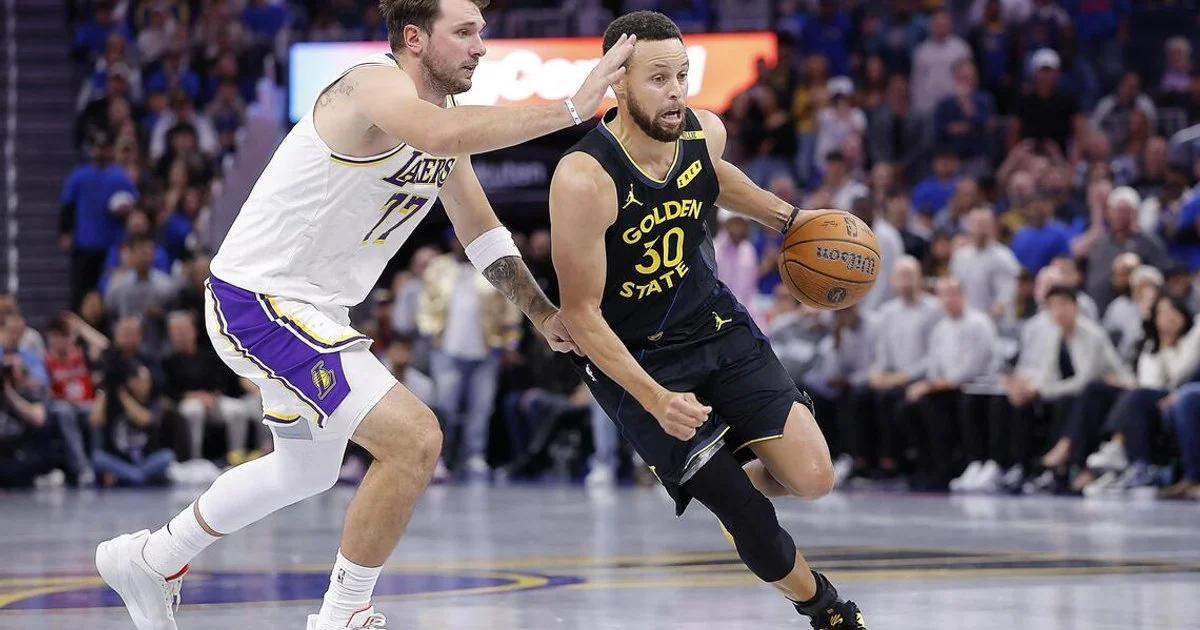
Lakers Collapse After Blowing 25-Point Lead as Warriors Complete Historic NBA Cup Comeback
SAN FRANCISCO, CA — What began as a dominant performance by the Los Angeles Lakers quickly turned into one of the most remarkable collapses of the young NBA season Friday night.
After building a commanding 25-point lead early in the second quarter, the Lakers watched their advantage disappear as Stephen Curry and the Golden State Warriors stormed back for a stunning 112-95 victory at Chase Center in the opening game of NBA Cup group play.
The Warriors completed a remarkable 42-point turnaround, going from trailing by 25 to winning by 17. It marked the largest margin of victory in the NBA’s shot-clock era for a team that trailed by at least 20 points at the end of the first quarter, adding a historic distinction to an already embarrassing defeat for Los Angeles. (NBA)
Luka Dončić’s Explosive First Quarter Gives Lakers Complete Control
For the opening 12 minutes, the Lakers appeared unstoppable.
Luka Dončić delivered an extraordinary first-quarter performance, scoring 21 points while shooting 7-of-12 from the field and connecting on five three-pointers. He also recorded five assists and two steals, orchestrating an offensive attack that overwhelmed Golden State’s defense.
Los Angeles raced to a 38-15 advantage after the opening quarter, holding a 23-point lead while seemingly controlling every aspect of the game.
The Lakers extended their advantage to 40-15 early in the second quarter, establishing their largest lead of the night at 25 points.
At that moment, Golden State appeared headed toward another lopsided defeat against Los Angeles after already losing the teams’ season-opening meeting the previous week.
Instead, the Warriors responded with one of the most dramatic momentum shifts in recent NBA history. (NBA)
Warriors Erase 25-Point Deficit Before Halftime
Golden State’s comeback began with a complete reversal of its first-quarter performance.
De’Anthony Melton provided the initial spark off the bench, scoring seven consecutive points early in the second quarter to begin cutting into Los Angeles’ substantial advantage.
As Golden State’s offense found its rhythm, the Lakers struggled to generate quality possessions. Turnovers, poor shot selection and an inability to maintain their early offensive efficiency allowed the Warriors to seize control of the game’s tempo.
Melton scored 13 points in the second quarter, while Curry added eight as Golden State repeatedly attacked the Lakers’ defense.
By halftime, the Warriors had completely erased the deficit.
In an extraordinary statistical coincidence, Golden State outscored Los Angeles 38-15 in the second quarter, the exact reverse of the opening period.
The game entered halftime tied at 53-53, despite the Lakers having led by 25 points just minutes earlier.
Golden State became the first team in the NBA’s shot-clock era, including postseason games, to trail by at least 23 points after the first quarter and recover to enter halftime tied or leading.
What initially looked like a comfortable Lakers victory had become a completely different contest. (NBA)
Stephen Curry Takes Over as Lakers’ Offense Disappears
Although Dončić finished with a game-high 37 points, Curry ultimately delivered the performance that mattered most.
The Warriors superstar recorded 31 points, six assists and four rebounds, shooting 11-of-23 from the field and an impressive 8-of-14 from three-point range.
Curry’s perimeter shooting became increasingly devastating as the game progressed, particularly during Golden State’s second-half surge.
Los Angeles briefly regained control during the third quarter, building a nine-point advantage before Golden State responded with another offensive explosion.
The Warriors closed the period on a 22-8 run over the final 5:27, turning their deficit into an 85-80 lead entering the fourth quarter.
Brandin Podziemski played a significant role in the turnaround, finishing with 21 points, six assists and five rebounds.
Golden State then delivered the final blow in the fourth quarter, extending its advantage to double digits as Los Angeles’ offense completely unraveled.
An 18-0 Warriors run helped put the game out of reach, with Curry continuing to punish the Lakers from beyond the arc.
Curry also reached another personal milestone during the final period, passing Dominique Wilkins for 18th place on the NBA’s all-time scoring list.
The Warriors outscored Los Angeles 27-15 in the fourth quarter, completing a comeback that seemed nearly impossible after the opening 15 minutes. (NBA)
Lakers’ Turnovers and Lack of Bench Production Prove Costly
While Golden State deserves considerable credit for its comeback, the Lakers’ offensive struggles were equally responsible for the collapse.
Los Angeles scored just 15 points in both the second and fourth quarters, a staggering decline from its 38-point opening period.
The Lakers also committed 20 team turnovers according to the NBA’s official box score, repeatedly surrendering possessions that could have helped stabilize their offense.
Austin Reaves finished with 21 points and five assists, providing the only substantial scoring support alongside Dončić.
However, the most glaring difference between the teams came from their respective benches.
Golden State’s reserves outscored the Lakers’ bench 50-7, an astonishing 43-point disparity that played a major role in the final outcome.
Melton contributed 16 points, while Georges Niang added 11 as Golden State received production throughout its rotation.
Los Angeles, meanwhile, became increasingly dependent on Dončić to create offense, with the Lakers struggling to maintain any consistency whenever their superstar was off the floor.
Despite Dončić and Reaves combining for 58 points, the remainder of the Lakers roster produced just 37.
That lack of offensive balance became impossible to overcome once Golden State began generating defensive stops and converting opportunities on the other end. (NBA)
JJ Redick Addresses Lakers’ Disappointing Collapse
Following the defeat, Lakers head coach JJ Redick acknowledged his team’s inability to respond to Golden State’s adjustments.
Redick pointed toward problems with the team’s decision-making, communication and offensive execution as the Warriors steadily took control.
The Lakers’ inability to protect the basketball was another significant concern, particularly as turnovers continued to interrupt potential scoring opportunities.
Dončić also accepted responsibility following the loss, acknowledging that both he and his teammates needed to perform better after surrendering such a substantial advantage.
The defeat was particularly frustrating considering how effectively Los Angeles had executed offensively during the opening quarter.
Rather than building on that performance, the Lakers allowed the Warriors to dictate the remainder of the contest, ultimately losing by double digits in a game they once led by 25.
For Redick, the challenge now becomes addressing the inconsistency that allowed a seemingly decisive advantage to disappear so quickly. (LA Times)
Historic Comeback Creates Early NBA Cup Statement
Beyond the rivalry between Los Angeles and Golden State, Friday’s result carries significance in the NBA Cup standings.
Both teams entered the matchup looking to begin West Group C play with a victory, making the result more consequential than an ordinary early-season contest.
Golden State’s 17-point victory also provides a substantial positive point differential, an important consideration in NBA Cup group play because point differential can factor into tiebreakers.
For the Warriors, the victory represents another encouraging result following a difficult 0-3 start to the regular season.
Curry remains the centerpiece of Golden State’s offense, but the contributions from Podziemski, Melton and the Warriors’ supporting cast demonstrated how dangerous the team can become when its rotation produces consistently.
The Lakers, meanwhile, leave San Francisco with a much different set of questions.
Dončić continues to demonstrate his ability to dominate offensively, but Friday’s collapse highlighted the challenges Los Angeles faces when its supporting cast struggles and its offense becomes overly dependent on individual shot creation.
The Lakers will return home to face the Toronto Raptors on Sunday, while Golden State will host the Los Angeles Clippers. (NBA)
A Collapse That Raises Questions About the Lakers
One early-season defeat will not define the Lakers’ championship aspirations, but the manner in which Friday’s game unfolded should concern Los Angeles.
Building a 25-point lead against a team featuring Stephen Curry is impressive. Allowing that same opponent to turn the deficit into a 17-point victory is an entirely different story.
The 42-point turnaround was not simply the result of Curry catching fire. It exposed significant weaknesses in the Lakers’ ball security, offensive consistency and bench production.
Los Angeles went from scoring 38 points in the first quarter to managing just 57 over the remaining three periods. Golden State, meanwhile, scored 97 points after its disastrous 15-point opening quarter.
Those numbers illustrate just how dramatically the game shifted.
For the Warriors, Friday night provided a reminder that Curry remains capable of completely changing the outcome of a game, even when his team appears hopelessly outmatched.
For the Lakers, it was a missed opportunity to establish an early advantage in NBA Cup competition and a difficult reminder that even a 25-point lead offers little security without consistent execution.
A game that began as a potential statement victory for Los Angeles instead became a historic comeback for Golden State — and one of the most memorable collapses of the young NBA season.
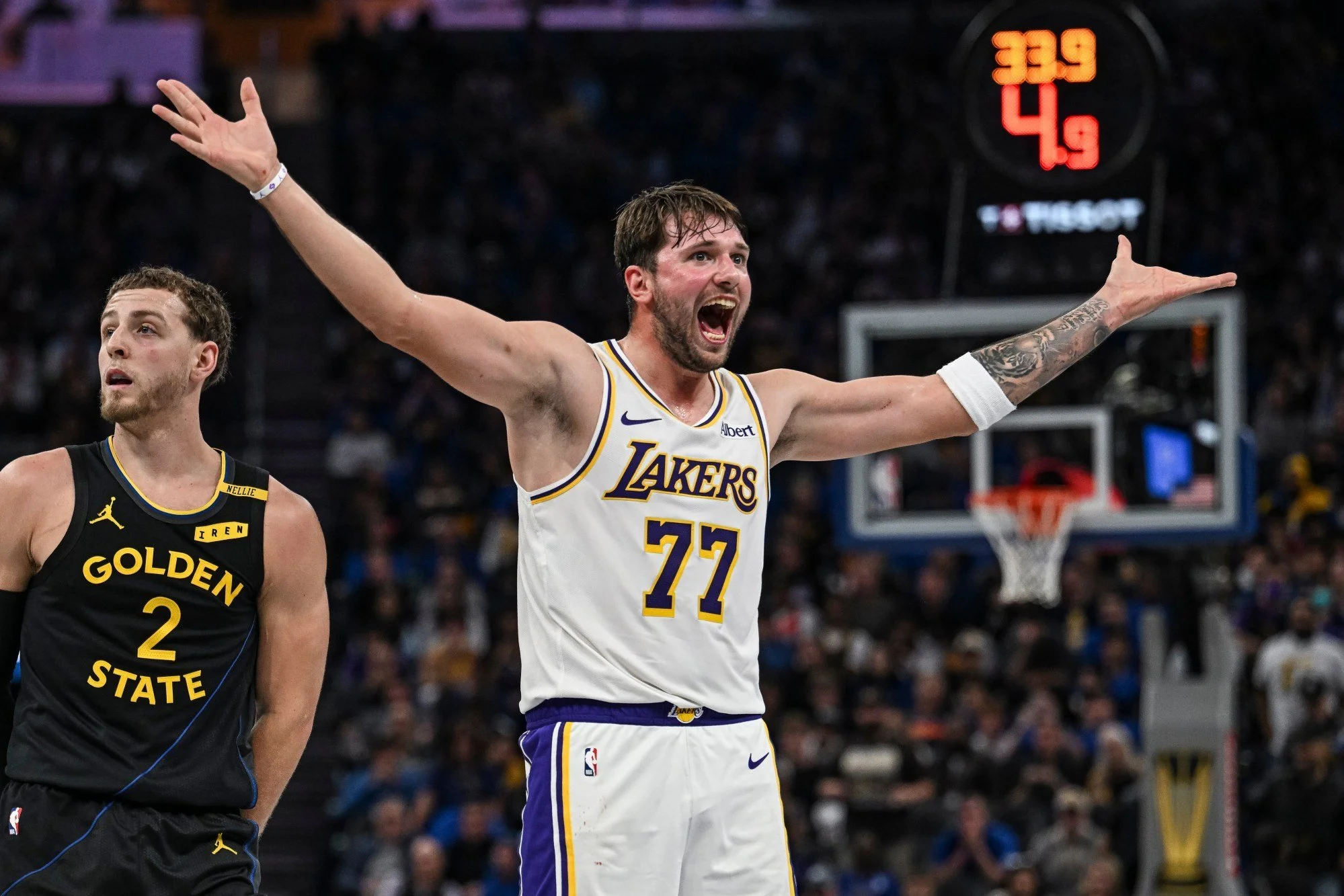
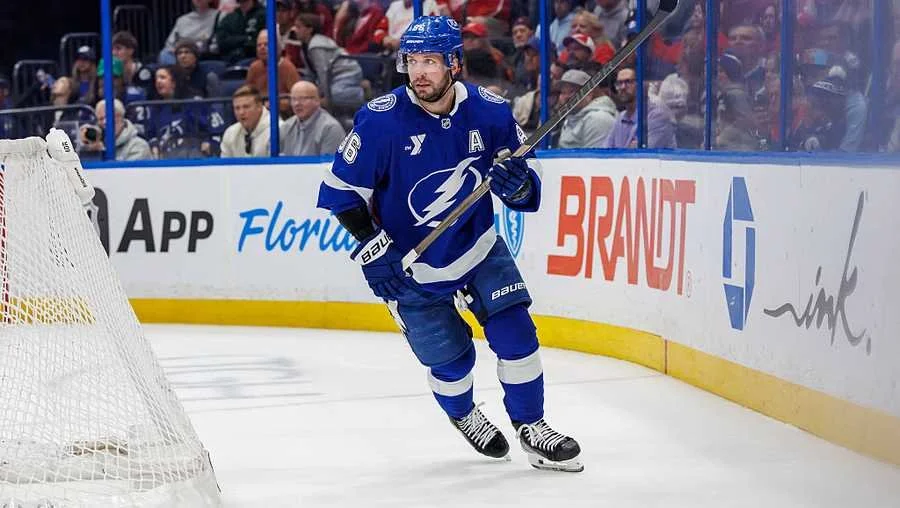
Shocking Split: Nikita Kucherov Tells Lightning He Won’t Re-Sign, Requests Trade
TAMPA, Fla. — One of the most successful partnerships in modern NHL history could be approaching its conclusion, as Tampa Bay Lightning superstar Nikita Kucherov has reportedly requested a trade and informed the organization that he does not intend to re-sign with the franchise.
According to Sportsnet’s Elliotte Friedman, the 33-year-old winger has communicated his desire to leave Tampa Bay, delivering a stunning development for an organization he helped lead to consecutive Stanley Cup championships in 2020 and 2021. The Associated Press independently confirmed the request through a person familiar with the situation. (Sportsnet)
The announcement represents a dramatic shift for a player who has spent his entire NHL career with the Lightning, becoming one of the greatest offensive talents in franchise history and a central figure in Tampa Bay’s transformation into a perennial Stanley Cup contender.
For an organization that has spent more than a decade building around Kucherov and its championship core, the possibility of losing its most productive offensive player presents an enormous challenge.
A Franchise Legend With Two Stanley Cup Championships
Kucherov’s legacy in Tampa Bay is already firmly established, regardless of where his career takes him next.
Selected in the second round of the 2011 NHL Draft, Kucherov developed from a promising young winger into one of the league’s most dominant offensive players. His elite vision, creativity and playmaking ability helped turn the Lightning into one of hockey’s most dangerous offensive teams.
His greatest accomplishments came during Tampa Bay’s consecutive Stanley Cup championship runs in 2020 and 2021, when the Lightning established themselves as the NHL’s premier franchise.
Alongside stars such as Steven Stamkos, Victor Hedman, Brayden Point and Andrei Vasilevskiy, Kucherov helped create a championship foundation that reached three consecutive Stanley Cup Finals between 2020 and 2022.
Kucherov’s individual accomplishments have been equally impressive. He has captured multiple Art Ross Trophies as the league’s leading scorer and earned two Hart Memorial Trophies as the NHL’s most valuable player.
During the 2025-26 season, Kucherov recorded 44 goals and 86 assists for 130 points in just 76 games, earning his second Hart Trophy and further solidifying his standing among the greatest offensive players of his generation. (NHL)
Contract Negotiations Take an Unexpected Turn
The reported trade request comes after months of negotiations between Kucherov’s representatives and the Lightning organization.
Kucherov is currently playing the final season of an eight-year, $76 million contract signed in July 2018. The agreement carries an annual salary-cap hit of $9.5 million, a figure that has become remarkably favorable for Tampa Bay considering his consistent offensive production.
The veteran winger is scheduled to become an unrestricted free agent following the 2026-27 season, placing additional pressure on Lightning management to determine his future before potentially losing him without receiving compensation.
As recently as September, Lightning general manager Julien BriseBois publicly expressed confidence that the organization could reach a long-term agreement with its superstar forward.
BriseBois emphasized Kucherov’s importance to the franchise and indicated that the organization wanted him to remain in Tampa Bay for years to come.
However, Friday’s developments suggest that the relationship between the two sides has changed significantly since those earlier discussions. (NHL)
The exact circumstances behind Kucherov’s decision remain unclear, including whether financial disagreements, organizational direction or other considerations influenced his reported request.
What a Kucherov Departure Would Mean for Tampa Bay
Losing Kucherov would represent one of the most significant roster changes in Lightning franchise history.
While Tampa Bay has experienced considerable personnel turnover since its championship seasons, Kucherov has remained the driving force behind its offensive production.
His ability to control the pace of a game, generate scoring opportunities and elevate the performance of his teammates makes him nearly impossible to replace with a single player.
The Lightning have also struggled to replicate their postseason success from the early 2020s.
Following their appearance in the 2022 Stanley Cup Final, Tampa Bay has endured four consecutive first-round playoff eliminations, raising questions about whether its aging championship core can make another serious run at the Stanley Cup.
Despite those postseason disappointments, Kucherov has continued performing at an MVP level, making his potential departure particularly difficult for the organization to absorb. (NHL)
General manager Julien BriseBois now faces a complicated decision.
Trading Kucherov could allow Tampa Bay to acquire valuable young players, prospects and draft selections that would help establish the franchise’s next competitive window.
However, moving a player of Kucherov’s caliber would also significantly weaken the team’s immediate championship aspirations.
The Lightning must weigh the value of retaining one of the world’s best players against the possibility of losing him in free agency next summer.
One of the NHL’s Biggest Potential Trade Targets
Should Tampa Bay seriously entertain trade offers, Kucherov would immediately become one of the most valuable players available on the NHL trade market.
Players capable of consistently producing more than 100 points per season rarely become available, particularly those with Kucherov’s extensive postseason experience and championship résumé.
Any interested organization would need to consider both the substantial assets required to acquire him and the financial commitment necessary to secure his services beyond the current season.
His $9.5 million cap hit could make a trade more manageable for certain contenders during the 2026-27 campaign, although fitting a potential extension into future salary-cap plans would create additional complications.
Tampa Bay would also need to evaluate whether acquiring established NHL talent or prioritizing younger assets would provide the greatest long-term benefit.
At this stage, no destination has been confirmed, and the reported request does not guarantee that a trade will occur immediately.
Nevertheless, the possibility of Kucherov changing teams could reshape the competitive landscape across the league.
The Potential End of an Era in Tampa Bay
For more than a decade, Kucherov has been synonymous with the Lightning’s success.
He helped transform Tampa Bay from an emerging contender into a championship powerhouse, delivering memorable postseason performances and establishing himself among the greatest players ever to wear the franchise’s uniform.
His reported decision to seek a trade marks another potentially defining moment in the evolution of a championship roster that has already experienced significant changes.
Unlike many aging superstars whose departures coincide with declining production, Kucherov remains among the most productive players in professional hockey.
That reality makes this situation particularly unusual. Tampa Bay is not simply facing the prospect of moving on from a former franchise cornerstone. It could be preparing to lose an elite player who continues to perform at the highest level.
Whether the Lightning ultimately honor his request, attempt to repair the relationship or continue negotiations remains to be seen.
What is clear is that Tampa Bay now faces one of the most consequential decisions in franchise history.
After two Stanley Cup championships, multiple individual awards and more than a decade of offensive brilliance, Nikita Kucherov’s remarkable tenure with the Lightning could be approaching its final chapter.
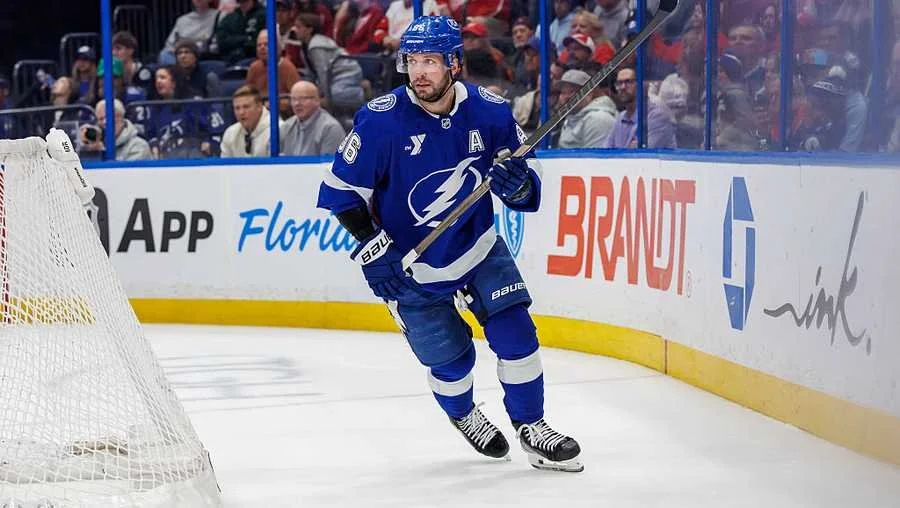
Quinton Byfield Scores Overtime Winner as Kings Survive Senators’ Four-Goal Comeback in Wild 6-5 Victory
LOS ANGELES — What appeared to be a comfortable victory for the Los Angeles Kings nearly turned into one of their most disappointing losses of the season Thursday night.
Quinton Byfield scored 3:37 into overtime to lift the Kings to a dramatic 6-5 victory over the Ottawa Senators at Crypto.com Arena, rescuing Los Angeles after it surrendered a four-goal lead during a disastrous third period.
The Kings carried a commanding 5-1 advantage into the final 20 minutes before Ottawa scored four unanswered goals, including the tying goal with just 1:40 remaining in regulation.
Despite the collapse, Byfield delivered when Los Angeles needed him most, beating goaltender Samuel Ersson with a snap shot from the high slot to secure the additional point and send the home crowd into celebration. (AP)
Kings Build Commanding Lead Behind Dominant Second Period
Ottawa opened the scoring in the first period when defenseman Tyler Kleven found the back of the net, giving the Senators an early advantage.
Los Angeles responded on the power play, with Erik Haula scoring to even the contest at 1-1 heading into the second period.
From there, the Kings appeared to take complete control.
Los Angeles erupted for four unanswered goals in the middle frame, receiving contributions from Trevor Moore, Mikey Anderson, Joel Armia and Artemi Panarin.
The offensive outburst showcased the Kings’ scoring depth, with multiple lines contributing to what appeared to be a decisive performance.
Panarin capped the second-period scoring with a power-play goal after Ottawa forward Hayden Hodgson received a major penalty and game misconduct for boarding Kings defenseman Brandt Clarke.
Clarke suffered an upper-body injury on the play and did not return.
By the end of the second period, Los Angeles held a 5-1 advantage and appeared firmly positioned to secure a convincing home victory.
However, the Senators had other plans. (AP)
Ottawa Erases Four-Goal Deficit in Remarkable Third-Period Comeback
Trailing by four goals entering the final period, Ottawa produced an extraordinary offensive rally that completely changed the direction of the game.
Drake Batherson and Dylan Cozens scored just 33 seconds apart, rapidly cutting into the Kings’ advantage and giving the Senators renewed momentum.
Cozens added another goal with 7:26 remaining in regulation, bringing Ottawa within one and placing enormous pressure on a Los Angeles team that had controlled the previous two periods.
The Kings struggled to regain their defensive structure as Ottawa continued pressing for the equalizer.
With Ersson pulled for an extra attacker in the closing minutes, Shane Pinto completed the comeback, scoring with 1:40 remaining to tie the game at 5-5.
In a matter of minutes, Los Angeles had watched a four-goal lead disappear.
What once seemed like a routine victory had become an overtime contest, with the Kings suddenly facing the possibility of leaving the game with only one point.
For Ottawa, the comeback represented an impressive display of resilience after an otherwise difficult opening 40 minutes.
For Los Angeles, it exposed significant concerns about protecting leads and maintaining defensive consistency throughout an entire game. (AP)
Byfield Delivers the Decisive Goal in Overtime
With both teams entering overtime following a chaotic third period, Los Angeles needed someone to reverse the momentum.
Byfield provided exactly that.
At the 3:37 mark of the extra period, the 24-year-old forward found space in the high slot and fired a snap shot past Ersson to end the contest.
Veteran defenseman Drew Doughty recorded his third assist of the evening on the game-winning play, completing an important offensive performance of his own.
The goal prevented what would have been a particularly frustrating defeat for a Kings team that had dominated large portions of the contest.
It also provided another example of Byfield’s importance to Los Angeles as the organization continues relying on its younger offensive talent.
Selected second overall in the 2020 NHL Draft, Byfield has developed into an increasingly important piece of the Kings’ long-term plans.
His combination of size, skating ability and offensive instincts makes him one of the team’s most valuable young forwards.
Thursday’s winner demonstrated his ability to deliver in critical situations, particularly after the Kings had lost nearly all of their momentum during regulation.
Although the victory will count the same in the standings, Byfield’s overtime heroics prevented a far more concerning result. (AP)
Goaltending Changes and Defensive Struggles Shape the Contest
The game also featured significant challenges for both teams between the pipes.
Ottawa starting goaltender Jonas Johansson allowed four goals on 16 shots before being replaced by Ersson during the second period.
Ersson helped stabilize the Senators, stopping 20 of the 22 shots he faced and giving Ottawa an opportunity to mount its third-period comeback.
At the opposite end, Darcy Kuemper finished with 17 saves for Los Angeles.
While Kuemper ultimately earned the victory, the Kings’ inability to protect their substantial lead raised questions about the team’s defensive performance.
Los Angeles entered the third period with complete control of the scoreboard but allowed Ottawa to dictate the pace and generate several critical scoring opportunities.
The injury to Clarke further complicated matters, leaving the Kings without one of their important young defensemen for the remainder of the contest.
Although Los Angeles escaped with the victory, the third-period breakdown will likely remain a significant point of emphasis moving forward. (AP)
Kings Continue Their Familiar Relationship With Overtime
For Los Angeles, another game extending beyond regulation is hardly unfamiliar territory.
The Kings established an NHL record during the 2025-26 season by playing 33 games that required overtime or a shootout, highlighting how frequently their contests remained undecided after 60 minutes.
Byfield has also developed a history of delivering in those situations.
During the previous season, he scored an overtime winner against the Toronto Maple Leafs on April 4, 2026, finishing a 7-6 victory in another high-scoring contest.
That goal was his second of the evening and his 20th of the season, helping Los Angeles secure an important victory during its playoff pursuit.
His latest overtime winner against Ottawa adds another memorable moment to his growing collection of clutch performances.
However, Thursday’s contest also demonstrated why the Kings must become more effective at finishing games in regulation.
While overtime victories provide valuable points, repeatedly surrendering leads and allowing opponents back into games can become a dangerous habit over the course of an 82-game season. (NHL)
Looking Ahead
Los Angeles will return to action Saturday when it hosts the Buffalo Sabres, while Ottawa continues its road trip with a matchup against the San Jose Sharks.
For the Kings, the victory provides an important result but also several areas requiring immediate attention.
Their offensive production was encouraging, particularly with six different players finding the back of the net.
Doughty’s three-assist performance and Byfield’s overtime winner further demonstrated the contributions Los Angeles can receive from both its veteran leaders and younger players.
However, surrendering four consecutive goals in the third period is not something the Kings can afford to repeat consistently.
For Ottawa, the loss will be disappointing considering the magnitude of its comeback, but earning a point after trailing 5-1 provides something positive to build upon.
Ultimately, Thursday’s game will be remembered for two dramatically different stories.
The Senators nearly completed an extraordinary comeback after appearing completely out of contention.
But when the game reached its decisive moment, Byfield ensured the Kings would not leave empty-handed.
Los Angeles survived a collapse, secured two points and escaped with a victory that was considerably more difficult than it ever needed to be.
Jordan Love Throws Three Touchdowns as Packers Hold Off Panthers on Thursday Night Football
GREEN BAY, Wis. — Jordan Love delivered another impressive performance under the lights Thursday night, throwing three touchdown passes as the Green Bay Packers defeated the Carolina Panthers 27-19 at Lambeau Field.
Green Bay built a commanding 17-point lead in the second half before surviving a late Carolina comeback attempt, improving to 5-3 on the season and keeping pace in a highly competitive NFC North division.
Love completed 30 of 41 passes for 288 yards, three touchdowns and one interception, connecting with Tucker Kraft, Matthew Golden and Josh Jacobs for scores. Despite committing three turnovers and struggling to establish a consistent rushing attack, the Packers relied on their quarterback and a relentless defensive performance to secure their fifth victory of the season. (NFL)
Packers Overcome Early Mistakes to Take Control
Green Bay’s night began with an immediate setback when the Packers fumbled the opening kickoff, giving Carolina excellent field position. The Panthers capitalized with a 39-yard field goal from Ryan Fitzgerald to take an early 3-0 lead.
After a three-and-out on their opening offensive possession, the Packers began finding their rhythm behind Love.
The Green Bay quarterback engineered an eight-play, 56-yard touchdown drive, finding tight end Tucker Kraft for a 12-yard score on third-and-eight. However, rookie kicker Trey Smack missed the extra point, leaving the Packers ahead 6-3.
Carolina responded with a 65-yard touchdown drive, capped by a one-yard rushing score from Chuba Hubbard early in the second quarter. The touchdown briefly restored the Panthers’ lead at 10-6.
From there, Green Bay’s offense began taking control.
Love connected with Christian Watson for a 53-yard completion that helped set up a one-yard touchdown run from Jacobs, giving the Packers a 13-10 advantage midway through the second quarter.
Later in the half, Love found rookie receiver Matthew Golden for a 24-yard touchdown on third-and-13, extending Green Bay’s lead to 20-10 heading into halftime.
The Packers continued their momentum after the break. Following a defensive stop on fourth down near midfield, Love led another scoring possession, finding Jacobs for a four-yard touchdown reception that pushed the advantage to 27-10.
At that point, Green Bay appeared positioned to cruise toward a comfortable victory. (AP)
Carolina Mounts Late Comeback, but Green Bay’s Defense Holds
Despite trailing by 17 points in the third quarter, Carolina refused to go away.
The Panthers cut the deficit to 27-13 following a 50-yard field goal from Fitzgerald, while Green Bay’s offense began struggling to maintain its earlier efficiency.
An interception by Carolina defensive back Zakee Wheatley in the end zone early in the fourth quarter prevented the Packers from extending their lead and provided the Panthers with another opportunity to climb back into the game.
Quarterback Bryce Young eventually delivered Carolina’s biggest offensive play of the night, connecting with Jalen Coker for a 26-yard touchdown on fourth-and-three with 5:37 remaining.
The touchdown brought Carolina within eight points, but Young’s two-point conversion attempt fell incomplete, leaving Green Bay ahead 27-19.
Carolina received another opportunity after forcing a punt, taking possession near midfield with more than four minutes remaining. However, the Packers’ defense held firm, forcing a turnover on downs.
The Panthers received one final possession with 22 seconds remaining, but Green Bay’s pass rush effectively ended the comeback attempt.
Young finished with 209 passing yards, one touchdown and one interception, while Hubbard contributed 81 rushing yards and a touchdown on 22 carries.
Green Bay’s defense recorded six sacks and prevented Carolina from completing what would have been one of the more dramatic comebacks of the NFL season. (NFL)
Jordan Love Continues to Carry Green Bay’s Offense
While the Packers ultimately secured the victory, Thursday’s performance highlighted how heavily their offense has depended on Love throughout the season.
The quarterback was efficient for much of the night, distributing the football to multiple receivers and delivering several important throws in difficult situations.
His three touchdown passes provided Green Bay with the offensive production necessary to overcome an ineffective running game.
Jacobs finished with just 39 rushing yards on 21 carries, averaging fewer than two yards per attempt against a Carolina defense that entered Thursday ranked last in the NFL against the run.
As a team, Green Bay managed only 66 rushing yards, continuing a concerning trend that has placed additional pressure on its passing attack.
According to the Thursday night broadcast, Green Bay became the first team in NFL history to hold a winning record through eight games despite accumulating fewer than 500 rushing yards.
That statistic illustrates both the effectiveness of Love’s passing attack and the significant imbalance within the Packers’ offense.
If Green Bay intends to compete with the NFC’s strongest teams later this season, developing a more reliable rushing attack will likely become a priority. (Reuters)
Christian Watson Returns After Frightening Injury Scare
One of the night’s most unusual developments involved Packers wide receiver Christian Watson, who temporarily left Lambeau Field in an ambulance after suffering a chest injury during a 53-yard reception in the second quarter.
Watson underwent medical testing at a local hospital before remarkably returning to the stadium and reentering the game during the second half.
The receiver later revealed that he had suffered a broken rib, although a CT scan showed no internal bleeding.
Despite the injury scare, Watson finished with eight receptions for 113 yards, leading Green Bay in both categories.
His ability to return provided an important boost to a Packers receiving group that has relied on contributions from several different playmakers throughout the season.
Watson’s performance also demonstrated the impact he can have on Green Bay’s offense when healthy, particularly as a deep receiving threat capable of creating explosive plays. (AP)
Packers Remain in the Thick of a Competitive NFC North Race
Thursday’s victory improved Green Bay to 5-3, keeping the Packers firmly involved in the NFC playoff picture despite entering the week in fourth place in their own division.
The NFC North has emerged as one of the NFL’s most competitive divisions, with the undefeated Minnesota Vikings setting the pace and both Chicago and Detroit remaining serious contenders.
For Green Bay, every victory carries additional importance in a division where even a winning record does not guarantee a favorable position in the standings.
The Packers have also demonstrated considerable defensive improvement, holding each of their last five opponents to 20 points or fewer.
That consistency could prove especially valuable as the season progresses, particularly if Green Bay continues experiencing difficulties establishing its running game.
However, Thursday’s victory was far from flawless.
Three turnovers, a missed extra point and a scoreless fourth quarter nearly allowed Carolina to erase what had appeared to be a comfortable advantage.
Those mistakes could become increasingly costly against stronger opponents, particularly within a division featuring several legitimate playoff contenders. (NFL)
Looking Ahead
The Packers will have additional time to prepare before traveling to face the New England Patriots on November 8.
Carolina, meanwhile, falls to 3-4 and will return home to face the Denver Broncos on the same date.
For the Panthers, Thursday’s defeat represented another frustrating performance in which offensive inconsistency and protection problems prevented the team from fully capitalizing on its opportunities.
For Green Bay, the victory provided another example of its ability to overcome adversity, even when several aspects of its performance fall short of expectations.
Love continues to establish himself as the centerpiece of the Packers’ offense, while the defense has shown the ability to deliver critical stops when games remain undecided.
Still, the Packers have considerable room for improvement.
With the NFC North race becoming increasingly competitive and the second half of the regular season approaching, Green Bay will need more complete performances to separate itself from the crowded playoff field.
Thursday night was not necessarily the Packers’ cleanest victory, but it was another important step forward.
And in a division where every win matters, Green Bay will gladly take it.
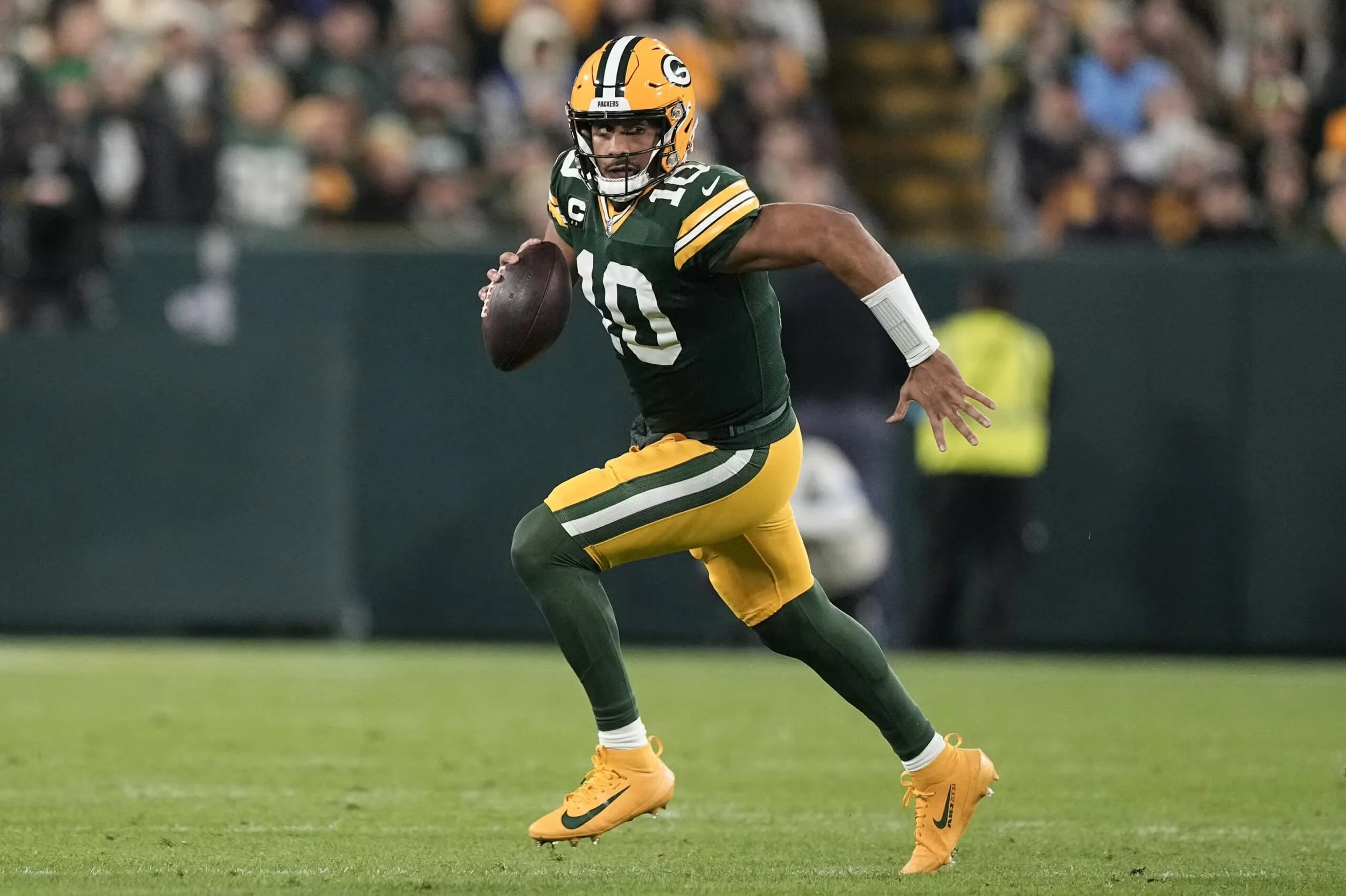
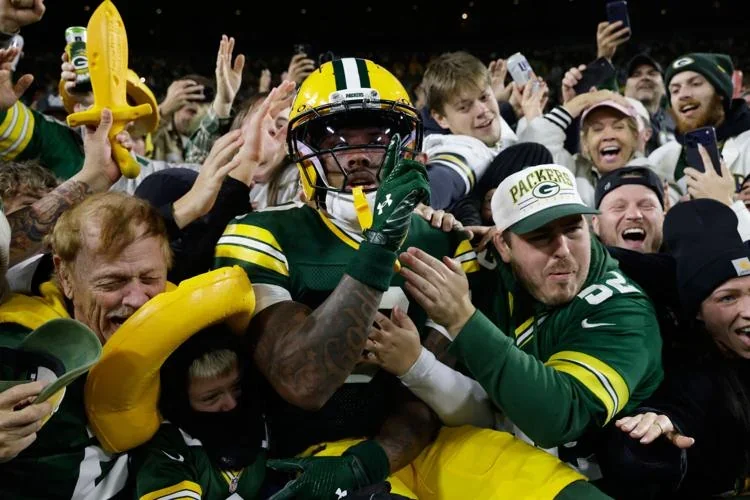
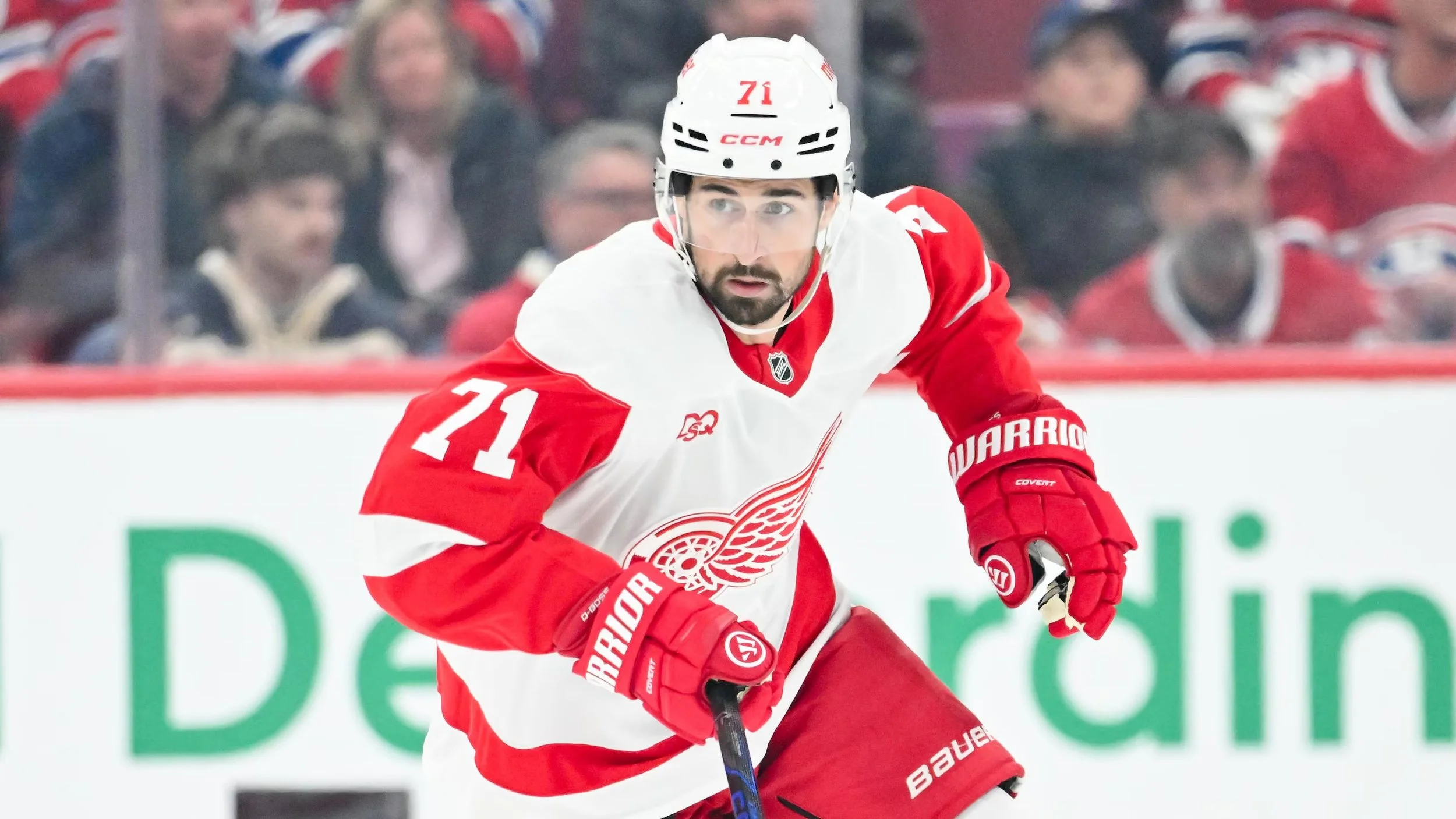
Dylan Larkin Refuses to Play for Red Wings, Suspended Without Pay as NHL Faces Growing Holdout Trend
DETROIT, MI — What was once an unusual occurrence in the National Hockey League is quickly becoming one of the league’s most controversial developing trends.
The Detroit Red Wings have suspended former captain Dylan Larkin without pay after the veteran center informed the organization that he would no longer play until his trade request was fulfilled. The decision marks a dramatic escalation in an already strained relationship between Larkin and the only NHL franchise he has ever represented.
The situation comes on the heels of a similar dispute involving star goaltender Connor Hellebuyck and the Winnipeg Jets, raising questions about whether the NHL is entering a new era of player empowerment, one that has become increasingly familiar in the NFL and NBA but remains relatively uncommon in professional hockey. (NHL)
Larkin’s Relationship With Detroit Reaches a Breaking Point
Larkin’s frustration with the Red Wings has been building for months, dating back to his trade request during the offseason following Detroit’s 10th consecutive season without a playoff appearance.
The 30-year-old center, who had served as Detroit’s captain since January 2021, was removed from that role in September as the organization prepared for the 2026-27 season. Despite the growing uncertainty surrounding his future, Larkin initially reported to the team and continued playing while management explored potential trades.
Through his first 10 appearances this season, Larkin recorded two goals and four assists while remaining one of Detroit’s most heavily utilized forwards.
However, with October nearing its conclusion and no trade completed, Larkin apparently reached his limit.
On Thursday, interim general manager Shawn Horcoff confirmed that Larkin had informed the organization of his decision to stop playing, prompting an immediate suspension without pay.
“Dylan Larkin has informed us that he will no longer play for the Detroit Red Wings,” Horcoff said in a statement.
“We are disappointed by his decision, particularly given his obligations to the organization and his teammates. We have therefore suspended Dylan without pay.”
Horcoff emphasized that Detroit would continue exploring trade possibilities, but made clear that the organization would not sacrifice its long-term interests simply to accommodate Larkin’s demands.
Larkin’s agent, Pat Brisson, offered a different perspective, explaining that his client believed he had already demonstrated considerable patience throughout the process.
“Dylan’s had enough of the situation,” Brisson said. “We believe he’s been very professional and cooperative through this process.”
The suspension represents a significant turning point for a player who has spent his entire NHL career in Detroit and was once viewed as a central figure in the franchise’s rebuilding efforts. (Sportsnet)
The Financial Consequences and Complications of a Trade
Larkin’s decision is not without substantial financial consequences.
The veteran center is currently playing under an eight-year, $69.6 million contract signed in March 2023, carrying an average annual salary-cap hit of $8.7 million.
With Detroit suspending him without pay, Larkin reportedly stands to forfeit approximately $41,000 for every day the suspension remains in effect.
Beyond the financial implications, the structure of his contract has complicated Detroit’s ability to facilitate a trade.
Larkin possesses a full no-movement clause, giving him considerable control over his potential destination. He initially identified only three teams he would consider joining before reportedly expanding that list to 10 organizations.
Those teams include the Minnesota Wild, Florida Panthers, Vegas Golden Knights, Dallas Stars, Washington Capitals, Carolina Hurricanes, Tampa Bay Lightning, Colorado Avalanche, New Jersey Devils and Utah Mammoth.
Although the expanded list provides Detroit with additional options, the Red Wings still face the challenge of finding a team willing to absorb Larkin’s contract while offering an acceptable return.
For Detroit, trading a longtime franchise cornerstone for an inadequate package could create problems extending well beyond the current season.
For Larkin, however, every additional day without a resolution represents another missed opportunity to begin the next chapter of his career. (USA Today)
Connor Hellebuyck’s Holdout Set the Stage for Another NHL Standoff
Larkin’s decision comes shortly after another prominent NHL star took an unusually aggressive approach toward forcing a change of scenery.
Connor Hellebuyck’s relationship with the Winnipeg Jets deteriorated after the decorated goaltender requested a trade during the offseason.
Unlike Larkin, who initially reported and continued playing for Detroit, Hellebuyck declined to report to training camp while awaiting a resolution.
Winnipeg responded by suspending the goaltender, creating a public dispute involving one of the NHL’s most accomplished players at his position.
Hellebuyck’s situation eventually ended with a trade to the New Jersey Devils, demonstrating that a prolonged standoff between a star player and his organization can ultimately result in a departure.
The similarities between the two situations are difficult to ignore.
Both players were established stars with significant contractual commitments. Both sought departures from organizations with which they had become closely associated. And both ultimately used their willingness to withhold their services as leverage in negotiations.
There are also important differences. Hellebuyck chose not to report at the beginning of the season, while Larkin initially attempted to continue playing through the uncertainty before deciding he would no longer participate.
That distinction matters because Larkin’s decision came after he had already spent weeks sharing a locker room with teammates while awaiting a trade.
Although contract disputes and trade requests have existed throughout NHL history, two high-profile veterans engaging in such public standoffs within the same season is an extraordinary development for a league where these tactics have traditionally been less common.
The NHL has seen contentious player departures before, but the timing and similarities of these two cases make them particularly noteworthy. (USA Today)
A Common Strategy in the NFL and NBA, but a Different Reality in Hockey
While the situations involving Larkin and Hellebuyck have attracted considerable attention throughout the hockey world, similar disputes have become familiar storylines in other major North American professional sports.
In the NFL, players have frequently withheld their participation from training camps, practices and other team activities to negotiate new contracts or pressure organizations into facilitating trades.
One notable example came in 2021, when quarterback Deshaun Watson requested a trade from the Houston Texans and did not play during the regular season. His situation involved additional and significant complications, including allegations of sexual misconduct and legal proceedings, making it far more complex than an ordinary contract dispute.
Nevertheless, Watson’s eventual trade to the Cleveland Browns in 2022 demonstrated the enormous influence a franchise quarterback could exert over an organization’s direction.
Another example came in 2018, when running back Le’Veon Bell refused to sign his franchise tender with the Pittsburgh Steelers and ultimately sat out the entire season.
Bell’s dispute was primarily about compensation and long-term security rather than a specific trade destination, but it illustrated a player’s willingness to sacrifice substantial earnings to gain leverage over an organization.
The NBA has experienced even more prominent examples of superstar trade demands.
In 2023, James Harden publicly requested a trade from the Philadelphia 76ers and became involved in an increasingly contentious dispute with team president Daryl Morey. Harden eventually joined the Los Angeles Clippers after months of uncertainty.
Similarly, Ben Simmons refused to participate for the 76ers at the beginning of the 2021-22 season, resulting in fines and a prolonged standoff before Philadelphia traded him to the Brooklyn Nets in February 2022.
These situations helped establish a modern reality in professional basketball: a star player’s desire to leave can significantly influence an organization’s decisions, even when that player remains under contract.
The NHL, however, operates under different circumstances.
Hockey rosters contain larger groups of regularly contributing players, superstar contracts generally account for a different share of a team’s salary structure, and the league’s hard salary cap makes complex trades particularly challenging.
Additionally, hockey has historically maintained a strong cultural emphasis on collective responsibility, dressing-room relationships and players fulfilling their contractual obligations.
That does not mean NHL players lack leverage, but it helps explain why the actions of Larkin and Hellebuyck have generated such considerable attention.
The broader question is whether these disputes represent isolated circumstances or the beginning of a more substantial shift in how NHL players approach their careers and contractual commitments.
Why These Situations Are More Complicated Than Simple Trade Demands
It would be easy to characterize Larkin’s refusal to play as another example of a professional athlete attempting to force his way out of an unfavorable situation.
However, the circumstances surrounding Detroit’s former captain are more complicated.
Larkin has spent more than a decade with the Red Wings, remaining with the organization throughout an extended rebuilding process that has yet to produce a return to the Stanley Cup Playoffs.
During that period, he became one of Detroit’s most recognizable players, served as captain and consistently produced offensively despite the team’s struggles.
From his perspective, the desire to compete for a Stanley Cup while still in the prime years of his career is understandable.
Yet Detroit also has legitimate concerns.
The Red Wings are responsible for building a competitive roster, maintaining financial flexibility and protecting the value of their most important assets.
Agreeing to an unfavorable trade simply because a player refuses to participate could establish a precedent that weakens the organization’s negotiating position in future situations.
There is also the question of responsibility to teammates.
When a prominent player decides to stop playing, the consequences extend beyond management. Coaches must adjust their lineups, teammates must assume additional responsibilities, and the organization must address the uncertainty surrounding its locker room.
At the same time, players who possess contractual trade protections have negotiated those rights as part of their agreements.
Larkin’s no-movement clause provides him with legitimate authority over his next destination, even if his refusal to play carries separate disciplinary consequences.
These competing interests make the situation considerably more nuanced than simply determining which side is right or wrong.
Could Player Holdouts Become More Common Across the NHL?
The most significant question emerging from these disputes may have less to do with where Larkin ultimately lands and more to do with what his actions could mean for the NHL moving forward.
For decades, hockey’s trade market has largely operated through private negotiations between general managers, with players occasionally expressing preferences or formally requesting moves.
Public refusals to play have generally remained exceptions rather than established negotiating strategies.
However, the circumstances involving Hellebuyck and Larkin could influence how other high-profile players evaluate their options when relationships with their organizations deteriorate.
If players believe withholding their services can accelerate trade negotiations, more may eventually consider the same approach.
Conversely, the financial penalties, reputational consequences and uncertainty associated with these disputes could discourage others from following that path.
The NHL’s guaranteed contracts and collectively bargained rules also create a different financial environment than the NFL, where many players have historically used holdouts to negotiate greater contractual security.
And unlike the NBA, where individual superstars can dramatically alter a franchise’s championship prospects, hockey’s greater reliance on roster depth can make organizations less willing to accommodate demands at any cost.
There is no guarantee that the league will experience the same level of player-driven movement seen in professional basketball or football.
Still, the emergence of two prominent disputes in such a short period raises an important question about the balance of power between NHL organizations and their most valuable players.
What Comes Next for Detroit and Larkin?
For the Red Wings, the immediate priority is finding a resolution that allows the organization to move forward without compromising its long-term plans.
Detroit entered the season hoping to end one of the NHL’s longest active postseason droughts. Instead, the organization now faces another major distraction involving a player who had been expected to help lead its return to relevance.
Larkin’s departure would create a substantial hole down the middle of Detroit’s lineup, both offensively and in terms of veteran leadership.
However, retaining a player who has publicly declared that he will no longer represent the organization presents an equally difficult challenge.
For Larkin, the suspension places his career in temporary uncertainty while negotiations continue.
His preferred destinations offer potential opportunities to join competitive organizations, but any trade will require cooperation between multiple parties and an agreement on compensation.
The Bigger Picture
The situations involving Dylan Larkin and Connor Hellebuyck could eventually be remembered as an important moment in the evolution of player empowerment throughout the NHL.
What has become a recurring feature of the NFL and NBA is now appearing in hockey through two of the league’s most recognizable names.
The circumstances are different, the contractual structures are different, and the culture surrounding the sport remains distinct.
But the underlying conflict is familiar: established players seeking greater control over their careers while organizations attempt to protect their investments and competitive futures.
Whether this becomes a lasting trend remains uncertain.
For now, Detroit finds itself at the center of an unusually public confrontation, and the outcome could influence how other NHL franchises approach similar disputes in the years ahead.
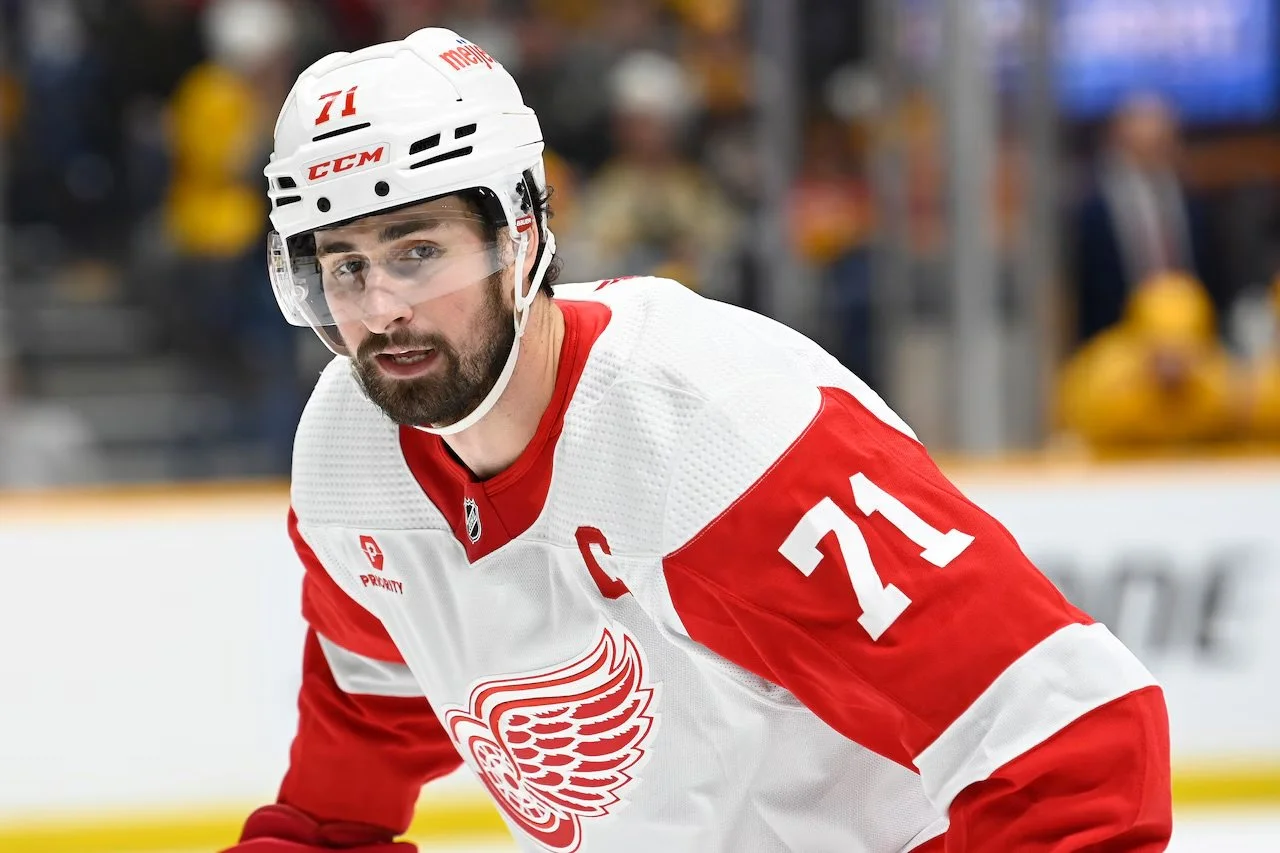
57 Years in the Making: Milwaukee Brewers Win First World Series in Franchise History
ST. PETERSBURG, Fla. — For the first time in franchise history, the Milwaukee Brewers are champions of the baseball world.
After 57 years in Milwaukee, decades of postseason disappointment, and a championship drought that stretched across generations, the Brewers finally reached the pinnacle of Major League Baseball on Wednesday night, defeating the Tampa Bay Rays 4-1 in Game 5 of the World Series at Tropicana Field.
Milwaukee captured the best-of-seven series four games to one, completing one of the most impressive seasons in franchise history and delivering the city’s first World Series championship since the Milwaukee Braves won it all in 1957.
Behind another dominant pitching performance from Jacob Misiorowski, timely contributions from rookie Cooper Pratt, and a relentless offensive approach that defined their postseason, the Brewers finished what they had spent the entire season building toward.
The victory also erased the disappointment of Tuesday night’s dramatic Game 4 defeat, when Milwaukee came within three outs of completing a World Series sweep before Tampa Bay rallied for a 12-inning walk-off victory.
Rather than allowing that loss to shift the momentum of the series, the Brewers responded immediately, taking control of Game 5 and refusing to give the Rays another opportunity to extend their season.
For a franchise that had experienced its share of heartbreak throughout October, the wait was finally over. (MLB)
Game 5: Milwaukee Takes Control Early and Never Looks Back
With the opportunity to secure the first championship in franchise history, Milwaukee entered Wednesday night’s matchup determined to avoid another late-game collapse.
The Brewers turned to young ace Jacob Misiorowski, while Tampa Bay countered with Drew Rasmussen, who was pitching on short rest in an effort to keep the Rays’ championship hopes alive.
Milwaukee struck first in the second inning.
Brice Turang opened the scoring opportunity with a double before Sal Frelick reached base after being hit by a pitch. Rookie shortstop Cooper Pratt then delivered an RBI single, giving the Brewers a 1-0 advantage.
It was another important contribution from Pratt, who had quickly established himself as one of Milwaukee’s most productive hitters throughout the World Series.
Rasmussen managed to limit the damage and kept Tampa Bay within striking distance, allowing just one run across four innings. However, the Rays struggled to generate any consistent offense against Misiorowski.
Milwaukee extended its lead in the fifth inning after Pratt and Garrett Mitchell reached base with singles. David Hamilton followed with an RBI single, bringing Pratt home and doubling the Brewers’ advantage to 2-0.
The Brewers continued applying pressure in the sixth.
Christian Yelich reached base after being hit by a pitch, and William Contreras delivered an RBI double to left field, scoring Yelich and extending Milwaukee’s lead to three runs.
Following another single from Turang, Pratt added his second RBI of the night with a sacrifice fly that brought Contreras home.
By the middle of the sixth inning, Milwaukee had built a 4-0 advantage, placing itself just nine defensive outs away from a championship.
The Brewers finished with eight hits and four runs, while Tampa Bay managed only four hits against Milwaukee’s pitching staff.
The Rays finally broke through in the ninth inning when Liam Hicks and Chandler Simpson delivered consecutive doubles, producing Tampa Bay’s only run of the evening.
However, Milwaukee closer Trevor Megill prevented any further comeback, getting Richie Palacios to ground out for the final out.
As the Brewers celebrated on the field, the franchise’s championship drought officially came to an end.
Final Score: Milwaukee Brewers 4, Tampa Bay Rays 1. (MLB) (Bleacher Report)
Jacob Misiorowski Delivers a Championship-Winning Performance
Throughout Milwaukee’s remarkable postseason run, pitching proved to be one of the organization’s greatest strengths.
On Wednesday night, Jacob Misiorowski delivered perhaps the most important performance of his young career.
The Brewers’ emerging ace worked 5⅔ scoreless innings, allowing just two hits while keeping Tampa Bay’s offense off balance throughout the evening.
Misiorowski controlled the game from the opening innings, preventing the Rays from establishing any meaningful offensive rhythm and consistently escaping potential scoring opportunities.
His most important escape came in the fourth inning, when Tampa Bay threatened with runners in scoring position. Despite the opportunity to tie or take the lead, the Rays failed to capitalize, allowing Milwaukee to maintain its narrow advantage.
Misiorowski eventually departed in the sixth inning because of calf cramping, ending an otherwise outstanding performance.
By that point, however, the young right-hander had already put Milwaukee in an excellent position to secure the championship.
JoJo Romero, Abner Uribe, and Trevor Megill handled the remaining innings, combining to preserve the lead and finish the series.
Misiorowski earned the victory, improving to 2-0 in the World Series.
For Milwaukee, his performance represented more than another successful pitching appearance. It demonstrated the importance of developing young talent capable of performing under the pressure of baseball’s biggest stage.
Misiorowski entered the postseason as one of the most exciting young pitchers in the sport. He finished it as a World Series champion and a central figure in one of the most significant victories in Brewers history. (MLB)
Cooper Pratt Emerges as One of the World Series’ Biggest Stories
While Milwaukee received contributions throughout its roster, few players made a greater impact on the championship series than rookie shortstop Cooper Pratt.
Pratt entered Game 5 following his dramatic performance in Game 4, when he temporarily put Milwaukee ahead with a 12th-inning home run before Tampa Bay eventually rallied to win.
The rookie carried that momentum into Wednesday night’s championship-clinching victory.
Pratt drove in Milwaukee’s opening run in the second inning, singled again in the fifth, and added a sacrifice fly in the sixth to extend the Brewers’ lead.
His two RBIs proved crucial in establishing the separation Milwaukee needed to control the game.
Pratt also made World Series history by recording hits in six consecutive at-bats, setting a new record for a rookie in the Fall Classic.
The accomplishment was particularly impressive considering the circumstances. Rather than struggling under the pressure of his first World Series appearance, Pratt consistently delivered in some of the biggest moments of Milwaukee’s season.
His emergence also highlighted the Brewers’ ability to build a competitive roster through player development rather than relying exclusively on expensive veteran acquisitions.
Pratt’s contributions throughout the series provided another example of how Milwaukee’s young talent helped carry the franchise to its first championship. (MLB)
Jackson Chourio Adds Another Historic Chapter to His Young Career
Another young Milwaukee star who played a significant role in the championship run was Jackson Chourio.
The Brewers outfielder continued his remarkable postseason by recording 11 hits across the first five games of the World Series, establishing a new record for the most hits through five games of a Fall Classic.
Chourio’s production was especially important in a lineup that relied on consistent contact, aggressive baserunning, and contributions from nearly every position.
Throughout the postseason, Milwaukee demonstrated an ability to manufacture offense without depending entirely on home runs.
Chourio’s combination of speed, contact hitting, and offensive consistency fit perfectly into that approach.
His success also offered an encouraging glimpse into the franchise’s future.
With players such as Chourio, Pratt, and Misiorowski already contributing to a championship, Milwaukee has established a young foundation capable of remaining competitive well beyond the 2026 season.
For Chourio, the championship represents an extraordinary early achievement in a career that continues to develop into one of baseball’s most promising. (AP News)
From Game 4 Heartbreak to World Series Glory
Milwaukee’s championship celebration could have happened 24 hours earlier.
Entering Game 4 on Tuesday night, the Brewers held a commanding 3-0 series lead and appeared poised to complete a sweep of the American League champions.
The teams remained tied 2-2 through nine innings before the game moved into extra innings.
In the 12th, Cooper Pratt delivered what initially appeared to be the defining moment of the World Series, launching a solo home run that gave Milwaukee a 3-2 advantage.
With the Brewers needing just three outs to capture the championship, Tampa Bay mounted one final comeback.
Jonny DeLuca delivered a game-tying RBI single before Ben Williamson produced a walk-off single, completing the Rays’ dramatic 4-3 victory and forcing a fifth game.
It was a remarkable escape for Tampa Bay, which became just the second team in World Series history to record a walk-off victory while facing elimination from a potential sweep.
For Milwaukee, the loss was particularly difficult considering how close the franchise had come to celebrating its first championship.
Yet the Brewers demonstrated the same resilience that had defined their season.
Less than 24 hours after watching a championship opportunity disappear, Milwaukee returned to Tropicana Field and delivered a controlled, convincing performance.
The response illustrated why the Brewers had been so difficult to defeat throughout October.
Even when faced with adversity, Milwaukee consistently found ways to recover without allowing one disappointing result to define its season. (MLB)
A Historic Postseason Run Through the National League
Milwaukee’s World Series championship was the culmination of a season in which the Brewers established themselves as one of the most complete teams in Major League Baseball.
The Brewers finished the regular season with a franchise-record 103 victories, the best record in the majors.
However, regular-season success had not always translated into October accomplishments for Milwaukee.
Despite reaching the postseason eight times over the previous nine seasons, the Brewers repeatedly encountered stronger opponents or failed to capitalize on their opportunities.
That narrative changed dramatically in 2026.
Milwaukee began its postseason by defeating the San Diego Padres in the National League Division Series.
The Brewers then faced a familiar postseason obstacle in the Los Angeles Dodgers, the defending back-to-back World Series champions.
Los Angeles had eliminated Milwaukee from the postseason three times during the previous eight years, making the National League Championship Series particularly significant.
This time, however, the Brewers completely reversed the outcome.
Milwaukee swept the Dodgers in four games, securing its first National League pennant since 1982 and advancing to the World Series for just the second time in franchise history.
The Brewers carried that momentum into the Fall Classic, winning the first three games against Tampa Bay before their Game 4 defeat briefly interrupted the celebration.
Wednesday’s victory completed an extraordinary postseason in which Milwaukee finished 11-2.
Across three playoff rounds, the Brewers lost only twice, defeating the Padres, Dodgers, and Rays on their way to the Commissioner’s Trophy.
It was the type of postseason dominance that left little doubt about which team deserved to finish the year on top. (MLB)
Erasing the Heartbreak of 1982 and Ending a 57-Year Wait
For longtime Brewers fans, Wednesday night’s victory carried a significance that extended far beyond the 2026 season.
The franchise’s previous and only World Series appearance came in 1982, when Milwaukee faced the St. Louis Cardinals in a seven-game series.
That Brewers team, famously known as Harvey’s Wallbangers, featured an explosive lineup led by Robin Yount, Paul Molitor, Cecil Cooper, and Gorman Thomas.
Milwaukee came within one victory of winning the championship but ultimately fell to St. Louis in Game 7.
For the next 44 years, the Brewers searched for an opportunity to return to baseball’s biggest stage.
There were memorable regular seasons, division championships, postseason appearances, and several promising rosters.
Yet none managed to accomplish what the 2026 team achieved Wednesday night.
The championship also carries historical importance for the city of Milwaukee.
Although the Brewers had never previously won a World Series, the city had experienced baseball’s ultimate celebration in 1957, when the Milwaukee Braves defeated the New York Yankees.
That Braves team featured legendary players including Hank Aaron, Eddie Mathews, and Warren Spahn.
The Braves eventually relocated to Atlanta following the 1965 season, leaving Milwaukee without a Major League franchise until the Seattle Pilots moved to Wisconsin and became the Brewers in 1970.
Since then, generations of fans had waited for the city’s next championship.
The 2026 Brewers finally delivered it.
Milwaukee’s victory also removed the franchise from the list of Major League Baseball teams that had never won a World Series.
Before Wednesday, five active franchises remained without a championship: the Brewers, Seattle Mariners, San Diego Padres, Tampa Bay Rays, and Colorado Rockies.
With Milwaukee now crowned champion, that list has been reduced to four. (MLB)
Christian Yelich Finally Reaches the Top
Among the many players celebrating Milwaukee’s historic achievement, the championship carried particular significance for veteran outfielder Christian Yelich.
Yelich arrived in Milwaukee ahead of the 2018 season and quickly became one of the most important players in franchise history.
During his first season with the Brewers, he captured the National League Most Valuable Player Award and helped lead Milwaukee to the National League Championship Series.
Over the following years, Yelich remained a central figure as the organization consistently competed for division titles and postseason appearances.
However, despite the team’s regular-season success, a World Series championship remained out of reach.
That changed Wednesday.
Now 34 years old, Yelich finally experienced the accomplishment that had eluded him throughout his Milwaukee career.
His presence also connected the current championship team with the earlier stages of the franchise’s modern resurgence.
While younger stars such as Chourio, Pratt, and Misiorowski represented Milwaukee’s future, Yelich symbolized the years of persistence that preceded the breakthrough.
Following the victory, Yelich reflected on how many Brewers fans had spent their entire lives waiting for this moment and the lasting effect a championship can have on a city.
For Yelich and Milwaukee’s veteran core, the 2026 season will forever stand as the year that transformed years of postseason ambition into a championship reality. (MLB)
Tampa Bay’s Remarkable Season Ends One Step Short
While Milwaukee celebrated its first championship, the Tampa Bay Rays were left confronting another disappointing conclusion to an otherwise outstanding season.
Tampa Bay entered the World Series after winning the American League pennant and establishing itself as one of baseball’s strongest teams.
The Rays had demonstrated impressive consistency throughout the postseason, relying on pitching depth, defensive execution, and timely offense to advance through the American League playoffs.
However, those strengths were not enough to overcome Milwaukee.
The Brewers controlled much of the series, winning three consecutive games to open the Fall Classic.
Tampa Bay showed considerable determination in Game 4, producing one of the most dramatic elimination-game victories in recent World Series history.
For a brief moment, that comeback offered hope that the Rays might begin an unprecedented rally from a 3-0 series deficit.
Wednesday’s loss ended those hopes.
The defeat marked Tampa Bay’s third unsuccessful World Series appearance, following previous losses to the Philadelphia Phillies in 2008 and Los Angeles Dodgers in 2020.
Despite falling short, the Rays’ run to the American League pennant represented another significant accomplishment for an organization that has frequently competed against teams with substantially larger payrolls.
Both Milwaukee and Tampa Bay demonstrated that disciplined roster construction and player development can still produce championship-caliber teams.
In the end, however, Milwaukee proved to be the more complete club over five games. (AP News)
A Championship That Could Define Milwaukee’s Future
Beyond the historical significance of Wednesday’s victory, the Brewers’ championship raises an intriguing question about the organization’s future.
Was 2026 the culmination of a remarkable season, or the beginning of an extended championship window?
Milwaukee’s roster construction suggests the possibility of sustained success.
Misiorowski has emerged as a premier young starting pitcher, while Chourio and Pratt have already demonstrated their ability to perform against elite competition in October.
The organization also continues to benefit from established veterans such as Yelich and Contreras, providing leadership and experience alongside its younger talent.
Perhaps most importantly, Milwaukee’s success was not built around one individual superstar carrying the team through the postseason.
The Brewers consistently received contributions throughout their lineup, pitching rotation, bullpen, and defensive unit.
That balance made Milwaukee exceptionally difficult to defeat during the regular season and even more dangerous in October.
Maintaining that success will present challenges, particularly as the organization faces roster decisions, rising player costs, and competition from larger-market franchises.
Nevertheless, the 2026 championship provides evidence that Milwaukee’s approach to building a competitive baseball team can succeed at the highest level.
For years, the Brewers were viewed as a well-managed organization capable of reaching the postseason but unable to finish the job.
That perception has now changed.
Milwaukee is no longer simply a contender searching for its breakthrough.
It is the reigning World Series champion.
A Moment Generations of Brewers Fans Will Never Forget
When Trevor Megill recorded the final out Wednesday night, the celebration extended far beyond the visiting dugout at Tropicana Field.
Back in Milwaukee, approximately 31,000 fans had gathered at American Family Field to watch the championship-clinching game on the stadium scoreboard.
Thousands more celebrated throughout Wisconsin, witnessing a moment that many had waited decades to experience.
For older fans, the championship represented the fulfillment of a dream that began with the franchise’s arrival in Milwaukee in 1970.
For those who remembered the disappointment of 1982, it finally brought closure to one of the most painful chapters in franchise history.
And for younger supporters, it created a memory that will likely define their relationship with the Brewers for the rest of their lives.
The significance of the moment was impossible to overlook.
After years of watching other franchises celebrate championships, Milwaukee finally had its own opportunity to lift the Commissioner’s Trophy.
The Brewers did not reach this point by accident. Their championship was the result of years of player development, organizational patience, consistent regular-season success, and a postseason performance that was nearly flawless.
A franchise that had spent more than half a century searching for baseball’s ultimate prize finally found it in St. Petersburg.
The 1982 team will always occupy an important place in Milwaukee baseball history. So will the 1957 Braves, who delivered the city’s previous World Series championship.
But now there is another team that belongs alongside them.
The 2026 Milwaukee Brewers.
A franchise-record 103 regular-season victories. An 11-2 postseason record. A National League pennant. And, finally, the first World Series championship in franchise history.
For 57 years, Milwaukee waited for this moment.
On October 28, 2026, the wait officially ended. (MLB)
Rays Avoid World Series Sweep With Dramatic 12th-Inning Walk-Off Victory Over Brewers
ST. PETERSBURG, Fla. — The Tampa Bay Rays were three outs away from watching the Milwaukee Brewers celebrate their first World Series championship Tuesday night. Instead, a dramatic 12th-inning comeback kept Tampa Bay’s season alive and prevented Milwaukee from completing a four-game sweep.
Pinch-hitter Ben Williamson delivered a walk-off RBI single in the bottom of the 12th inning, lifting the Rays to a 4-3 victory in Game 4 of the World Series at Tropicana Field. The victory cut Milwaukee’s series lead to 3-1 and forced a Game 5 on Wednesday night. (MLB)
After dropping the first three games of the series, including a 10-1 defeat in Game 3, Tampa Bay entered Tuesday facing elimination. The Rays had struggled to generate consistent offense against Milwaukee’s pitching staff, but their resilience in the final inning produced one of the most memorable finishes of the 2026 postseason.
Brewers Come Within Three Outs of Championship
The game began as a tightly contested matchup, with both teams exchanging early runs before settling into a prolonged pitching battle.
Tampa Bay struck first in the second inning when Chandler Simpson delivered an RBI double against Milwaukee starter Dustin May. The Brewers responded in the fourth when rookie shortstop Cooper Pratt drove home Sal Frelick with a double, tying the game at one.
The Rays regained the lead in the bottom of the fourth after a throwing error by Milwaukee third baseman David Hamilton allowed Junior Caminero to score. However, Hamilton quickly made up for his mistake, launching a solo home run in the fifth inning to tie the game at 2-2.
From there, neither offense could break through for six consecutive innings. Both bullpens delivered important performances, keeping the score tied deep into extra innings as the pressure continued to build. (AP)
Milwaukee finally appeared to deliver the decisive blow in the top of the 12th inning.
Pratt, already enjoying an impressive performance, launched a go-ahead solo home run off Rays reliever Ian Seymour, giving the Brewers a 3-2 advantage. The blast was Pratt’s fourth hit of the night and put Milwaukee just three outs away from capturing the first World Series championship in franchise history.
With the Brewers holding a commanding 3-0 series lead entering the night, the home run appeared destined to become one of the defining moments in Milwaukee baseball history.
However, Tampa Bay had one final response.
Williamson Delivers Season-Saving Walk-Off
The bottom of the 12th began with an opportunity created by Milwaukee’s defense.
Junior Caminero reached base after Brewers third baseman Joey Ortiz committed a throwing error, allowing Tampa Bay to put its leadoff hitter aboard.
Liam Hicks followed with a single, putting runners on the corners after Cedric Mullins entered as a pinch-runner for Caminero. Jonny DeLuca then delivered an RBI single to center field, bringing Mullins home and tying the game at three.
Chandler Simpson followed with another single, loading the bases and putting Milwaukee’s pitching staff in an increasingly difficult situation.
With the bases loaded, pinch-hitter Ben Williamson stepped to the plate against Brewers reliever Shane Drohan.
Williamson, who had recorded just one hit in 15 postseason at-bats entering the moment, connected on the first pitch he saw. His high-bouncing ground ball cleared first baseman Jake Bauers and landed in right field, allowing pinch-runner Nick Fortes to score the winning run.
The Rays poured out of their dugout as Williamson’s teammates mobbed him near first base, celebrating a 4-3 victory that extended their season for at least another game.
Tampa Bay had produced four consecutive singles in the 12th inning after managing just five hits through the first 11 frames. (CBS Sports)
The comeback was particularly remarkable considering how close Milwaukee had been to completing the sweep. The Brewers had controlled much of the series, but a defensive mistake and a sudden offensive surge changed the outcome in a matter of minutes.
A Historic Victory Keeps Tampa Bay Alive
Tuesday’s victory placed the Rays in rare company.
Tampa Bay became just the fifth team in World Series history to force a Game 5 after falling behind 3-0 in the series. The previous four teams to accomplish that feat ultimately lost Game 5.
The Rays also became the first team since the 2011 St. Louis Cardinals to avoid World Series elimination with a walk-off victory. St. Louis famously went on to win that championship after its dramatic Game 6 comeback against the Texas Rangers. (CBS Sports)
The victory also ended Milwaukee’s eight-game postseason winning streak, which had carried the Brewers through their National League Championship Series sweep and the first three games of the World Series.
Milwaukee had been attempting to become the first team since the 2012 San Francisco Giants to sweep the World Series. Instead, the Brewers will have to wait at least another night for an opportunity to secure their first championship. (MLB)
Milwaukee Still Controls the Series Entering Game 5
Despite the heartbreaking defeat, the Brewers remain in a favorable position with a 3-1 advantage in the best-of-seven series.
Milwaukee has demonstrated its offensive depth throughout the postseason, and Pratt’s four-hit performance in Game 4 provided another example of the team’s emerging young talent.
Jackson Chourio also continued his impressive World Series, collecting two hits Tuesday and improving to 10-for-20 through the first four games, matching Babe Ruth’s 1928 mark for hits through four games of a World Series.
The Brewers will turn to Jacob Misiorowski for Game 5, hoping the right-hander can deliver the franchise’s long-awaited championship. Milwaukee needs only one more victory, while Tampa Bay must win three consecutive games to complete an unprecedented World Series comeback. (UPI)
Game 5 is scheduled for Wednesday, October 28, at 8 p.m. ET at Tropicana Field.
Can the Rays Make World Series History?
The challenge facing Tampa Bay remains enormous.
No team in Major League Baseball history has overcome a 3-0 deficit to win the World Series. The only team to accomplish that comeback in any best-of-seven MLB postseason series was the 2004 Boston Red Sox, who rallied against the New York Yankees in the American League Championship Series before winning the World Series.
The Rays are still a long way from joining that historic group, but Tuesday’s victory at least gives them an opportunity to continue the pursuit.
For Milwaukee, the loss represents a missed opportunity rather than a complete shift in control. The Brewers remain one win away from a championship and will have three more chances to finish the series if necessary.
For Tampa Bay, however, the significance of Tuesday’s comeback extends beyond a single victory. After appearing overwhelmed through the first three games, the Rays finally demonstrated the timely hitting and determination that helped carry them to the American League pennant.
One dramatic inning does not erase a 3-1 deficit, but it has ensured that the World Series will continue.
And after coming within three outs of elimination, the Rays have given themselves something they did not appear to have entering the bottom of the 12th inning: another chance.
Aaron Rodgers Passes Peyton Manning for Third All-Time in Touchdown Passes as Steelers Make History in Paris
PARIS, France — Aaron Rodgers added another historic accomplishment to his legendary NFL career Sunday afternoon, surpassing Peyton Manning for third place on the league’s all-time passing touchdowns list while leading the Pittsburgh Steelers to a 16-10 victory over the New Orleans Saints.
Playing in the NFL’s first regular-season game in France, Rodgers threw his 540th career touchdown pass during the second quarter, moving ahead of Manning’s 539 and further cementing his place among the greatest quarterbacks in league history.
The milestone came in fitting fashion for the 42-year-old quarterback, who has continued to produce at a high level in what he has announced will be his final NFL season.
Pittsburgh’s victory at Stade de France improved the Steelers to 5-2, extending their winning streak to three games and keeping them firmly in contention in the AFC North. The Saints, meanwhile, fell to 2-5 after struggling to capitalize on several opportunities throughout the afternoon. (Steelers)
Rodgers Surpasses Manning With Historic Touchdown Pass
Rodgers entered Sunday’s matchup tied with Manning at 539 career regular-season touchdown passes, needing just one more to move into sole possession of third place in NFL history.
That moment arrived midway through the second quarter.
Facing third-and-14, Rodgers escaped pressure and connected with wide receiver DK Metcalf for a 51-yard completion, moving Pittsburgh deep into New Orleans territory.
On the following play, Rodgers found tight end Darnell Washington for a four-yard touchdown, giving the Steelers a 10-3 lead with 6:45 remaining in the first half.
Washington made an impressive contested catch against Saints cornerback Kool-Aid McKinstry, using his 6-foot-7 frame to secure the football while maintaining possession and getting both feet in bounds.
The touchdown carried significance beyond Rodgers’ individual achievement. It was also the first touchdown scored in an NFL regular-season game played in France.
With the completion, Rodgers officially moved past Manning and joined an exclusive group of quarterbacks who have surpassed 540 career passing touchdowns. (Steelers)
Rodgers Continues Climbing the NFL Record Books
Rodgers’ latest accomplishment places him behind only Tom Brady and Drew Brees on the NFL’s all-time regular-season passing touchdowns leaderboard.
All-Time Passing TDs
(1) Tom Brady | 649
(2) Drew Brees | 571
(3) Aaron Rodgers | 540
(4) Peyton Manning | 539
(5) Brett Favre | 508
Manning, who played 17 seasons with the Indianapolis Colts and Denver Broncos, retired following the 2015 season as one of the most decorated quarterbacks in NFL history.
Rodgers has now surpassed Manning in career touchdown passes while continuing to add to a résumé that includes four NFL Most Valuable Player awards, a Super Bowl championship and numerous passing records.
The accomplishment is particularly notable considering Rodgers’ longevity.
Originally selected by the Green Bay Packers in the first round of the 2005 NFL Draft, Rodgers spent 18 seasons in Green Bay before joining the New York Jets in 2023. His career later continued in Pittsburgh, where he has experienced a resurgence in the final stages of his playing career.
Rodgers now trails Brees by 31 touchdown passes, although reaching second place would require another extraordinary stretch of production during his final season.
Regardless of where he finishes, Rodgers has already secured his position among the most accomplished quarterbacks the league has ever seen. (ESPN)
Steelers Control the Ground Game in Paris
Although Rodgers’ historic touchdown dominated the headlines, Pittsburgh’s running game played an equally important role in Sunday’s victory.
Running back Jaylen Warren delivered one of his most productive performances of the season, rushing for 101 yards on 18 carries while adding three receptions for 36 yards.
Warren helped establish Pittsburgh’s offensive approach early, breaking free for several substantial gains during the opening possession.
The Steelers moved the football effectively on their first drive, eventually settling for a 28-yard field goal from Chris Boswell to take a 3-0 lead.
Pittsburgh continued relying on its rushing attack throughout the afternoon, finishing with approximately 150 rushing yards while limiting New Orleans to just 18 yards on the ground.
Rico Dowdle also contributed 86 yards from scrimmage, giving Pittsburgh another dependable option out of the backfield.
Rodgers finished the afternoon completing 19 of 30 passes for 212 yards and one touchdown. While his statistical performance was relatively modest compared with some of his most productive games, his efficiency and situational decision-making helped Pittsburgh maintain control. (CBS Sports)
Saints Battle Back Before Pittsburgh’s Defense Takes Control
Despite Pittsburgh’s strong start, New Orleans remained competitive throughout the first half.
Saints quarterback Tyler Shough led an extended scoring drive late in the second quarter, eventually connecting with wide receiver Devaughn Vele for a one-yard touchdown on fourth down.
The score tied the game at 10 and briefly shifted momentum toward New Orleans.
However, Pittsburgh responded before halftime.
Boswell connected on a 47-yard field goal as time expired in the second quarter, sending the Steelers into the locker room with a 13-10 advantage.
The second half became a defensive battle, with neither team able to consistently finish possessions.
New Orleans appeared positioned to take its first lead of the afternoon during the third quarter after advancing deep into Pittsburgh territory.
However, Steelers linebacker Payton Wilson delivered one of the game’s most important plays.
With the Saints threatening inside the Pittsburgh 10-yard line, Wilson intercepted Shough near the goal line, ending a lengthy New Orleans possession and preventing what could have been a momentum-changing touchdown.
The interception proved particularly significant because the Saints never scored again.
Pittsburgh added another Boswell field goal later in the third quarter, extending its advantage to 16-10.
The Steelers defense continued applying pressure throughout the fourth quarter, with linebackers Patrick Queen and T.J. Watt helping disrupt New Orleans’ offensive rhythm.
Queen finished with a team-high 10 tackles and a sack, while Watt contributed another sack as Pittsburgh limited the Saints’ opportunities to mount a comeback. (Steelers)
Rodgers Delivers One Final Play to Secure the Victory
Although Pittsburgh held a six-point advantage late in the fourth quarter, the outcome remained uncertain.
New Orleans had an opportunity to tie the game with a 52-yard field goal attempt, but kicker Daniel Carlson missed, preserving the Steelers’ lead.
Pittsburgh then needed to maintain possession and prevent the Saints from getting another opportunity.
With less than three minutes remaining, Rodgers faced a critical third-and-6 situation in New Orleans territory.
Rather than forcing a pass into coverage, the veteran quarterback escaped the pocket and scrambled for eight yards, picking up the first down and allowing Pittsburgh to continue draining the clock.
It was not the type of play typically associated with a quarterback in his 40s, but it demonstrated the awareness and competitiveness that have defined Rodgers’ career.
The conversion helped Pittsburgh exhaust the remaining time and secure its third consecutive victory.
Rodgers acknowledged afterward that he no longer possesses the same mobility he once did, but emphasized the importance of making a play when his team needed one.
For Pittsburgh, the scramble was every bit as valuable as his historic touchdown earlier in the afternoon. (CBS Sports)
Pittsburgh Makes NFL History for the Second Consecutive Season
Sunday’s victory represented another milestone for the Steelers franchise.
Pittsburgh became the first NFL team to win a regular-season game in Paris, adding to its distinction of winning the league’s first regular-season game in Dublin during the 2025 season.
The international victory also marked an important moment for head coach Mike McCarthy, whose team has continued building momentum following an inconsistent opening stretch.
At 5-2, the Steelers remain among the AFC’s strongest teams through seven weeks.
Pittsburgh’s recent success has been built around a combination of disciplined defense, an effective running game and timely contributions from Rodgers.
While the offense has not always produced overwhelming statistics, the Steelers have demonstrated an ability to control possession and execute in critical situations.
Sunday’s performance was another example of that formula.
The Steelers converted 10 of their 16 third-down opportunities, controlled the line of scrimmage and prevented New Orleans from establishing a consistent rushing attack.
With a divisional matchup against the Cleveland Browns approaching, Pittsburgh will look to extend its winning streak and strengthen its position in the AFC North. (Steelers)
Another Historic Chapter in Rodgers’ Final Season
As Rodgers approaches the conclusion of his NFL career, performances like Sunday’s continue adding to a legacy that was already firmly established.
His 540th touchdown pass was not simply another statistical milestone. It represented more than two decades of sustained excellence at the quarterback position.
From his early years behind Brett Favre in Green Bay to his emergence as one of the most efficient passers in NFL history, Rodgers has built a career defined by precision, arm talent and an extraordinary ability to protect the football.
Surpassing Manning places him ahead of another quarterback whose career helped define an entire generation of professional football.
And while the milestone will undoubtedly become one of the lasting memories of his final season, Rodgers remains focused on helping Pittsburgh compete for a championship.
The Steelers have now won three consecutive games, and their veteran quarterback continues demonstrating that he can contribute to winning football despite being in the final stages of his career.
Sunday afternoon in Paris provided a fitting combination of individual history and team success.
Rodgers moved into third place on one of the NFL’s most prestigious statistical leaderboards, while Pittsburgh secured another important victory in its pursuit of a postseason berth.
For a quarterback whose career has already featured countless memorable moments, the first NFL touchdown ever scored in France will now hold a permanent place in his remarkable story.
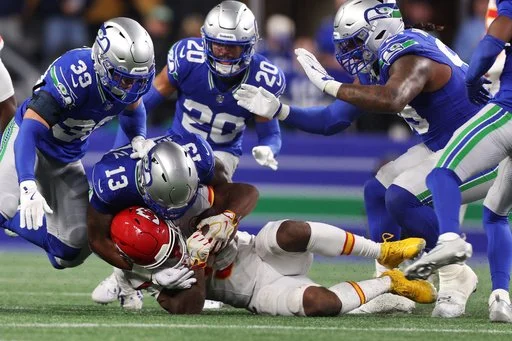
Kenneth Walker’s Return to Seattle Spoiled as Seahawks Dominate Previously Unbeaten Chiefs
SEATTLE, Wash. — Kenneth Walker III returned to the city where his NFL career began Sunday night, but what was supposed to be a highly anticipated homecoming quickly turned into a frustrating evening for the former Seattle Seahawks running back.
Behind a dominant defensive performance and another historic outing from wide receiver Jaxon Smith-Njigba, the Seahawks defeated the previously unbeaten Kansas City Chiefs 20-3 at Lumen Field, handing Patrick Mahomes and company their first loss of the 2026 season.
Seattle held Kansas City to just 213 total yards, 11 first downs and three points, delivering one of the most impressive defensive performances against Mahomes since he became the Chiefs’ starting quarterback in 2018.
The victory improved Seattle to 4-3, ending a two-game losing streak and providing the defending Super Bowl champions with a much-needed victory. Kansas City, meanwhile, fell to 5-1 after entering the matchup as one of the NFL’s final undefeated teams. (Seattle Seahawks)
Kenneth Walker’s Highly Anticipated Return Ends in Frustration
Sunday night’s matchup carried additional significance because of Walker’s return to Seattle for the first time since departing the organization during the offseason.
Walker spent the first four seasons of his NFL career with the Seahawks after being selected in the second round of the 2022 NFL Draft. He developed into one of the league’s most explosive running backs and played an important role in Seattle’s championship run last season, earning Super Bowl LX MVP honors.
However, Walker departed Seattle during free agency, signing with Kansas City and immediately establishing himself as a centerpiece of the Chiefs’ offense.
Entering Sunday’s game, Walker had rushed for 665 yards and six touchdowns on 106 carries across five games, leading the NFL in rushing yards while averaging an extraordinary 6.3 yards per attempt.
His production had helped Kansas City begin the season undefeated, and his return to Seattle offered an opportunity to demonstrate his value against the organization that originally drafted him. (NFL.com)
Instead, Walker encountered a Seattle defense that appeared determined to prevent its former star from taking over the game.
The Seahawks limited Walker to just 36 rushing yards on 14 carries, an average of 2.6 yards per attempt. He also caught four passes for 21 yards, finishing with only 57 yards from scrimmage.
For a running back who had exceeded 100 rushing yards in four of his previous five appearances, the performance represented a dramatic departure from his early-season dominance.
Seattle consistently closed running lanes, prevented Walker from reaching the second level and forced Kansas City into passing situations that favored the Seahawks’ defense.
The performance was particularly impressive considering Seattle had not allowed an individual 100-yard rusher in its previous 35 games.
Walker entered the matchup as one of the NFL’s most productive offensive players. By the end of the evening, his former teammates had delivered one of the most effective defensive performances against him in recent memory. (Seattle Seahawks)
Seahawks Defense Completely Shuts Down Patrick Mahomes
While Walker’s return dominated much of the pregame discussion, Seattle’s defense ultimately became the biggest story of the evening.
The Seahawks held Kansas City scoreless throughout the first half, limiting Mahomes and the Chiefs to an unusually ineffective offensive performance.
Mahomes completed just 19 of 33 passes for 165 yards, throwing one interception and finishing with a passer rating of 58.3.
It was one of the least productive performances of his career, with Seattle consistently applying pressure, limiting explosive plays and forcing Kansas City into difficult third-down situations.
The Chiefs converted just three of their 11 third-down opportunities and failed to reach the red zone for the entire game.
According to NBC Sports, it marked the first time Kansas City had failed to reach the red zone in a game started by Mahomes, including postseason appearances.
Kansas City’s 213 total yards were less than half of Seattle’s 410, illustrating the significant difference between the two offenses throughout the evening. (NBC Sports)
The Seahawks also controlled possession for nearly 36 minutes, preventing Mahomes from developing any consistent offensive rhythm.
Kansas City’s only points came on a 50-yard field goal from Harrison Butker late in the third quarter.
Butker missed two additional attempts, including a 45-yard opportunity in the fourth quarter that could have reduced Seattle’s advantage to seven points.
Instead, the Seahawks maintained control and eventually put the game out of reach.
Jaxon Smith-Njigba’s Historic Start Continues
While Seattle’s defense controlled Kansas City, Smith-Njigba continued putting together one of the most remarkable starts to a season by a wide receiver in recent NFL history.
The reigning Associated Press Offensive Player of the Year finished Sunday night’s victory with nine receptions for 150 yards and a touchdown, leading Seattle’s passing attack and repeatedly creating problems for the Chiefs’ secondary.
His biggest play came during the second quarter, when quarterback Sam Darnold connected with him for a 28-yard touchdown that extended Seattle’s lead to 10-0.
By halftime, Smith-Njigba had already accumulated 129 receiving yards and a touchdown on six receptions.
He finished with his sixth 100-yard receiving performance in just seven games this season, continuing a level of consistency rarely seen from even the NFL’s most accomplished receivers.
Through seven games, Smith-Njigba has accumulated 867 receiving yards and eight receiving touchdowns.
That production places him alongside Jerry Rice in 1986 and Cooper Kupp in 2021 as the only players to record at least 800 receiving yards and eight receiving touchdowns through their team’s first seven games of a season.
Smith-Njigba has also recorded at least 120 receiving yards in five of his seven appearances, further illustrating how consistently he has dominated opposing secondaries. (Seattle Seahawks)
His 867 receiving yards put him on pace for more than 2,100 yards across a 17-game regular season, a total that would surpass Calvin Johnson’s NFL single-season receiving record of 1,964 yards established in 2012.
Although maintaining that production throughout an entire season would be an extraordinary accomplishment, Smith-Njigba’s opening seven games have already placed him among some of the greatest receiving performances in league history.
The consistency has been especially important for Seattle’s offense, which has experienced occasional struggles despite possessing considerable talent.
Darnold finished Sunday’s victory completing 20 of 28 passes for 257 yards, one touchdown and one interception, with Smith-Njigba accounting for more than half of his passing yardage.
At just 24 years old, Smith-Njigba is continuing to establish himself as one of the NFL’s premier offensive players, and his performance against Kansas City provided another example of why opposing defenses have struggled to contain him.
Travis Kelce Passes Marvin Harrison on NFL’s All-Time Receptions List
Despite Kansas City’s difficult offensive performance, tight end Travis Kelce reached another significant milestone in his Hall of Fame-caliber career.
Kelce recorded four receptions for 44 yards against Seattle, increasing his career total to 1,104 catches and moving past Pro Football Hall of Famers Marvin Harrison and Cris Carter into fifth place on the NFL’s all-time receptions list.
Harrison finished his career with 1,102 receptions, while Carter retired with 1,101.
Kelce officially moved ahead of Harrison during the fourth quarter when Mahomes connected with him for a 19-yard completion, giving the veteran tight end another historic achievement in his 14th NFL season.
The milestone was especially fitting because it occurred on National Tight Ends Day, an annual celebration of the position that Kelce has helped redefine throughout his career. (NFL.com)
Kelce now trails only Jerry Rice, Larry Fitzgerald, Tony Gonzalez and Jason Witten on the NFL’s career receptions leaderboard.
He also surpassed Gonzalez for the most receiving yards by a tight end when combining regular-season and postseason production, adding another remarkable accomplishment to his résumé.
Although Kansas City’s offense struggled throughout the evening, Kelce’s performance served as another reminder of his longevity and consistency at a position where sustained production is particularly difficult.
For the Chiefs, however, the individual achievement offered little consolation following their first defeat of the season. (CBS Sports)
Seattle Controls the Game From Beginning to End
The Seahawks established control early, preventing Kansas City from finding the offensive rhythm that had helped produce five consecutive victories.
After a scoreless opening quarter, Seattle broke through with a 25-yard field goal from Jason Myers.
The Seahawks then capitalized on an interception by safety Ty Okada, who picked off Mahomes on a pass intended for Jalen Royals.
Darnold converted a critical third down with his legs before finding Smith-Njigba for a 28-yard touchdown, extending Seattle’s advantage to 10-0 before halftime.
The Chiefs had an opportunity to put points on the board before the break, but Butker’s 58-yard field goal attempt fell short.
Seattle extended its lead to 13-0 during the third quarter on another Myers field goal before Kansas City finally responded with Butker’s 50-yard conversion.
However, the Chiefs never seriously threatened to take control.
Following Butker’s second missed field goal in the fourth quarter, Seattle put together its final scoring possession, capped by a 21-yard touchdown run from Emanuel Wilson with 3:47 remaining.
Wilson finished with 100 rushing yards on 24 carries, providing the Seahawks with a physical presence in the running game that complemented Darnold’s passing attack.
Seattle finished with 410 total yards, converted 11 of 16 third-down opportunities and controlled possession for 35 minutes and 51 seconds.
Kansas City, meanwhile, managed just 50 rushing yards and failed to score a touchdown for the entire evening. (Associated Press)
Seahawks Send a Message to the Rest of the NFL
Sunday night’s victory represented considerably more than simply ending a two-game losing streak.
Seattle entered the matchup facing questions about its offensive consistency and ability to compete with the league’s strongest teams.
Against an undefeated Kansas City squad led by Mahomes, Walker and Kelce, the Seahawks responded with one of their most complete performances of the season.
The defense neutralized one of the NFL’s most productive running backs, prevented Mahomes from reaching the end zone and consistently won critical situations.
Meanwhile, Smith-Njigba continued his extraordinary opening stretch, establishing himself as a legitimate candidate to challenge one of the NFL’s most prestigious receiving records.
For Kansas City, the loss exposed vulnerabilities that had largely remained hidden during its undefeated start.
Walker had been virtually unstoppable through the Chiefs’ first five games, but Seattle demonstrated that even the NFL’s leading rushing attack could be contained with disciplined defensive execution.
Mahomes also struggled to create opportunities when the running game failed to produce, an issue Kansas City will need to address as its schedule becomes increasingly challenging.
The Seahawks will now turn their attention toward a Monday night matchup against the Chicago Bears, while Kansas City prepares to face the Denver Broncos in another important AFC West contest.
For Walker, his return to Seattle was undoubtedly memorable, although not for the reasons he might have envisioned.
The running back who helped deliver a championship to the Seahawks returned wearing an opposing uniform, only to watch his former teammates produce a defensive performance that completely disrupted his new team’s offense.
And while Walker’s homecoming dominated the discussion entering Sunday night, it was Seattle’s defense and the continued brilliance of Smith-Njigba that ultimately defined the evening.
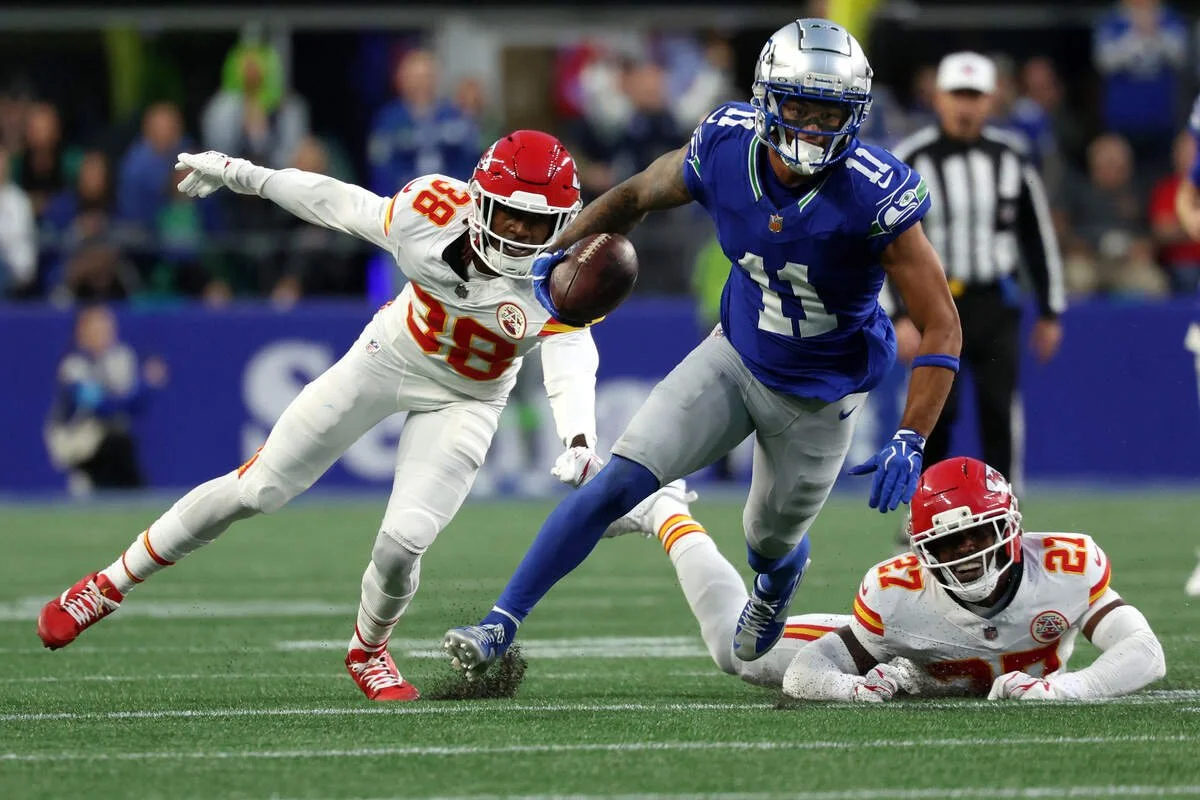
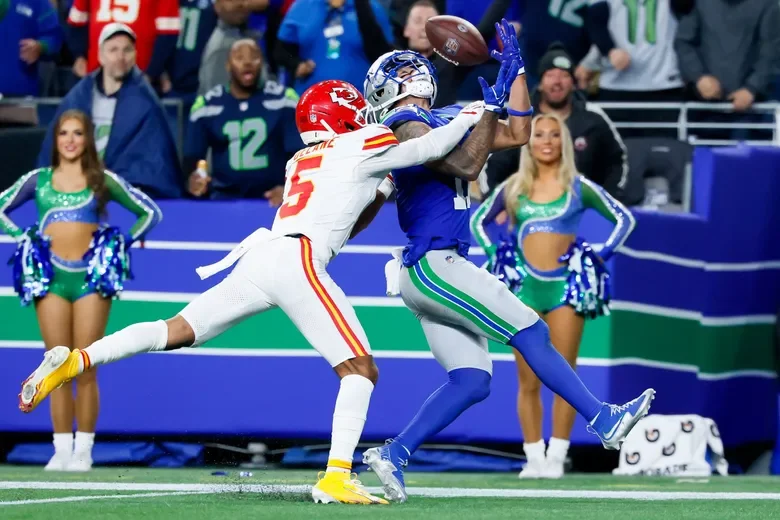
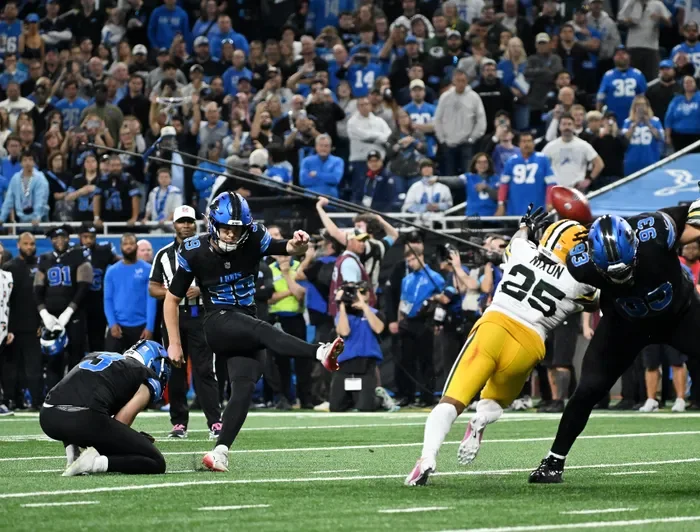
Lions Escape Packers in Dramatic NFC North Showdown as Bates Delivers Walk-Off Winner
DETROIT, Mich. — In a game filled with questionable decisions, missed opportunities and dramatic momentum swings, the Detroit Lions found a way to come out on top against one of their biggest division rivals.
Jake Bates connected on a 22-yard field goal as time expired Sunday afternoon, lifting Detroit to a thrilling 20-17 victory over the Green Bay Packers at Ford Field. The win improved the Lions to 4-2 on the season, giving them consecutive victories for the first time this year and keeping them firmly in the NFC North playoff conversation. (Detroit Lions)
What appeared to be a game Detroit had thrown away in the closing minutes quickly turned into one of the most memorable finishes of Week 7.
After an aggressive fourth-down decision by head coach Dan Campbell gave Green Bay possession deep in Lions territory, Detroit’s defense responded with a critical stand before quarterback Jared Goff engineered the winning drive.
The result was another chapter in a rivalry that has become increasingly competitive in recent seasons, with both teams entering Sunday’s matchup looking to strengthen their positions in a crowded NFC North.
Campbell’s Risky Decision Nearly Costs Detroit
With the game tied at 17 and less than five minutes remaining, Campbell faced a decision that would ultimately become one of the afternoon’s biggest talking points.
Rather than punting on fourth-and-1 from deep inside Detroit territory, Campbell elected to keep his offense on the field.
The Lions handed the ball to running back Jahmyr Gibbs, but Green Bay cornerback Keisean Nixon helped stop the play behind the line of scrimmage, handing the Packers possession at Detroit’s 22-yard line.
Suddenly, Green Bay was in an ideal position to take the lead with the clock winding down.
The decision appeared particularly costly considering Detroit had already passed up another scoring opportunity earlier in the second half, failing to convert a fourth down inside the Packers’ 10-yard line.
However, the Lions defense refused to allow the game to slip away.
Green Bay quarterback Jordan Love nearly connected with running back Josh Jacobs for a touchdown, but the pass fell incomplete in the end zone. That forced the Packers to attempt a 35-yard field goal with rookie kicker Trey Smack.
Smack’s attempt was partially deflected by Detroit defensive lineman D.J. Wonnum and missed, preserving the 17-17 tie and giving the Lions possession with 3:21 remaining.
It was Smack’s second missed field goal of the afternoon, after an unsuccessful 26-yard attempt earlier in the game. (Green Bay Packers)
In a matter of moments, Detroit had gone from potentially handing Green Bay the victory to having an opportunity to win the game itself.
Jared Goff Engineers the Winning Drive
With the game tied and just over three minutes remaining, Goff took possession knowing that one successful drive could erase the frustration of Detroit’s earlier mistakes.
The veteran quarterback responded by leading the Lions on a 10-play, 71-yard possession that consumed the remainder of regulation.
One of the drive’s most important moments came when Goff connected with tight end Sam LaPorta for an 18-yard completion over the middle. A roughing-the-passer penalty against Green Bay defensive lineman Karl Brooks added another 15 yards, pushing Detroit into Packers territory.
The Lions continued advancing before another costly Green Bay penalty extended the possession. Brooks was flagged for jumping offside on third-and-5, giving Detroit a fresh set of downs near the Packers’ 15-yard line.
Rather than rushing toward the end zone, Detroit shifted its focus toward controlling the clock and preventing Green Bay from getting another possession.
Gibbs demonstrated remarkable awareness on two late rushing attempts, intentionally going down short of the goal line despite having opportunities to score.
The decision allowed Detroit to exhaust Green Bay’s remaining timeouts and position Bates for the final kick.
With one second remaining, Bates stepped onto the field and calmly converted from 22 yards, sending the Ford Field crowd into celebration and completing Detroit’s dramatic victory. (Yahoo Sports)
Jameson Williams and Amon-Ra St. Brown Lead Detroit’s Offense
While the game’s final minutes dominated the headlines, Detroit’s receiving corps played an equally important role in keeping the Lions competitive throughout the afternoon.
Jameson Williams continued his impressive stretch of performances, recording five receptions for 91 yards and two touchdowns.
It marked the second consecutive game in which Williams caught two touchdown passes, providing Detroit with an explosive receiving threat capable of changing the game on any possession.
His first touchdown came on a 16-yard reception, while his second was a 10-yard catch in the third quarter that helped Detroit reclaim the lead after Green Bay had moved ahead 14-10.
Amon-Ra St. Brown was equally productive, finishing with nine receptions for 153 yards. His ability to consistently create separation and move the chains gave Goff a reliable option throughout the contest.
Goff completed 22 of 32 passes for 303 yards and two touchdowns, finishing with a passer rating of 119.7.
The performance extended Goff’s streak to 29 consecutive games with a touchdown pass. Through six games this season, he has thrown 14 touchdowns without an interception, continuing one of the most efficient stretches of his career. (Detroit Lions)
Detroit also received another productive afternoon from Gibbs, who rushed for 116 yards on 29 carries while adding five receptions for 27 yards.
His contributions were particularly important during the final possession, when his combination of rushing ability and situational awareness helped secure the victory.
Packers Unable to Capitalize on Detroit’s Mistakes
For Green Bay, Sunday’s defeat will likely be remembered as a game filled with opportunities that went unconverted.
The Packers entered the afternoon riding a three-game winning streak and appeared positioned to extend that momentum after forcing multiple Detroit turnovers.
Green Bay recovered two Lions fumbles, including one late in the first half and another early in the third quarter.
The second recovery proved especially important, setting up a 25-yard touchdown reception by Jacobs that gave the Packers a 14-10 advantage.
Love completed 27 of 45 passes for 274 yards and two touchdowns, connecting with tight end Tucker Kraft and Jacobs for Green Bay’s two scores.
However, the Packers struggled to establish consistency on the ground, finishing with just 60 rushing yards against Detroit’s defense.
The offense also failed to take advantage of several favorable situations, most notably the fourth-quarter possession that began deep inside Lions territory.
Green Bay eventually tied the game at 17 on a 43-yard field goal with 7:14 remaining, but its inability to produce points on the ensuing short-field opportunity proved decisive. (Detroit Lions)
The Packers’ kicking struggles were compounded by several costly penalties, including two infractions against Brooks on Detroit’s final possession.
Green Bay head coach Matt LaFleur expressed frustration with several officiating decisions following the loss, particularly penalties that extended Detroit drives.
Although the Packers had legitimate reasons to question some calls, their missed scoring opportunities ultimately played a substantial role in the defeat. (Green Bay Packers)
Detroit’s Defense Delivers When It Matters Most
Despite allowing Green Bay to move the football at several points throughout the afternoon, Detroit’s defense produced critical plays when the game was on the line.
Safety Brian Branch made an important contribution in his return from an Achilles injury suffered last December, recording a fourth-quarter interception that helped prevent Green Bay from building momentum.
The Lions also limited the Packers’ rushing attack and prevented Green Bay from scoring a rushing touchdown.
Perhaps most importantly, Detroit’s defensive stand following Campbell’s unsuccessful fourth-down gamble preserved the opportunity for Goff to deliver the winning drive.
Without that stop, the Lions might have been forced to overcome a late deficit rather than simply needing a field goal to secure the victory.
Instead, the defense gave Detroit’s offense one final opportunity, and the Lions made the most of it.
NFC North Race Continues to Intensify
Sunday’s result carried considerable importance in a division that has emerged as one of the NFL’s most competitive.
With the victory, Detroit improved to 4-2 and moved ahead of Green Bay, which fell to 4-3 after having its three-game winning streak snapped.
The Lions remain behind the undefeated Minnesota Vikings and the 5-2 Chicago Bears in the NFC North standings, but Sunday’s victory prevented Detroit from falling further behind its division rivals. (Detroit Lions)
For Green Bay, the loss represents a missed opportunity to strengthen its position in the division race.
The Packers demonstrated their ability to compete with Detroit throughout the afternoon, but missed field goals, penalties and an inability to finish drives ultimately proved too costly.
With several divisional matchups still remaining, both teams will have additional opportunities to influence the NFC North standings.
However, Sunday’s head-to-head result could become particularly important if Detroit and Green Bay find themselves competing for playoff positioning later in the season.
A Victory That Could Define Detroit’s Season
The Lions have built their identity under Campbell around aggressive decision-making, physical football and an unwillingness to abandon their approach when adversity strikes.
Sunday’s victory against Green Bay demonstrated both the benefits and risks of that philosophy.
Campbell’s fourth-down decisions nearly cost Detroit a critical divisional victory, and two lost fumbles prevented the Lions from building a more comfortable advantage.
Yet when the game reached its most important moments, Detroit found a way to execute.
Goff delivered the necessary throws, Gibbs demonstrated exceptional situational awareness, the defense responded to a potentially devastating turnover on downs, and Bates finished the afternoon with the winning kick.
The victory was far from flawless, but it offered another example of Detroit’s ability to respond under pressure.
For a team attempting to reestablish itself among the NFC’s leading contenders, winning games like Sunday’s can make a considerable difference over the course of a long season.
Detroit still has work to do to catch Minnesota and Chicago in the division standings, and the Lions cannot afford to consistently leave points on the field against quality opponents.
But for one afternoon at Ford Field, the mistakes, missed opportunities and questionable decisions were overshadowed by one final kick.
And when the clock reached zero, it was Detroit celebrating another victory over Green Bay.
Browns Do It Again: Szmyt Delivers Another Walk-Off Winner as Watson Leads Fifth Game-Winning Drive
NASHVILLE, Tenn. — The Cleveland Browns have developed a remarkable habit of finding ways to win football games in the closing moments, and Sunday afternoon against the Tennessee Titans provided yet another example.
For the second consecutive week, kicker Andre Szmyt delivered a walk-off field goal as time expired, lifting Cleveland to a 27-24 victory over Tennessee at Nissan Stadium. The win improved the Browns to 5-2 on the season, keeping them atop the AFC North and continuing one of the franchise’s most promising starts in recent memory. (Cleveland Browns)
While Szmyt delivered the final points, quarterback Deshaun Watson once again orchestrated the drive that made it possible. With less than a minute remaining and the game tied, Watson marched Cleveland down the field to set up the winning kick, recording his fifth fourth-quarter game-winning drive of the season.
Through seven games, Cleveland has already established itself as one of the NFL’s most resilient teams, repeatedly finding success in situations where a single mistake could determine the outcome.
Another Walk-Off Winner for Andre Szmyt
With the score tied at 24 and the final seconds ticking away, Szmyt stepped onto the field facing a familiar situation.
The Browns needed a field goal to win, and their kicker had already demonstrated his ability to deliver under pressure.
Szmyt connected from 32 yards as time expired, securing Cleveland’s fifth victory of the season and his third game-winning field goal of the year. It marked the second consecutive week that Szmyt ended a Browns game with a walk-off kick, following his 37-yard winner against the Baltimore Ravens in Week 6. (Yahoo Sports)
The finish was particularly significant considering Szmyt had missed a 43-yard attempt earlier in the fourth quarter, striking the right upright and giving Tennessee an opportunity to regain momentum.
Rather than allowing the miss to define his afternoon, Szmyt responded when Cleveland needed him most.
His emergence as a dependable late-game option has become an important component of the Browns’ success. In a season where close games have repeatedly determined Cleveland’s position in the standings, Szmyt has provided the finishing touch on several critical victories.
Deshaun Watson Continues Remarkable Late-Game Success
Although Szmyt has become a familiar face in Cleveland’s postgame celebrations, Watson’s performances in the closing minutes have been equally important.
Sunday’s victory marked Watson’s fifth game-winning drive of the season, meaning every one of Cleveland’s five victories has featured a fourth-quarter drive that put the Browns ahead for good.
According to the Browns, Watson joined Troy Aikman and Matthew Stafford as the only quarterbacks since the 1970 AFL-NFL merger to record a game-winning drive in each of their team’s first five victories of a season. (Cleveland Browns)
Against Tennessee, Watson completed 25 of 36 passes for 308 yards, marking his first 300-yard passing performance since joining Cleveland. He also added a rushing touchdown, demonstrating his ability to contribute both through the air and on the ground.
His most important contribution, however, came during the game’s final minute.
After Tennessee tied the contest with 58 seconds remaining, Watson took possession needing to move the offense into field goal range with little time to spare.
The veteran quarterback responded by directing a four-play, 55-yard drive, highlighted by a 36-yard completion to tight end Harold Fannin Jr. that positioned Cleveland for the winning kick. (CBS Sports)
The sequence was another example of Watson’s growing confidence in high-pressure situations.
For a quarterback whose Cleveland tenure has featured considerable scrutiny and inconsistent performances, his ability to repeatedly deliver late in games has become one of the defining developments of the Browns’ season.
Browns Overcome Early Deficit Against Tennessee
Cleveland’s latest victory did not come without adversity.
Tennessee opened the afternoon aggressively, scoring touchdowns on its first two possessions and putting the Browns in an early 14-0 hole.
Titans running back Tony Pollard proved particularly difficult to contain, finishing with 129 rushing yards and three touchdowns. His performance kept Tennessee competitive throughout the afternoon and nearly prevented Cleveland from securing another victory.
However, the Browns responded with 17 unanswered points before halftime, fueled by running back Quinshon Judkins and a defense that began creating opportunities.
Judkins finished with 96 rushing yards and two touchdowns on 17 carries, providing Cleveland with a consistent presence in the running game. Cornerback Denzel Ward also delivered a critical interception in the second quarter, helping shift momentum in Cleveland’s favor. (Cleveland Browns)
After Tennessee tied the game at 17 in the fourth quarter, Watson led a 71-yard scoring drive that ended with his nine-yard touchdown run, putting Cleveland ahead 24-17 with 4:34 remaining.
The Titans refused to go away.
Pollard scored his third touchdown of the afternoon on a one-yard run with just 58 seconds remaining, tying the contest at 24 and seemingly positioning the game for overtime.
Instead, Watson and the Browns offense needed less than a minute to change the outcome.
Young Playmakers Continue to Make Their Presence Felt
Beyond the late-game heroics, Cleveland received encouraging contributions from several of its younger offensive players.
Rookie wide receiver KC Concepcion delivered his best performance of the season, recording eight receptions for 129 yards and providing Watson with another reliable target.
Fannin continued his emergence as an important part of the offense, catching six passes for 91 yards. His 36-yard reception during Cleveland’s final possession was arguably the most important offensive play of the afternoon, directly setting up Szmyt’s winning attempt. (CBS Sports)
Combined with Judkins’ production in the backfield, Cleveland’s younger offensive contributors are beginning to provide the balance necessary to complement Watson’s improved performances.
The Browns finished with 491 total yards of offense, another encouraging indication that the unit is capable of producing beyond its late-game possessions.
Cleveland Remains Atop the AFC North
At 5-2, the Browns have matched their best seven-game start since the franchise returned to Cleveland in 1999.
More importantly, Cleveland remains in first place in the AFC North, continuing to establish itself as a legitimate contender in a division where every victory carries significant importance. (Cleveland Browns)
The Browns have now won five of their last six games, building momentum behind a combination of timely defensive plays, an improving offense and an unusual ability to execute in the final minutes.
Still, Cleveland’s repeated reliance on late-game comebacks presents an interesting question moving forward.
While the Browns have demonstrated an impressive ability to handle pressure, consistently playing close games leaves little room for error. Against stronger opponents, early deficits and missed opportunities could become increasingly difficult to overcome.
Nevertheless, winning close games is an essential characteristic of successful NFL teams, and Cleveland has demonstrated that ability repeatedly through the first seven weeks.
A Different Feeling Surrounding the Browns
There is something noticeably different about the way Cleveland has approached the closing moments of games this season.
A year ago, a late opposing touchdown or an early two-score deficit might have been enough to raise serious concerns about the Browns’ ability to recover.
Now, the offense has repeatedly shown that it can respond.
Watson’s five game-winning drives are more than an impressive individual statistic. They represent a developing confidence within an offense that has consistently executed when the stakes are highest.
Szmyt’s three game-winning field goals have provided the finishing touch, giving Cleveland a reliable option when drives reach the opponent’s territory.
Together, the quarterback and kicker have become central figures in one of the NFL’s most unexpected early-season success stories.
The Browns have not necessarily made winning look easy, but through seven games, they have made it a habit.
And with Cleveland continuing to hold its position atop the AFC North, the ability to deliver when the clock is running out could prove to be one of the most important factors in determining how far this team can go.
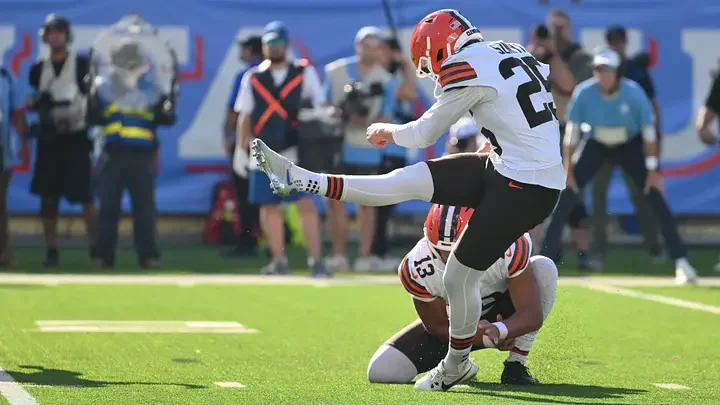
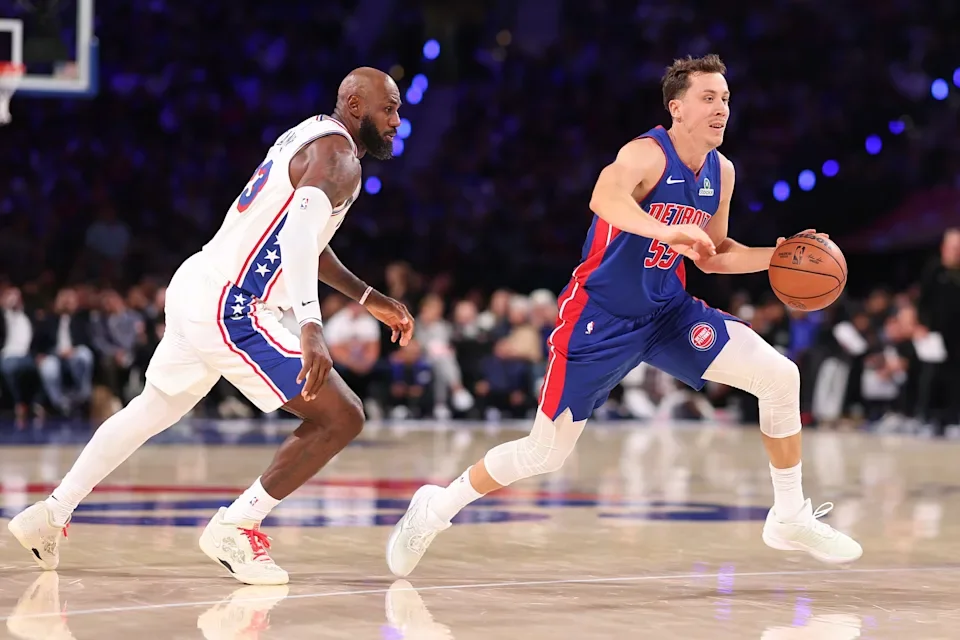
Pistons Hand 76ers First Loss of the Season, Sending an Early Message to the Eastern Conference
DETROIT, Michigan — The Philadelphia 76ers entered their matchup against the Detroit Pistons looking to preserve their undefeated start to the 2026-27 NBA season. Instead, they ran into a Detroit team determined to remind the rest of the Eastern Conference why it won 60 games a season ago.
Detroit handed Philadelphia its first loss of the young season, delivering an early statement against a 76ers team that had generated considerable excitement through its opening games.
For the Pistons, the victory represented more than another win in the standings. It was an opportunity to demonstrate that last season’s success was no accident and that Detroit remains a serious contender in an increasingly competitive Eastern Conference.
For Philadelphia, the defeat offered an early reminder that even a talented roster must find ways to consistently compete against the conference’s established contenders.
Detroit Continues Building on Last Season’s Success
The Pistons entered the 2026-27 campaign facing a different set of expectations than in previous years.
After years of rebuilding and developing young talent, Detroit established itself as one of the Eastern Conference’s strongest teams last season, finishing with 60 victories and transforming its reputation around the league.
That success changed how opponents approached the Pistons.
No longer viewed as a rebuilding franchise, Detroit entered this season with the expectation of competing near the top of the conference standings.
The foundation of that transformation has been built around a young core that has developed together, supported by improved defensive discipline, physicality and a more consistent offensive identity.
Against Philadelphia, those characteristics once again demonstrated why Detroit has become such a difficult opponent.
The Pistons have developed into a team capable of controlling games through their defense, rebounding and ability to capitalize on opponents’ mistakes. Their physical approach makes them particularly dangerous against teams that rely heavily on offensive rhythm.
That identity helped carry Detroit to 60 victories last season, and it remains central to the organization’s championship ambitions.
Cade Cunningham Leads Detroit’s Balanced Attack
Cade Cunningham once again demonstrated why he has become the centerpiece of Detroit’s resurgence, finishing with 26 points, eight rebounds and eight assists.
The Pistons controlled the game from the opening minutes, racing to a 34-22 lead after the first quarter and eventually extending their advantage to 21 points.
Duncan Robinson provided a major offensive contribution with 21 points, connecting on five three-pointers. John Collins added 16 points and 11 rebounds, while Daniss Jenkins contributed 18 points.
Detroit’s balanced production was particularly impressive considering the team was without Jalen Duren and Ausar Thompson.
The Pistons also dominated the rebounding battle, holding a 54-37 advantage and collecting 15 offensive rebounds that helped produce 24 second-chance points.
Even without two important starters, Detroit demonstrated the depth and discipline that made it one of the NBA’s best teams a season ago. (Reuters)
Philadelphia’s Comeback Attempt Falls Short
The 76ers entered Sunday with a 3-0 record following victories over the New York Knicks, Cleveland Cavaliers and Milwaukee Bucks.
Philadelphia had already demonstrated its ability to overcome adversity, including a remarkable 29-point comeback against Cleveland earlier in the week.
Against Detroit, however, the Sixers faced another substantial deficit that ultimately proved too difficult to overcome.
Trailing by 21 points during the second quarter, Philadelphia began working its way back into contention behind Tyrese Maxey and LeBron James.
James helped spark a late first-half run, scoring on three consecutive drives to the basket as Philadelphia reduced Detroit’s advantage to 56-44 at halftime.
The Sixers continued applying pressure throughout the second half and eventually narrowed the deficit to four points in the fourth quarter.
However, Detroit responded with timely perimeter shooting, including a crucial three-pointer from Robinson that helped halt Philadelphia’s momentum.
Maxey finished with a game-high 29 points, including 18 in the fourth quarter. James contributed 18 points, while Jaylen Brown scored 16 on 5-of-20 shooting.
Philadelphia also played without Joel Embiid, who rested on the second night of a back-to-back, and VJ Edgecombe, who was sidelined with an abdominal contusion.
The absences undoubtedly affected the Sixers’ rotation, but Detroit faced its own injury challenges and still managed to control the matchup. (CBS Sports)
Detroit Sends an Early Message to the Eastern Conference
Last season, the Pistons finished 60-22, securing the Eastern Conference’s top seed and establishing themselves as legitimate championship contenders.
The achievement represented a remarkable transformation for a franchise that had spent much of the previous decade struggling to regain its place among the NBA’s elite.
Cunningham’s development into an All-NBA-caliber guard has been central to that turnaround, but Detroit’s success extends beyond its star player.
The Pistons have built a roster that complements Cunningham’s playmaking ability with defensive versatility, rebounding and reliable perimeter shooting.
Sunday’s victory offered another example of that formula.
Detroit did not need an extraordinary individual scoring performance to defeat Philadelphia. Instead, the Pistons relied on multiple contributors, controlled the glass and responded whenever the Sixers threatened to make the game competitive.
The result also continued Detroit’s recent success against Philadelphia. The Pistons swept all four meetings between the teams during the 2025-26 regular season, demonstrating that their ability to match up against the Sixers is not limited to one game.
With Sunday’s victory, Detroit improved to 3-0 and remained the Eastern Conference’s only undefeated team. (Reuters)
What the Loss Means for Philadelphia
Although Philadelphia’s undefeated start has ended, there is little reason for the 76ers to panic after just four games.
The team has already demonstrated considerable offensive potential with Maxey, James, Brown and Embiid forming one of the conference’s most talented groups.
However, Sunday’s defeat exposed areas that will require improvement as the season progresses.
Philadelphia struggled to contain Detroit’s physicality, particularly on the boards, while its offense lacked consistency without Embiid.
The Sixers also continued a concerning early-season pattern of falling behind by significant margins before attempting second-half comebacks.
That approach had worked against Cleveland, but Detroit demonstrated why relying on late rallies can be dangerous against disciplined opponents.
As Philadelphia’s roster continues developing chemistry, establishing stronger starts and improving its defensive consistency will be essential to competing with teams such as Detroit.
Pistons Prove Last Season Was No Accident
Detroit’s victory over Philadelphia was an important early reminder of the standard the Pistons established last season.
After winning 60 games and finishing atop the Eastern Conference, Detroit entered the new campaign facing questions about whether it could sustain that success.
Through three games, the Pistons have provided an encouraging answer.
Their 106-93 victory against Philadelphia demonstrated the same qualities that fueled last season’s remarkable turnaround: defensive intensity, rebounding, balanced scoring and composure when opponents begin closing the gap.
For Philadelphia, the loss ended an exciting undefeated start but provided a valuable early test against one of the conference’s established contenders.
For Detroit, the message was considerably different.
The Pistons are no longer a young team hoping to become a contender. They have already established themselves among the Eastern Conference’s best, and Sunday’s performance suggested they have every intention of remaining there.
With both franchises expecting to compete deep into the postseason, their first meeting of the season offered an early glimpse of what could become an important Eastern Conference rivalry.
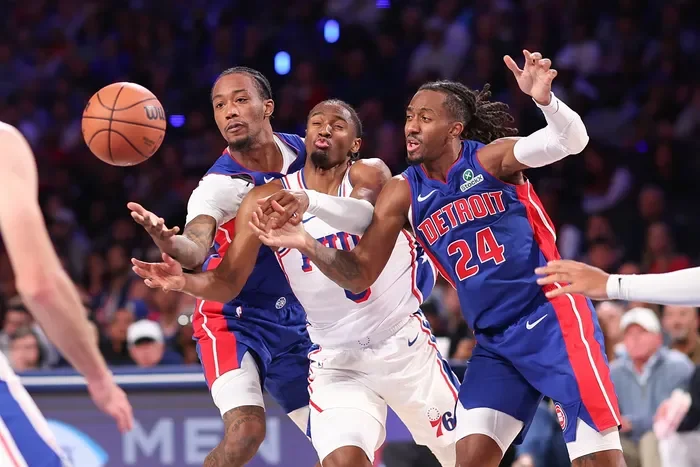
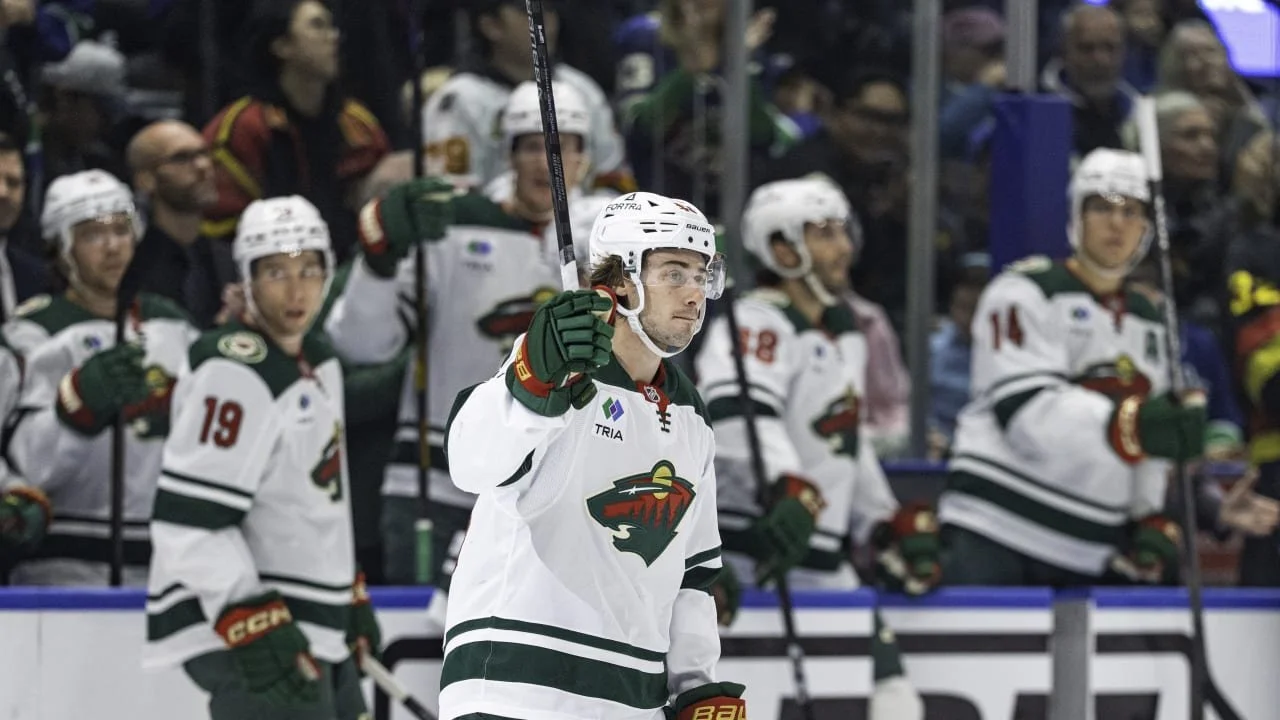
Quinn Hughes Scores in Return to Vancouver as Wild Defeat Canucks 4-2
VANCOUVER, British Columbia — Quinn Hughes returned to the city where he established himself as one of the NHL’s premier defensemen Sunday night, but this time, he was wearing a Minnesota Wild jersey.
In his first appearance at Rogers Arena since being traded by the Vancouver Canucks in December 2025, Hughes faced a hostile reception from portions of the crowd before scoring against his former team in Minnesota’s 4-2 victory.
The highly anticipated homecoming brought together two franchises moving in different directions. Minnesota entered the season with Stanley Cup aspirations, while Vancouver continued searching for answers following the departure of its former captain.
For Hughes, the evening represented more than another regular-season matchup. It was his first opportunity to return to the building where he spent six and a half seasons, won a Norris Trophy, and became one of the most accomplished defensemen in franchise history. (Sportsnet)
Mixed Reception Greets Former Canucks Captain
The atmosphere inside Rogers Arena was noticeably different from the moment Hughes stepped onto the ice for warmups.
Hundreds of fans gathered near the glass, many wearing his familiar No. 43 Canucks jersey. While some supporters welcomed their former captain, others expressed their frustration over his departure with loud boos.
Chants of “Quinn you suck!” and “Quit-er!” echoed through the arena during the opening minutes, illustrating the complicated relationship between Hughes and the fanbase that once celebrated him as the centerpiece of the organization.
During the first television timeout, Vancouver presented a video tribute recognizing Hughes’ contributions to the franchise. The reaction was mixed, with boos eventually giving way to applause and a standing ovation from portions of the crowd.
Hughes acknowledged the moment by raising his stick toward the fans while players from both teams tapped their sticks against the boards.
Before the game, Hughes had made it clear that whatever reception awaited him would not change his appreciation for Vancouver.
“I was really lucky to start my career there and just being in a Canadian market was a really special thing for me,” Hughes said Saturday.
Despite the difficult ending to his tenure, Hughes credited the organization and its supporters for helping him develop into the player he is today. (Sportsnet)
Hughes Finds the Net Against His Former Team
While the emotional circumstances surrounding Hughes’ return dominated the pregame conversation, the former Vancouver captain eventually made his presence felt on the scoreboard.
Hughes scored a power-play goal midway through the second period, extending Minnesota’s advantage to 3-0 and delivering one of the night’s defining moments.
The goal carried additional significance given the circumstances. Hughes had spent years generating offense from Vancouver’s blue line, establishing himself as the franchise’s most productive defenseman. On Sunday, the same offensive ability that made him a fan favorite in Vancouver resulted in his 500th career point.
Vancouver eventually found enough offense to narrow the deficit, but Minnesota held on for the 4-2 victory.
For the Wild, the result continued an important early-season stretch as the organization looks to establish itself among the Western Conference’s strongest contenders. For Vancouver, it was another frustrating defeat in a season already marked by significant struggles. (FOX Sports)
A Legacy That Remains in Vancouver
Although Hughes now plays for Minnesota, his accomplishments with the Canucks remain an important part of the organization’s history.
Selected seventh overall in the 2018 NHL Draft, Hughes quickly developed into one of the league’s most dynamic offensive defensemen.
Over 459 regular-season games with Vancouver, he recorded 61 goals and 371 assists for 432 points, becoming the franchise’s all-time leading scorer among defensemen.
His most celebrated individual season came in 2023-24, when he won the James Norris Memorial Trophy as the NHL’s top defenseman while helping Vancouver capture the Pacific Division title.
Hughes also served as team captain beginning in the 2023-24 season, becoming the face of a franchise attempting to return to consistent championship contention.
However, uncertainty surrounding his long-term future eventually led Vancouver to make one of the most significant trades in recent franchise history.
On December 12, 2025, the Canucks sent Hughes to Minnesota in exchange for Marco Rossi, Liam Ohgren, Zeev Buium and a first-round selection in the 2026 NHL Draft.
The transaction provided Vancouver with young players and future assets while giving Minnesota an established superstar capable of transforming its defense.
For Canucks supporters, Sunday’s matchup was another reminder of the talent their organization lost and the challenges involved in replacing a player of Hughes’ caliber. (Minnesota Wild)
Minnesota’s Stanley Cup Expectations Continue to Grow
Hughes’ arrival in Minnesota was never intended to be a short-term improvement. The Wild acquired him with the expectation that he could help push the franchise into serious Stanley Cup contention.
His skating, passing ability and offensive creativity have added another dimension to a Minnesota lineup already featuring Kirill Kaprizov, Matt Boldy and Joel Eriksson Ek.
Since making his Wild debut in December 2025, Hughes has become a central part of the team’s offensive production from the blue line.
Entering Sunday’s game, the 27-year-old had recorded two goals and 12 assists through 12 games of the 2026-27 season.
His impact extends beyond individual statistics. Hughes provides Minnesota with an elite puck-moving presence capable of controlling possession, creating scoring opportunities and generating offense during critical moments.
That combination makes him particularly valuable to a team attempting to advance deeper into the postseason after winning its first playoff series since 2015 last spring.
With Minnesota continuing to build around its established core, Hughes’ long-term future also remains an important storyline. He has yet to sign a contract extension with the Wild, although he recently suggested that an agreement could be approaching. (CBS Sports)
Two Franchises Moving in Different Directions
Sunday’s result highlighted the contrasting circumstances surrounding Minnesota and Vancouver.
The Wild have assembled a roster designed to compete immediately, with Hughes playing a significant role in their pursuit of a championship.
Vancouver, meanwhile, is navigating a difficult rebuilding process following the departure of its former captain.
The Canucks entered Sunday’s matchup with a 2-9-1 record and a nine-game losing streak, reflecting the challenges facing an organization attempting to establish a new foundation.
The trade involving Hughes was designed to provide Vancouver with young talent capable of contributing to its future, but replacing his production and leadership remains a substantial undertaking.
Minnesota’s 4-2 victory provided another reminder of the difference a player of Hughes’ caliber can make.
A Memorable Homecoming for Hughes
For much of his career, Quinn Hughes was the player Vancouver supporters looked toward when their team needed something special.
On Sunday night, he returned as an opponent, heard the frustration of the crowd, received recognition for his accomplishments and ultimately helped defeat the franchise where his NHL career began.
The boos demonstrated that emotions surrounding his departure remain strong, but the tribute and applause also reflected the lasting appreciation for everything he accomplished in a Canucks uniform.
For Minnesota, the victory was another step in a season filled with championship expectations. For Vancouver, it was another difficult night during a period of transition.
And for Hughes, his first return to Rogers Arena provided a memorable chapter in a career that continues to evolve beyond the organization where he became a star.